Showing posts with label Blessed Virgin Mary. Show all posts

Sunday, May 14, 2017

Fifth Sunday of Easter - 100th Anniversary of Fatima

The place: Europe. The year: 1917. War has plagued the continent for over three years at this point. The ravages of trench warfare, poison gas, machine guns, and tanks never seems to end. But another war is brewing in Russia, where revolution will explode in October, killing the tsar and his family and leading to the rise of godless Communism. Everywhere it seems as if chaos and disorder rule the day. It is in the midst of this most depressing time that something incredible occurs in a small town in Portugal.
Three shepherd children are caring for their families’ flocks in the fields when they see a bright light. When their eyes adjust, they see a lady clothed in white. She asks them to join her in praying the Rosary. After the Rosary, she promises to visit them for four more months. Thus ended the first apparition of our Lady at Fatima in Portugal, which occurred one hundred years ago yesterday. In fact, Pope Francis has been in Fatima to celebrate the centenary of the apparitions, to honor everything that Mary did at Fatima, in particular her message. But what is her message?
Our Lady revealed to the children a few secrets. First, she showed them what hell is really like. The tortures and pain were so tremendous that one of the children remarked later on that the children were so scared by what they saw that only the assurance of Our Lady that she would take them to heaven calmed them down. The Virgin reminded them that this is what awaits sinners who do not repent and turn to Jesus. It is the ultimate fate for those who reject what Jesus declares in the Gospel today: “I am the way, and the truth, and the life.” There is no other way to follow to get to heaven except the way of Jesus; there is no other truth to believe except the truth that Jesus is Lord and King, victorious in His resurrection from the dead; and there is no life possible except life in Christ, animated by His grace and mercy to be the saints we were meant to be.
Not only did she reveal the truth about hell, but the Virgin Mary also predicted that another war would break out after the current war ended if men did not abandon their wicked ways. She also gave a prophecy of the Church in calamity, destruction seeming to occur everywhere. Yet, despite all of these terrifying visions and prophecies, the Lady ended all of this with a simple but hopeful promise: “In the end, my immaculate heart will triumph.” In truth, how can she not obtain the triumph? That heart has most completely and most willingly obeyed God from the very first moment she could act until now and until the end of time. How can Satan overcome a heart most united to God through her divine Son?
Indeed, the victory of Jesus Christ is shared by the Virgin Mary because she is the greatest of all disciples. She shows us how to follow Jesus the way; she shows how to adhere to Jesus the truth; and she is the best witness of how to live in Jesus our life. All of the saints put together cannot match her fidelity, her virtue, her purity, her sanctity. This is why we crown her as Queen - because God has already crowned her Queen of heaven and earth by her faithfulness to everything He commanded her to do.

Let us indeed crown our Lady today, but not only with a crown of flowers, but in our hearts and minds as our mother and our queen. Let us heed the warning that she gave at Fatima and still gives today: repent and believe in her Son. Convert, and be no longer the slaves of Satan, the pawns of a sinful world, but become the children of Mary, the brethren of Jesus. Let us do what she asks of us, so that we may join her and all the angels and saints in the Father’s house, where a place is prepared for all who adhere to Him who is the one way, the one truth, the one life.

Sunday, December 11, 2016

Our Lady of Guadalupe


It is so wonderful to be here with all you tonight, to celebrate the feast of the Virgin of Guadalupe. I am glad you allow a poor gringo priest to celebrate with you this wondrous feast of so beautiful and so important a lady. I must admit that I grow fonder of the Virgin each year, since I first learned of her in seminary almost ten years ago. The marvel of it all overwhelms me: how great her influence has been not only in Mexico but in all of the Americas. Truly she is the Empress of the Americas as Pope Saint John Paul II declared. Please permit me to review these marvels for our edification.
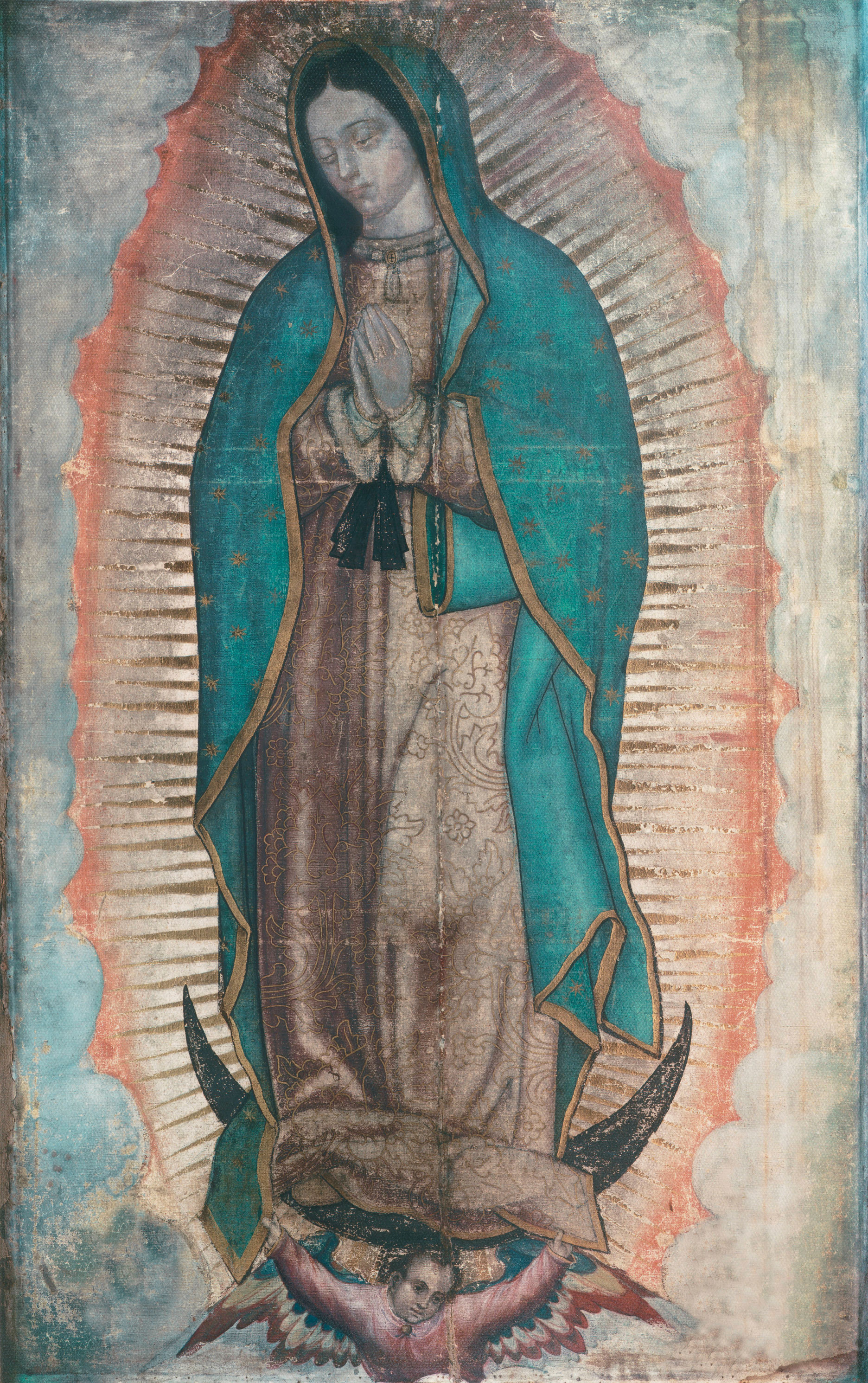
When the Spanish conquered Mexico in the 16th century, they brought with them missionaries to convert the native peoples to the Christian faith. However, these missionaries struggled greatly and received few converts in their first few years. But then Our Lady came to the hill of Tepeyac in 1531 and changed everything. This image, as you might well know, is not only responsible for the conversion of the native Mexicans, but it is the most visited image in the world. Millions received baptism and became Catholics all because of this image that has endured so much in its history, and yet it remains the same as when Saint Juan Diego received it from her.
But why is it that this image could have such an immense effect upon the peoples, even down to our day? How does La Virgen have such an impact upon so many? In truth, it is the a simple answer, though one that we may forget at times: it is the effect and the impact of a mother upon her children. Are we capable of hard-heartedness in the sight of so loving and caring of a mother? Can we fail to listen when she calls us just as she called Juan Diego by the name “Juanito”? When she shows us such a love, what else can we do but whatever she asks of us?
Yet perhaps we may have forgotten her requests or her words to Juan Diego to explain why she came. When La Virgen appeared the first time on December 9, she told him that she was the mother of the most true God, of he through whom everything lives, the Creator of persons, the master and lord of all the earth. She revealed herself completely to Juan Diego in his own language, not Spanish but the local Nahuatl language. La Virgen first seeks to reveal to this faithful man who she really is in a way that the natives would understand. She does this so that they may receive the Christian faith at their own level.
This shows the humility of Our Lady, for she never focuses on herself. She is the handmaid of the Lord, as she told the archangel in the Gospel. Everything that she does is not for her, but for her son. In fact, the image shows her as being pregnant, one of the few if not the only images to show this. Just as she carried Jesus in the womb to Bethlehem in the midst of her own people, she also carries Him to a new people who will be hers very soon. Truly she is a mother to us all.
Her very appearance is meant to reflect not only her humility, but to demonstrate to the people the truths of the faith using their own symbols along with the symbol we see in the first reading from the book of Revelation. Our parish patron Saint John called her the ark of the covenant, and paints a magnificent picture with his words: a woman clothed with the sun, with the moon under her feet and a crown of twelve stars on her head. All of these signs are found in the image, but they also carry meaning within the pagan religion of the native people.
La Virgen stands before the sun and over the moon, showing her dominance over the main gods of the pagan religion. The flower over her womb was a symbol of the divine and the center of the universe. It rests over the womb which carries the child who is both divine and the center of the universe. Her pink robe is symbolic of an Aztec princess or queen, showing her royal state. The angel holding her up holds her robe and her mantle, pointing to the child in her womb who is both human and divine. The image itself is a Gospel in pictures.
Yet the wonders of La Virgen do not end there. Perhaps you remember the story of Juan Diego trying to avoid Tepeyac because he wanted to get help for his sick uncle. Not only that, but he was embarrassed by his failure to get the bishop to believe him. Yet she does not stay on the top of the hill; she comes down and greets him with those heartfelt words, “Am I not here, I who am your mother?” What joy! What delight! Not only is she the mother of Jesus Christ the Savior, but she is our mother. A mother who does not remain above us, but humbles herself to come to us in our need.
It is this last apparition which results in that miracle of miracles which remains with us today: the image on the tilma. Just when Juan Diego hoped to avoid more failure, La Virgen proves herself through her roses and her image. Joy of joys! The victory of Our Lady comes to Mexico! We know the rest of the story, for we are living it here and now. You all would not be here if it were not for the loving kindness of La Virgen for your ancestors and your land.
But is this the end of the story? Or is it only the first chapter? Listen to those first words of Our Lady to Juan Diego: "I desire very much that they build my sacred little house here, for there I will show Him to you, I will magnify Him, I will turn you over to Him, to He who is all my love, to He who is compassionate gaze, to He who is my help, to He who is my salvation." Who is He whom she wants to offer to us? It is Jesus Christ, the King of Heaven and earth, the Savior of humanity, the Word made flesh, the God-man. All of this is meant to lead us to know Him, to love Him, and to serve Him through her. Her message for all peoples, not only Mexicans, is to know her Son, to love Him, and to join her in serving Him who is our help and our salvation. She is the best missionary for our Christian faith, because she is intimately united to He who is the center of our faith.
But how many of you truly hear her words? How many of you fulfill her request? I am happy to see so many of you with us on this beautiful night to celebrate her who is the honor of your people. Our church is bursting with love for La Virgen. But how complete is that love? Many of you are seeing me for the first time since I arrived in June. Many of you are in this church for the first time since Easter or Christmas or even the last celebration of Guadalupe. Many of you profess a love for La Virgen, but have nothing to show for it beyond your attendance here tonight.
Do you think this is what she wants for you? Do you think that she came to Juan Diego so that you might be half-Christians? Do you think she gave you this image so that you would receive baptism but never be converted to Jesus Christ? How terrible! It would have been better for your people to remain pagans rather than become a convenient Christian. It would have been better if La Guadalupana had not come if you won’t love her by listening and obeying her.
Brethren, if you love La Virgen, listen to her! If you love La Virgen, follow her! If you love La Virgen, love her Son as well! The true lover of La Guadalupana is the person who follows she who is victorious over the serpent. The true lover of La Guadalupana is the person who imitates her total obedience to God in the totality of their life. The true lover of La Guadalupana will not darken the door of the church only on her feast day, but will seek to be with her in the church as much as she demands. Love for her cannot be only an emotion; it requires actions and signs to demonstrate that love.
Let us indeed rejoice that we have such a loving mother in La Virgen; a mother who is near to us at every step. Let us rejoice that she loves us so much as to reveal herself in this unique way. But let us not waste this opportunity to be a true Guadalupano, which is very essential to our salvation, by following La Virgen who follows the most true God. Let us pray that she may continue to win us salvation and mercy from her son, so that we may not look to her in vain. May La Virgen of Guadalupe be the madrecita of the Mexicans and of all the Americas. May she be the compassionate mother of we her poor children. May she be for all of us the Queen who brings us to the glories of heaven.


Viva la Virgen!

Thursday, December 8, 2016

Immaculate Conception

Saint Bernadette Soubirous and Our Lady of Lourdes

In 1858, a young girl was walking with her sister and a friend near her village to collect firewood for her poor family. The other two crossed the creek near a grotto where pigs used to shelter after they were fed by the farmers, but the girl did not due to her poor health. As she waited near the grotto, she heard a noise like a wind blowing yet none of the trees stirred. She looked up at the top of the grotto and saw a most beautiful woman smile at her. Over the following weeks, this girl, Bernadette Soubirous, would pray with this lady and obey her requests. When she finally asked the lady who she was, the lady told her, “I am the Immaculate Conception.”
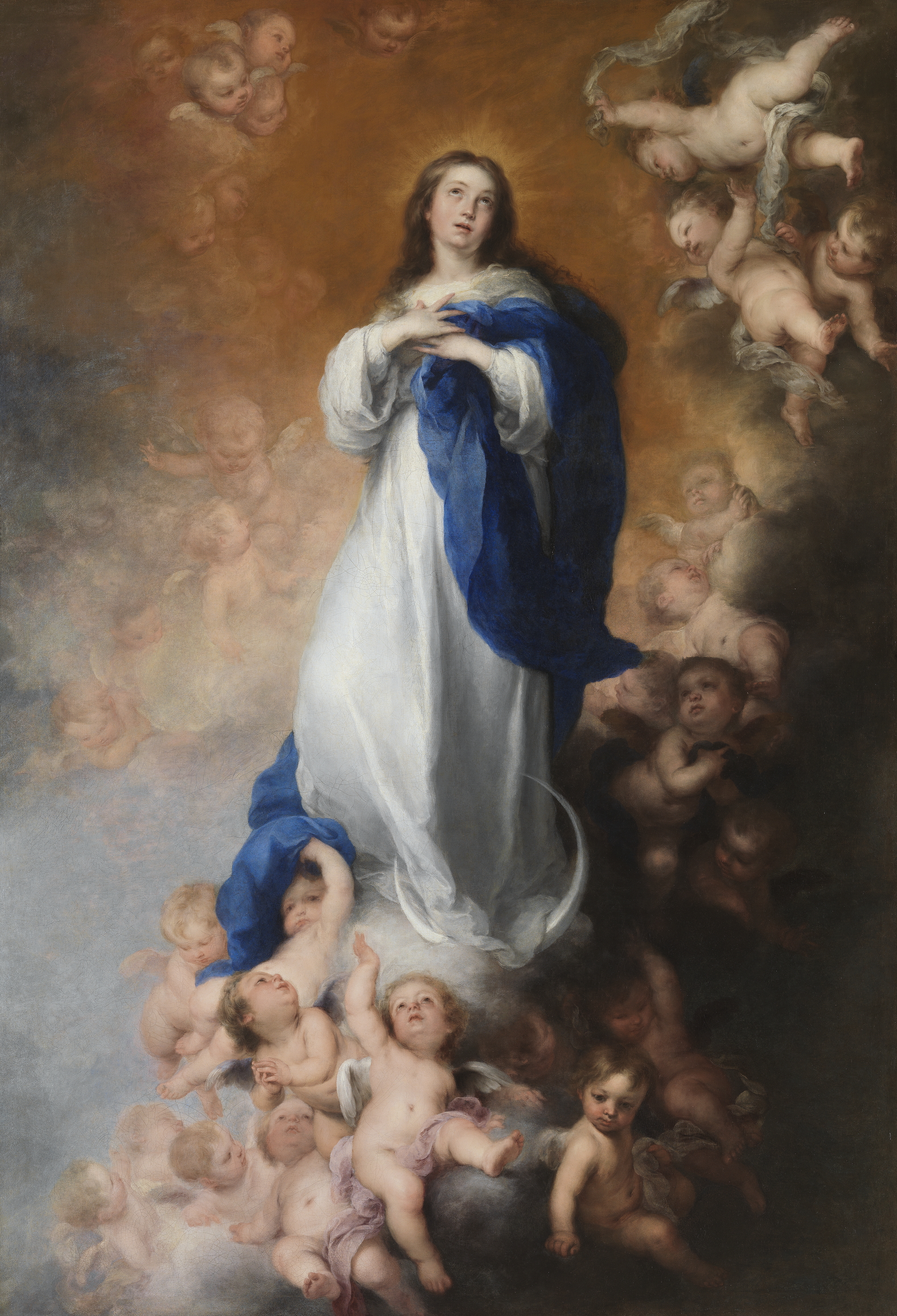
This is the wonderful account of the apparitions of Our Lady at the small town of Lourdes in France. Today, Lourdes is one of the most visited religious sites in the world. We are blessed to have an image of both Our Lady of Lourdes and Saint Bernadette in our church. It is appropriate to remember this apparition today in light of this glorious feast day commemorating the first moments of the life of the Blessed Virgin Mary. But we ought to ask ourselves two things. Why did this happen to Mary? And why would she identify herself by this rather formal, theological term?
What we celebrate today is the greatest grace a human being has ever received from God. Pope Pius IX definitively defined the Immaculate Conception in 1854, only a few years before the visions at Lourdes, as the dogma that “the most Blessed Virgin Mary at the first instant of her conception, by a singular grace and privilege of Almighty God, in virtue of the merits of Christ Jesus, the Savior of the human race, was preserved immaculate from all stain of original sin.” (Ineffabilis Deus) But what use is this singular grace and privilege? Why does God grant unto Mary this removal of any and all effects of sin on her person? The answer lies in the season during which we find ourselves: the season of Advent.
We are drawing closer and closer to the birth of Jesus Christ our Savior. This season of Advent is a time for remembering the preparation for this birth along with the reason for this birth. Our blessed Mother was not the first human without original sin: our first parents, Adam and Eve, were also created without sin or any stain of sin upon their souls. However, though they were free of sin, they chose to disobey God and thus fell from that state of original grace and union with God and hindered the rest of humanity, until the Savior would come and restore us to that union.
The Savior of humanity would have to undo the knot of disobedience wrought by our first parents through His own complete obedience to God. Only a completely opposite act could reverse that initial act in the garden. Saint Paul sees Jesus as the new Adam in his letter to the Romans, undoing the actions of the first Adam by obeying God rather than disobeying, by submission rather than betrayal (cf. Rom 5:12-18). But Adam did not fall alone; he fell along with Eve, who also willed to sin. But if Jesus is the new Adam undoing the old Adam’s work, who will be the new Eve to do the same thing?
Not only that, but the Savior needs a human body in order to remove sin from humanity. This Savior, while removing sin from the human condition, was free from sin Himself, being God in the flesh, for God contains no sin or evil in His divine substance and sin cannot remain in the divine presence. We might remember that God commanded Moses and the ancient Israelites to build the ark of the covenant which contained the divine presence in the ancient Temple. God commanded that this ark be made of the finest gold and best materials and that it could not be touched by anything lest it be made impure. If the Lord commands this for the symbol of His presence among Israel, how much shall He demand the greatest and the best of the womb in which He shall be conceived by the Holy Spirit and take on our flesh in such need of purification?
This solemnity, then, marks the immediate preparation for Christmas Day, for the birth of Christ our Savior. In order to take on our flesh, He needs the perfect woman. In order to undo the work of Adam, He needs an Eve to work with Him. In order to overturn our act of disobedience, He needs someone to make a great sign of obedience. This is why the Virgin is graced with the fruits of Christ’s salvation beforehand: that she might cooperate fully and completely when the angel tells her that she will be the mother of the Savior. That instead of Eve’s no, Mary will say “Let it be done to me.”
Through her immaculate conception, the Mother of God is able to aid all of humanity by cooperating in the divine work of salvation. But her cooperation did not end with her acceptance of this son; it continues even now with her reigning with her son over heaven and earth. Just as she came to that grotto of pigs in Lourdes, so too does our Lady come to aid us still tainted by the filth of sin. Just as she smiled at Saint Bernadette and called her to prayer and penance, so too does she smile down at we her children and call us, like a good mother, to be the best we can be, to be saints. Just as she revealed herself as the Immaculate Conception when asked who she was, she still reveals herself to be for us the singular vessel of grace and devotion, the lowly handmaid of the Lord elevated as the Queen of heaven and earth.
Let us rejoice in the Immaculate Conception this day, as we prepare for Christmas. Let us rejoice that the Virgin Mother of God did cooperate with God and help bring about our salvation. Let us praise God who humbles Himself to drop down like dew from Heaven and to become the child of so wonderful a mother. Let us also pray to her that we may be freed of our sinfulness and become more like her every day: obedient, loving, and faithful to God. Let us rejoice in Mary so that we may rejoice more greatly in Jesus her Son.

Wednesday, December 23, 2015

Fourth Sunday of Advent (OF) - Mary and Her Child


We stand on the precipice of Christmas.  The time grows short, the days are getting shorter and busier, everyone is bustling about trying to prepare.  We are all in haste to get the house cleaned, the presents bought and wrapped, the decorations in place, the lights hanging, everything we need for Christmas.  How much attention, though, do we place on the reason for the season? Certainly, we are not forgetful of why it is that we celebrate Christmas: the birth of the Christ Child into the world.  Yet do we take time to consider the significance of this holiday?  It’s easy to do the work of cleaning and decorating, but are we cleaning and decorating our hearts and minds for the feast day we are to celebrate so soon?
If you pay attention to the prayers of our Mass, you might notice that something is missing: the name of the one who is to be born on Christmas Day.  We must always remember that Christ is not necessarily a name but a title, a title indicating the one anointed or chosen by God.  Throughout our prayers, which normally include the Holy Name, we notice an absence which expresses the longing of the Church for He who is to be born so soon.  It is the longing of our ancestors, the longing of our forefathers, the longing of the whole human race.  It is also the longing of a mother to at last hold her unborn child in her arms and to speak their name for the first time to them.
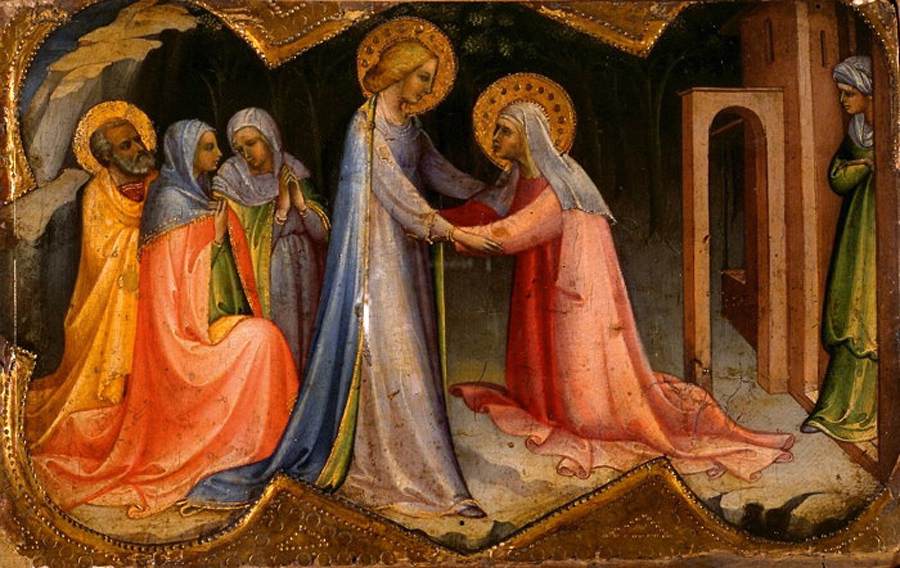
We are journeying now with the Virgin Mary to the town of Bethlehem - foretold by the prophet Micah in our first reading to be the birthplace of the one who is to be the ruler or the king in Israel.  Saint Luke presents to us one part of the journey which Our Lady makes towards her ancestral home in showing us what is traditionally called the Visitation: the period immediately after the announcement by Saint Gabriel to the Virgin Mary that she will be the Mother of God.  The archangel had revealed to her that her cousin Elizabeth had also become pregnant by the power of God; she who had been barren for so long now bore within her womb the one who would prepare the way for the Lord.
Our Lady leaves in haste so as to marvel at what God has done in Elizabeth and in herself.  But no sooner does she greet her cousin than her cousin begins to praise her: “Blessed are you among women and blessed is the fruit of your womb.”  Elizabeth cries out in joy and in humility that she has received the gift of a visit from the mother of her Lord.  Even John rejoices while in his mother’s womb, leaping for joy that the One whom he will proclaim as the Lamb of God has come to him.  Joy overflows this moment which Saint Luke recalls for our consideration.
But even greater joy awaits our Lady: the joy of finally bringing this child into the world.  A mother desires more than anyone else the birth of her child, if for nothing else except to have the child finally out of the womb.  Yet Mary desires this birth for a far greater reason: because of who this child is and what He will do.  She knows that her child is the Savior of the nations.  She knows that her child will be the King who frees His people.  She knows that her child is the one who truly comes to do the will of God in the flesh He receives from her. She knows that her child is the Emmanuel - the God with us.
This is why she eagerly awaits His birth and rejoices with Elizabeth.  Along with her littleness and her humility, God blesses Mary’s immense faithfulness with becoming the most powerful woman in the world, as one magazine recently declared her.  Thus does Elizabeth praise her finally as being blessed because she believed that what was spoken to her by the Lord would be fulfilled.  Believing in God and His desire for our salvation, she who is the handmaid of the Lord has been exalted above every other creature, to the point of even being made the Queen of heaven and earth, all because of her child whose birth is at hand.
Let us rejoice with the Virgin Mary that she is to soon bring into the world the God-man.  Let us praise her, just as Elizabeth praised her, for her faith and her humility while learning from her how to do the same.  Let us be prepared in mind and heart for the coming child through our prayers and our lives.  Let us truly desire to welcome the one whose name will so soon be on our lips, just as it was on the lips of Mary at His birth: the one who is called Savior, the one who is our way and our eternal life, the one who is the God among us: Jesus Christ the Lord.

Tuesday, December 8, 2015

The Feast of the Immaculate Conception (OF)


If we were given the opportunity and the funds, what sort of house would we build?  Would we not desire the very best materials, the highest quality furniture, perhaps even the best and newest technology we could find?  If we were capable, we would each most likely build a house better than the one in which we live now, even if we are comfortable and love what we have.  This does not necessarily signify weakness or sinfulness, but rather that we desire the best in our lives, most especially with the place where we call home.  This desire for the best is not only found in humanity, but it can also be found within the Divinity.
God desires to have the best in all that He works.  This is not because He needs it, since He is infinite and omnipotent and already has everything He could ever want, but rather because the best that earth and creation can offer are those things which are closest to God in holiness, in beauty, and in truth.  God also desires the best in His works so as to lift us up to Himself through those works.  This is proven in the work for which we have started preparing in this Advent season: the birth of the Savior of the human race.
As we continue our preparation for the coming of Christ at Christmas, it seems as if the Church interrupts this season of Advent with today’s feast of the Immaculate Conception.  Yet this could not be farther from the truth.  If we understand what is happening in the mystery of today’s feast, we will see how this event is essential to the work of salvation God brings about in His Son Jesus Christ, along with seeing how the Blessed Virgin Mary is the greatest and the best creature God has ever made.
Having already noted this God’s desire for quality in His craftsmanship, we can look at what we celebrate today as one of the clearest examples demonstrating this principle.  It all begins in the Garden, which we hear the closing part in our first reading today.  Adam and Eve have contracted sin for the whole human race through their disobedience to God’s command, thus requiring their exile from the Garden and the punishment of travails in labor.  Yet even in the midst of this condemnation, God makes a promise to them that this will not persist forever.  The Lord tells our first parents that “I will put enmity between [the serpent] and the woman, and between [the serpent’s] offspring and hers” (Gen 3:20).  This has been seen by the Church throughout the centuries as the foreshadowing of what will happen in the Gospel between Christ the Son of Mary and the Devil the trickster who slithered his way into ruining humanity.
Indeed, God will do this not just through any human agent, but He will do it by His own Son becoming a man so as to win humanity back from Satan.  Yet this goal of salvation via the Incarnation of God the Son begs the question: how will God become man?  Will He imitate Adam by being born from the earth? Or will He just appear among the crowds, becoming a man instantly?  Or will God take the hard road by humbling Himself to become a man just as we have done: through being born of a woman?
If God were not only to free humanity from the bondage of sin and Satan and lift us up so as to draw near to Himself, He must do it by taking on every aspect of humanity that is possible, including being conceived and born.  Yet God is all-holy, all-perfect, Goodness in His very being; how can He be born of a sinful woman, He who will be like us in all things except sin (cf. Heb 4:15)?  We have already seen that God desires to do the best in everything He works, and it is the same with the birth of His Son, our Lord and Savior.  If God the Son is to unite Himself to our human flesh and so become Jesus, He must have the best mother and the most glorious dwelling that can be created in the universe.
Thus is the Blessed Virgin Mary not only given the singular privilege of becoming the mother of God, but she is given the greatest grace and the source of the innumerable graces that fill her: the grace of being conceived without the stain of original sin.  Just as God has desired a beautiful and holy temple undefiled by sin in the times of the Old Testament, so too does He desire the most beautiful and most holy temple in the womb where He will dwell for nine months and become a member of the human race, in the womb of the Virgin Mother.
But God grants this highest privilege and immense grace upon Mary not only so that she will be the Mother of God, but that she may also begin to unravel the effects of original sin upon humanity.  Just as Adam and Eve are without sin when they decide to disobey God, so too are Jesus and Mary free of the taint of sin so as to rectify that first disobedience with the greatest obedience offered by any two human beings.  Just as sinless Eve brought forth sin unto Adam, as the story tells us, so does sinless Mary bring forth for us now the new Adam who will free us from that sin.
The celebration of the Immaculate Conception can be seen, then, as one of the most essential pieces of the immediate preparation for the coming of Christ our Savior.  For in it we see the beginnings of the fulfillment of the promise God made to Adam and Eve at their exile from the Garden, by the new garden which is found in the immaculate and virginal womb of Mary.  Yet there is more that comes from this enclosed garden than the Son who will be King and Lord: there is also the beginnings of the mercy which God desires to show unto His people.
As you have heard or seen or read for the past few weeks, Pope Francis has inaugurated a Jubilee Year of Mercy which begins on this feast.  In doing this, the pope desires to renew among we the faithful a greater appreciation of the mercy of God won for us in Christ Jesus and to be witnesses of that mercy to a world in so desperate need of that mercy.  It is fitting that we begin this Jubilee of Mercy on the day when God shows one of the greatest signs of His mercy in freeing Mary from every stain and touch of sin from her conception in the womb of her mother.
The mercy of God is given freely, without any merit on our part, but completely from the merits of Christ’s saving Passion and Death.  Mary receives this mercy and grace in a pre-figurative sense through her Immaculate Conception.  She did not earn it in any way; how can we earn something when we are incapable of breathing or walking on our own?! St. John Paul II says that “Mary is the one who experienced mercy in an exceptional way — as no one else.” (Dives in misericordia 9)  For this reason, we honor and petition Mary as the Mother of Mercy; because of all that God has done for her and through her in her Immaculate Conception, most especially becoming the mother of the one who would win this mercy for us on the Cross.
Let us then take up the call of the Psalmist to “sing to the Lord a new song, for He has done marvelous deeds” through the Virgin Mary, the best creature God has made in this universe.  Let us rejoice that Mary has been chosen to be the one “full of grace” so that she would fulfill what the archangel Gabriel declared to her: that she will bear the one whose merciful Kingdom will have no end.  Let us also turn to her, the Mother of Mercy, and beseech her to plead for us, who are still plagued by sin and temptation, who so often times fail to live up to the promise that we made at our baptism.  Let us hope in the God who has done such marvels through Mary and continues to do many marvels through the Mother of God for we her spiritual children.  Let us entrust ourselves to Mary just as God entrusted His Son to her, that we may learn from she who is the handmaid of the Lord how best to serve and love the God of mercy.  Let us not only rejoice in this feast day, but let us desire to be renewed by the mercy and the grace of God as we enter into this Jubilee of Mercy: that all our sins may be forgiven, that our lives may radiate with the joy and the love of the child for the merciful Father, that our lives may be continually purified and elevated so that we will be able to join the immaculate Virgin Mary and all the saints in the greater glories which await the faithful in Heaven.

Saturday, August 15, 2015

The Assumption of the Blessed Virgin Mary

The Assumption of the Virgin by Peter-Paul Rubens
(NB: This weekend, I am celebrating the Assumption in lieu of the 20th Sunday per annum because this is the feast of my parish.)

“Mary is assumed into Heaven; the angels rejoice, praising they bless the Lord.”  Thus the Church begins this feast of the Assumption in the Office as found in the Extraordinary Form or the more traditional liturgy.  Heaven rejoices to receive the one who is so pure, so loving, so intimately united to the King of Heaven.  The angels rejoice to receive her who will be crowned the Queen of angels.  They bless the Lord who has worked such marvels through her and for her.  In hearing this antiphon we receive a key to understanding today’s feast.
We all desire heaven.  Any sensible person does not desire to descend into the fires of hell for all eternity, but instead wishes for paradise.  But what does it take to get there?  What must we do to gain eternal life? We see this played out most particularly in the life of the Blessed Virgin.  She demonstrates to us what is necessary in order for us to gain heaven.  They are: the grace of God, a willing heart, and our own efforts.
First must come the grace of God.  Our Lady is the hallmark of this principle in her very being.  We celebrate her as being conceived without the stain of original sin.  But this did not come from herself; it was the almighty Trinity, in preparation for the incarnation of the Son, that bestowed this grace upon her.  We have not been blessed with this immense gift and grace, but we have received the graces necessary to enter into the Church and receive the sacrament of baptism, which washes us clean of that same stain.  We continue to receive these graces through our continued participation in the sacraments, most especially the healing grace of confession and the vivifying grace given to us whenever we receive the Eucharist. If God did not and does not continue to will this for us, it would not have happened; and this offers us the first reason to rejoice in this feast.
The next matter which is required in order to gain heaven is a willing heart.  While God lovingly pours out His grace upon us, yet He never coerces us or forces us to respond.  We are creatures given the gift of a free will, and it is only in accepting that grace that we can begin to direct our lives towards the eternal mansions.  We can compare Eve and Mary to see the difference a willing heart makes.  Certainly, Eve was not created with any sin upon her, yet she still made the choice to disobey God along with Adam in the garden, and thus merited for herself and we her children the effects of sin on the human condition.  Yet Mary reverses this with the Yes that she offers God when the archangel Gabriel tells her that she will be the Mother of God. St. Irenaeus of Lyons, a second-century Church Father, identifies her as the New Eve in union with Christ our New Adam, as highlighted by St. Paul in our second reading, undoing Eve's disobedience with her obedience. We rejoice on this feast day because Mary's fiat has lead to her assumption and entrance into Heaven.
Finally, we must not only receive the grace of God with a willing heart, but we must also supplement this with our own work. While Heaven is certainly a gift of God, it is a gift that we must begin to receive in a foreshadowed sense here and now. If we are truly animated by God's grace and our good will, then how can we not desire to bring this to fruition in our labors? We see this demonstrated in our Gospel, when Mary rushes to the side of her cousin Elizabeth. Our Lady not only desires to love God, but recognizes that we must love God through our neighbor. All of our actions, in fact, are meant to be directed towards this goal, even the menial tasks such as our eating or cleaning or sleeping. Our Lady's assumption thus does not occur only in a physical sense at the end of her earthly life, but is spiritually occurring every day in her prayers and actions. Each moment of her life draws her closer and closer to the glories of paradise, until that blessed moment when she follows her Son in entering body and soul, in the totality of her being, into the blessings of eternal life.

Let us rejoice, then, on this glorious day, that God has willed that His holy one would not see corruption. Let us rejoice in the triumph of Our Lady over the devil through her mission as the Mother of God. Let us rejoice that she has entered into the final glory to stand at the right side of her Son arrayed in glory for all eternity. But let us also pray to her that we too may receive the grace necessary to be converted from sin and directed on the path of holiness. Let us beseech her motherly aid for we her spiritual children: that we may not fall into temptation, but be elevated so as to imitate her perfect obedience to God. Let us be more fervent in praying our Hail Marys and our rosaries that we may imitate her example of obedience and charity, so that she who is praying for us sinners, now and at the hour of our death, may raise us to join her, to join her Son, and to join all the angels and saints in the marvels that await the blessed in the beatitude of heaven.

Saturday, May 2, 2015

Fourth Sunday after Easter/May Crowning (EF)

As has been appropriate for Mays immemorial, we have crowned Our Lady on this first Sunday of May so as to open this month in which we hold her most dear to us.  Bl John Henry Newman, in his devotions for the month of May, relates how Our Lady is most fittingly honored during this month.  Newman writes: “May, therefore, is the time in which there are such frequent Alleluias, because Christ has risen from the grave, Christ has ascended on high, and God the Holy Ghost has come down to take His place. Here then we have a reason why May is dedicated to the Blessed Mary. She is the first of creatures, the most acceptable child of God, the dearest and nearest to Him. It is fitting then that this month should be hers, in which we especially glory and rejoice in His great Providence to us, in our redemption and sanctification in God the Father, God the Son, and God the Holy Ghost.”  Indeed, we should glory and rejoice in her through whom salvation has come and in whom the Church remains sanctified and united to her divine Bridegroom.
Our Lady deserves our praise not only because of every good gift, every perfect gift she has received, but because of their source and their purpose.  Their source is the Father of lights, who is the best of all givers.  For indeed, God gives more than grace unto each Christian; He gives that which is most dear to Him: His own Son.  And this relates the source of her gifts to their purpose.  Their purpose is for the salvation of souls; in fact, the salvation of the whole world.  God made her so perfect and pure so that she would be worthy to carry the insitum verbum, the Word grafted unto her flesh, and through her, grafted unto the flesh of all humanity.
Let us rejoice, indeed, that God has chosen His lowly handmaid to be the Mother of His Son.  Let us give her the praise that is due to her, singing the new song foretold by the psalmist in our introit, the song praising the marvels the Lord has done through her and with her.  Let us echo the praises of the Church throughout the centuries in honoring who is most blessed among all women.  Yet our praises cannot be enough for her who is such a good and perfect gift to us.
Just as promises are worthless if they are not reinforced by action, so too our praises are worthless if they do not lead us towards the goal of all the gifts we praise in her and from her.  Our Lady certainly receives our praise and gratitude with joy, but she desires to give more than that to her Son, to her King.  She desires to pass on and present more perfectly our entire being as a good gift to return to Him who has given everything for us.  In union with the Paraclete, the divine Spouse who brought her the gift of her Son, she desires to love us completely and to aid us in the ultimate goal which God has in mind for each of us: our sanctification.
The Virgin Queen loves us most when we love her in every part of our lives.  Let us do our part to make each moment of our existence ordered towards a greater love of our Queen, and, with her and through her, our eternal King.  Let us order our lives as Saint James instructs us: casting away all uncleanness and abundance of malice, being swift to hear the Word implanted in us by her and being slow to speak and slow to anger.  Above all, we must act in charity towards God, towards Our Lady, and towards our neighbor.
Let us imitate the example of the Blessed Virgin in our lives, orienting ourselves towards the Word implanted in us by the Holy Spirit, whose descent Our Lord foretells in our Gospel.  Let us hear the truth about which we should be more convinced every day: the sinfulness of disbelief even within the Church and within our hearts when we fail to live up to His commands; the justice of Christ reigning from His heavenly throne, to which He will ascend so very soon; and the judgment of God which is already cast upon this generation.  Let us not be afraid to beseech God through Our Lady for every good gift, every perfect gift necessary for us to grow in sanctity through the Word implanted within us at baptism and upon whom we are regrafted each time we worthily receive the Holy Eucharist.  Let us strive to praise Our Lady not only in our hymns and in our prayers, but also in our words and our actions, so that we may merit at the end of our days to enter into the unchangeable and unalterable joy of the Father of lights.

Wednesday, March 25, 2015

The Annunciation

The Annunciation and the Crucifixion (from the Walters Art Museum, Baltimore)
We seem to be suffering from many interruptions to our Lenten devotion over the few days.  Last week, we celebrated the feast of Saint Joseph, that righteous man whom God chose to be the custodian of the Holy Family.  We rejoiced in the humble place that God made in His eternal plan of salvation for the humble carpenter of Nazareth.  But today, on this the feast of the Annunciation, we celebrate the feast which gives rise to our Lenten penances and points us towards the resolution of this sorrowful season.  For in the message given by the angel Gabriel to the Blessed Virgin, we are shown not only the pivotal role of the Virgin in the economy of salvation, but we are also shown the entire purpose for the mysteries we are about to celebrate this coming week.
We are first privy to the importance of Our Lady in the divine plan for the redemption of humanity.  Every dogma and doctrine our Catholic faith professes about her stems from this moment in the Gospels.  She was immaculately conceived in her mother’s womb so as to be prepared for this encounter with the angel.  She had already sworn herself to the state of virginity, and she will in fact remain a virgin all her days, as the angel promises.  She is proclaimed to be the Mother of God so as to affirm the complete divinity of Him whom she was made worthy to bear as her son.  And at the end of her earthly life, having been the dwelling place of the Most High, she will be assumed body and soul into Heaven so as to remain free from mortal corruption.
All of this stems from this short encounter.  How rich is every word we hear from the lips of Our Lady!  However, there is only one word that we desire to hear upon her lips, we poor souls clamoring to God for our redemption and our salvation.  It is the word that was missing from the lips of our first parents in the garden, when they partook of the sinful fruit.  It is the word that God has always desired to hear from His people, yet how often He was rebuked by His chosen flock.  It is a word so simple, yet so potent with meaning.  That word which we desire to hear and do hear proceed from the lips of Our Lady is “FIAT.”
As we hear the angel proclaiming the glories of the One who will be born from the virginal womb, we seem to hold our breaths, waiting for the response of the Virgin.  Saint Bernard of Clairvaux, in his magnificent homily on this text, displays our patience for her answer most brilliantly: “The angel awaits your reply, for it is time that he should return to God, Who sent him. We, too, are waiting, O Lady, for a word of mercy—we, who are groaning under the sentence of condemnation. See, the price of our salvation is offered to you; if you consent, we shall at once be delivered... Hasten, then, O Lady, to give your answer; hasten to speak the word so longed for by all on earth, in limbo, and in heaven... He whom you have pleased by your silence will now be more gratified by your reply.”
And so she indeed replies to the angel and to God with that most humbling word, “Fiat” - “Let it be done.”  By this one word, Our Lady begins to unravel the damage of the Fall.  By this one word, as the hymn Ave Maris Stella tells us, she receives the Ave of Gabriel which transforms the name of Eva.  By this one word, the Virgin gives assent to God, thus undoing the knot of Eve’s disobedience through her obedience.  Just as the human race fell through a woman first, so now does the human race rise again through a woman first.  The parallels between the fall in the garden and the Annunciation fill the works of the Church from the earliest centuries.  St. Irenaeus of Lyons, from the second century, draws out this comparison between the disobedient virgin and the obedient Virgin, reflecting that “[the effects] also of that deception being done away with, by which that virgin Eve ... was unhappily misled,—was happily announced, through means of the truth [spoken] by the angel to the Virgin Mary” (Adversus Haereses, V.19).
O wondrous assent! O glorious obedience! See for yourself, brethren, how we are to respond to the promptings of God.  See how we are to truly live out our lives, not only in Lent, but every day of our mortal existence.  We must desire the will of God in our lives, lest we fail to produce the fruit which God desires to bring forth through us.  But we must also contemplate the meaning of this will, of what it is that God desires for each one of us.  This contemplation must draw us towards the second meaning of the feast, to be found in the proclamation of the angel to Our Lady.
Why is all this happening?  Why is God subjecting Himself to the lowliest of His creatures, as she refers to herself, through His conception in her virginal womb?  This is what makes the Annunciation a wonderful starting point for our preparation and celebration of the Sacred Triduum approaching so soon.  The words of Saint Gabriel reveal to us the mission of the one whose very name, whose most holy name, begins this revelation of the divine mission.
The angel first reveals the name that shall be given to the child, the name of Jesus.  In this name is signified His purpose for coming, for the holy name comes from the Hebrew words for “the Lord saves.”  The very name of Christ indicates His mission while on earth, but the words of the angel do not cease at this point.  The angel says that this child will be great, and will be called the Son of the Most High.  Who is great as is God?  The message reveals the character of this child as being God from God, light from light, true God from true God, as we profess every time we recite the Nicene Creed.  Only one can truly claim the title of the Son of God by being truly begotten, not made, by the Father.  And it is this child who will possess this title in its fullness.
The angel concludes his proclamation with the declaration that this child will receive the kingship of David, a kingship which shall not end over the house of Jacob.  Understand that the angel speaks here of the eternal house of Jacob, now assumed into the holy Church of God, which will continue without end in this world, and in the world to come.  Yet, how will this child receive the kingship which is due to Him?  How does any king receive His kingdom except to do battle so as to secure it from those pretending to have a right to it?  It must be the same with Christ, since His kingdom has been stolen and claimed by the devil.  Remember the temptation in the desert: Satan claimed to have possession of all the kingdoms of the world and that it was in his power to give them to Christ if only for a single act of worship.
And so, Christ will indeed do battle for His kingship, but in His own great way.  He will wage war with the weapons of obedience and fidelity to His heavenly Father, by teaching and doing those things necessary for our salvation.  That battle would conclude on Good Friday, upon the cross of death, which becomes through the precious blood of Christ the new tree of life.  We cannot fully appreciate the weight of the Passion without understanding everything that has led Christ and led us to this moment, nor can we truly rejoice in our feast today without appreciating the consequences of all that the angel declared unto the Virgin.
Let us, then, rejoice in the message the angel has brought not just to Our Lady, but to us as well.  Let us rejoice in Emmanuel truly dwelling with His people.  Let us desire to conform our lives more to the example of our Lord and our Lady.  First, let us imitate our Lord by subjecting ourselves to the motherly care of our Lady, whom God Himself was pleased to make His earthly mother.  No one can love the Son without loving His mother.  Yet, at the same time, no loves the mother best than when they love her Son.  Let us also imitate our Lady by loving the Word of God and desiring to yield to the will of God for our lives, come what may.  Only in this way can we truly live the Christian vocation to holiness, whatever our individual vocations may be.  Let us strive to hold their examples before us this Lent and all the Lents of our lifetimes, so that we may be prepared at last for the eternal Easter celebration, where Christ reigns triumphantly with His Queen Mother in that kingdom which shall not end.