Showing posts with label Sundays. Show all posts

Sunday, November 13, 2022

33rd Sunday in OT: The Emperor Has No Clothes

I want to start with a familiar story. Two con men came into the court of an emperor and profess that they are weavers who have found a thread that is only invisible to the stupid and incompetent. They succeed in gaining funds to make magnificent new robes from this invisible thread and supposedly work on it, each time fooling one official or another into thinking that the clothes must be there. The day comes when the con men finish and dress the emperor in his new clothes so that he may parade through town for all to see. Even the townsfolk go along with the ruse so as to avoid appearing dumb, until one lone child begins to cry, “He hasn’t got anything on.” The townsfolk eventually agree with the child, but the emperor continues his parade of folly.

There are many ways this old tale has been applied but it seems to resonate with me this past week in recognizing something we never wish to acknowledge: we have no tolerance for truth in this age. As much as we may profess ourselves to be truth seekers or haters of false news, we cannot stand to hear the truth. Why is that? Because the knowledge of the truth requires us to act contrary to our passions and feelings, and we will not stand for this.

What other answer is possible in the face of not one but two pro-life amendments not passing in this country? In two states that are supposedly deeply conservative-our state of Kentucky and the state of Montana,-neither could muster enough votes for an amendment to be introduced into the state constitutions. Despite the fact that both states elected so-called conservative leaders in big proportions-in our state, almost a million people voted for the incumbent Republican senator-yet many of those same voters did not think it important to grant protection to the unborn here at home. If only one hundred thousand voters had switched their votes, the amendment would have passed here.

We have no tolerance for truth in this age. We cannot tolerate truth, because truth does not give us rights, but obligations. We cannot tolerate truth because it requires that I acknowledge my faults and correct my ways. We cannot tolerate truth because truth is above and beyond the self, but the self is the only frame of reference most of us have anymore. How many who profess themselves as Catholics went and voted in favor of the murder of the innocent and the helpless? How many call themselves champions of women’s rights but lock them in to the subjugation of evil men and a world that hates their femininity? How many were too cowardly to stand up for the truth?

Why does persecution happen? Because we have no tolerance for the truth. In particular, we have no tolerance for He who is Truth in the flesh: Jesus the Son of God. Why did so many of the Jews hate Him? Because He preached the truth. Why did the Pharisees seek to kill Him? Because He is the Truth. Why did He have to die? Because we don’t want the truth. Our blessed Lord, the Word Incarnate, stands before Pontius Pilate and tells him at the end of his life, as the crowd screams for His blood, “‘For this I was born, and for this I have come into the world, to bear witness to the truth. Every one who is of the truth hears my voice.’ Pilate said to him, ‘What is truth?’”

The history of the world has been a consistent battle against truth. The demons fell from Heaven because they rejected the truth. Adam and Eve hid because the truth of their sin shamed them before God. Cain lied about killing Abel: “Am I my brother’s keeper?” he dares to say to God with blood on his hands. The Israelites built a false idol in the golden calf rather than wait and hear the truth come from God through Moses. David tried to deceive people when he took the wife of Uriah in adultery. Judas dares to lie to Truth Himself when he kisses Him as a sign of his betrayal.

There can be no rest for the few who seek truth and wish to possess it, or rather to be possessed by Him who is Truth. They are the little child crying out the truth against the conformists surrounding the emperors of this world. They cry out and are hushed, told to remain quiet, because they don’t actually understand how things work. If they persist, they are punished. Many of them have even been killed, the blood of martyrs who would not stop crying out the truths that the world does not want to hear.

What is this truth? It is summarized in one simple phrase: “Jesus is Lord”. If Jesus of Nazareth is truly the Son of God, then He is also the Lord who reigns above all, the true King of the Universe. If this is true, then all of the truths of the Catholic faith must be true, which means that so much of what the world professes is wrong and untrue. But too many do not wish to hear it. They profess themselves wise and knowledgeable about many things, yet are dumb themselves and unable to see the truth which is Jesus Christ. They will hate the truth and hate any who shout it out for others to hear.

This world is truly falling apart. The signs are there for people to see, who have eyes to see. Is this the end of all things? It’s possible, but it is at least the end of an age. This nation continues to fall headfirst into degeneracy and degradation. Nothing is sacred for the average American except themselves and their ego. But it is not restricted to the United States, nor is it limited to the West. Everywhere, the cracks grow in the modern structures and institutions. The time is coming when they shall finally break and all shall be washed away in the collapse. But before that day, they shall persecute those who cry out that the emperor has no clothes.

Dear brethren, the hour is at hand: the hour when Satan tries to claim victory over our Lord. There is no room for accommodation with the world. We cannot serve two masters, but must pick one. Shall you follow Christ in the way of truth or shall you follow the crowd who conforms with the world and its dark prince? We cannot be both Catholics and good members of society any more, but must be the voice of truth in an age of falsity. The end of the Temple which Christ prophesizes in today’s Gospel is not just the ancient Temple in Jerusalem, reduced now to only its foundations. It is the temple of the world, which must also fall and be destroyed before it can be reborn.

The prophecy of Malachi we hear in the first reading is a frightening one, but it shall come true: a day of fire and wrath that will envelope everything. For the wicked, for those who choose falsehood, that fire shall continue forever. But for the faithful, for those who fear the name of the Lord and seek He who is truth, that fire will turn into the sun, and they shall see the truth and rejoice in that truth forever. The choice is ours: shall we walk with the emperor of the age as he struts around pretending to be in control, or shall we be the little child who declares the truth behind all truths: “Jesus is Lord”? May we have the grace to make the true choice and to bear witness to the truth, even at the cost of our lives, hopeful in the words of the Lord: “By your perseverance you will secure your lives.” 

Sunday, October 2, 2022

27th Sunday of Ordinary Time Year C - Belief in Spite of All

It should be asked whether the invention of the Internet was actually a good thing. We could honestly ask that question of most media, as has been a constant complaint for millennia. The Greek philosopher Socrates, living almost 500 years before our Lord, complained that writing would cause people to stop using their memory. Yet the modern media, in particular the Internet and social media, does more than cause us to forget things, but exposes far more of our society to us. While television can be regulated or controlled by various authorities, the Internet is truly equal in that anyone can share anything. And what is shared concerning the state of affairs of our age is quite frightening.

Perhaps you have heard these things, but if you have not, they should give you pause. The consistent promotion of anti-Christian degenerate values such as sodomy, transgenderism, and the exaltation of the state above the family is consistently on display. We don’t even need to look far to see this happen. This past week, the Kentucky Department of Education issued a document on students who suffer from the mental disorder of transgenderism in favor of the student against their families. The department said that it is not always necessary to inform parents and guardians of any name changes or gender identification or sexual orientation. This is not from New York or California. This is in our state. It is here.

What is happening? What we are seeing is the complete dismantling of everything oriented to God: not just church or religion but even family and the identity of the human person as having both a body and a soul. Every aspect of society is being upended and turned towards the degradation of the human person from one created in the image and likeness of God into a unit only fit for whatever the elites or those in power think they should be. They have pushed God out of the public square, they continue to promote the slaughter of the innocent in abortion and contraception, they continue to unravel everything in the quest to tear down all that good Christians and those in pursuit of the true and the good and the beautiful have sought to build up and elevate over the course of human history.

Are we at the end? It is perhaps possible, though none of us knows the hour or the day. One could rightly argue we are seeing an end of an age, a time similar to the calamitous fall of Rome in the fifth century, signaling an immense transition into a period of further uncertainty, struggle, and woe. It is not getting better. They are striving to label you as fascists, as racists, as enemies of the state. They seek to steal your children and groom them into mindless consumers, only able to enjoy the sensual as the highest good. And it seems as if they are winning.

Yet, as Christians, as followers of Jesus Christ, we know that all this has happened before. We see it in the Passion of our Lord as He is mocked, jeered, derided, spat upon, and hated by the crowds. We see it in the indifference of Pontius Pilate, knowing this to be wrong yet desirous of pleasing the people so politics pushes on. We see it in the cruelness of the Jewish elders who scoff at the Messiah manifested before them. We see it above all in the agony of the Cross, where it seems even the Lord Himself suffers a feeling of the absence and alienation of God, crying out, “My God, my God, why have you abandoned Me?”

We know the rest of the story. We know of the triumph of the risen Savior, victorious through His sufferings and death over all the enemies of God. We know that the tomb is empty, that the promise has been fulfilled, that we are not abandoned or lost forever. We know this, yet do we believe?

The disciples ask Jesus to increase their faith in today’s Gospel. The Apostles are very real men in the sense that they seem extremely weak in comparison to the Lord who towers over everyone whenever we read or hear the Gospels. The passage ahead of this says that the disciples struggled to dispel a demon from a possessed person. So it seems natural for them to ask for more faith in order to perform more works. Jesus rebukes them for asking for more faith, as if it is only magic. We do not need more faith for the performance of works, but we need to live the faith which we have received from God towards the works He calls us to do.

Faith is not a feeling, nor is it a mere intellectual apprehension of reality. Faith is our assent to the truth which comes from God. We believe because it is true but also because God has given us the grace to believe. The small mustard seed of faith has already been planted within us, through our baptism. We must let it grow through His grace and through our works. Hence our Savior tells us to label ourselves as unprofitable servants who did what they were called to do. The response to faith is works: the living out of the truth and reality that there is one God, that Jesus is Lord, that the Church is the only means of salvation, that we are called to more than the glitter of the world and the wiles of the devil but that we are called to eternal life.

We may cry out like the prophet Habakkuk in the first reading, wondering where God is in these dark times, where it seems that everything is turned to evil and all seems but lost. Yet God assures the prophet when He declares, “The rash one has no integrity; but the just one, because of his faith, shall live.” Our task is not to give in to the despair and nihilism that washes over all, but to remain steadfast in faith, steadfast in the Lord. We must do the task God has given us and not grow slack or weary. We will be hated, we will be mocked, we will suffer in one form or another, but if we remain the servants of God, we shall live.

Dear brethren, do not lose heart at the chaos of the world. Do not struggle even when it seems that the smoke of Satan seeps into the Church, when clergy willingly abandon the faith to accommodate the age rather than proclaim the Gospel. We are not called to an age of ease but to the labor of salvation. God still speaks to us, and we must not harden our hearts either by joining the world or by despairing over how quiet God seems. As the last king of Narnia said before entering his last battle, “We are all in the paws of the true Aslan.” God is still in control.

St. Paul, writing near the end of his life, writes to his beloved Timothy, “bear your share of hardship for the gospel with the strength that comes from God.” Let us be strengthened for the battles that lie ahead. Let us live out the faith of the mustard seed which God has planted within us, to stand up for God, for truth, for goodness, and for beauty. Let us oppose all who make themselves the enemies of God with the weapons of prayer and charity. Let us turn also to the help of blessed Mary and all the saints, asking their continued support as we fight the good fight. May we continue to have faith in God, in the entire Trinity, in the one Church of Christ, that we may bear our share of hardships so that we may be worthy of the rest and the joy that awaits in eternal life. 

Sunday, August 26, 2018

21st Sunday per annum - After the Report

I have gone through a great wave of emotions over the past few weeks, since the publication of the Pennsylvania grand jury report which outlines not only numerous accounts of abuse by priests over seven decades, but the numerous ways the various bishops covered up or ignored these wicked priests, with some of these bishops rising to the upper ranks of the Church. The first emotion is anger - anger that this continued for so long, anger that none of the bishops seem willing to hold themselves or their brother bishops responsible, anger that even the pope seems unwilling to do anything serious. The second emotion is sadness - sadness at how many were abused and probably lost their faith, sadness at the people who tried to help but couldn’t get anywhere, sadness that this is dragging the Church through the mud once more.
All of this raises the question of whether it is good to stay in such a Church when there seems to be so many wicked men in the Church, so many who are more concerned about their rank or power rather than where they are leading souls. I am not the only priest who has struggled with these staggering and scandalous reports and wondered what to do or where to go from here. Yet I cannot shake the words that Saint Peter so quickly offers up in the Gospel today: “Lord, you have the words of eternal life.”
Brothers and sisters, where else can we go to hear these life-giving words, in particular the words Jesus has been speaking to us the past few weeks - “I am the bread of life”; “unless you eat the flesh of the Son of Man and drink his blood, you do not have life within you.” These are hard words to understand, even harder to live, as are so many things which the Church teaches, such as the difficult teaching on marriage we hear in the second reading. However, all of these words and all of these teachings come from the lips of the most innocent and truthful Man in all of history, He who declared Himself to be the Way, the Truth, and the Life, He who was willing to suffer the death of the Cross because of my sins so that I might receive that bread of life.
I believe these revelations of scandal and wickedness will be something good for the Church, like receiving the news that one has cancer. It is not the scandals themselves that are good, but that we know they are happening so that we can answer how to remove them and restore the Church to her apostolic glory. The one answer that we ought to have is that we do not believe in men; the psalms warn us against that when they say, “Put not your trust in princes, in whom there is no help.” Our faith is not in a human structure or organization but in God, in Jesus Christ who established and maintains His Church in spite of the wickedness of her members, especially her clergy.
The Church continues in her divine mission because of the grace that the Holy Spirit maintains within her. And where can we find that grace? We find it in the sacraments, and above all we find this grace in the Most Holy Eucharist. Not in the Bible, not in the tradition, not in anything else other than the sacraments which Jesus has given us and which have been maintained by the Church for 2000 years. “To whom can we go?” Peter asks our Lord. We cannot find this in any other religion nor in the absence of religion. We cannot find it in sports, in politics, in technology, in nothing else but in that simple bread and wine transformed by the action of the priest - even the most sinful priest - into the body and blood of Christ.
My dear brothers and sisters, do not lose hope in God or in His Church. There will always be sinful men and women in the Church. Remember that Judas walked with Christ, saw His miracles, and yet still betrayed Him to His death. Yet Jesus transforms that most wicked sin into the greatest good done for all of humanity. Jesus can do the same even with such terrible men at the helm in our day. I don’t know how He will do it, but I believe and trust that He will, and that He will do it even through me a sinner. Our faith cannot be in sinners, nor even in the saints who are in the Church, but God alone who acts in and through both of them. Let us taste and see the goodness of the only one who is truly good - the Lord who offers Himself for us in the Eucharist as our nourishment, our strength, and our foretaste of the glory He desires for us if we remain faithful, if we remain with Him and His Church.

Sunday, August 13, 2017

19th Sunday per annum - The Challenge of Faith

Which do we desire: comfort or challenge? Do we desire the old martial attitudes, focused in such activities as exercise, jousting, or boxing, or rather, do we desire the calm, collected tranquility of such easy activities as television, internet, and Netflix? Let’s be honest with ourselves: we want comfort. If we had to pick between remaining in our own time or dropping down into the Middle Ages, we would stay here in a heartbeat, kicking up our recliners to perish the thought of having to toil and labor for the bare minimum to survive. But is this what Jesus wants for us?
If we pay attention to Matthew’s telling of this episode of his Gospel concerning the Lord walking over the waters, we should notice one detail sticking out concerning the disciples: Matthew seems to imply that the boat was tossed about until the fourth watch of the night, or nearly 3 in the morning. Think about that: the Gospel says that as evening approached, the boat began to toss, yet Jesus seemingly abandons them for most of the evening. How terrifying it must have been for the disciples as the boat continued to rock and reel, yet their Master was not there to aid them. But when He does come, they are so frightened by His appearance they believe Him to be a ghost or an apparition.
Yet the Lord offers those prized words of consolation to any soul wearied and troubled: “Be not afraid.” Who responds immediately to this call but Peter, the one most eager to serve Christ? Even though the waves have buffeted the boat all night, Peter remains strong in his faith in Jesus, calling Him to command Peter to walk on those same waters. But even Peter has his weak points: even though he had endured the waves all night, Peter lost faith because of the strength of the wind. He begins to sink and cries out in fear just as the other disciples had done earlier. Only the strong arm of Christ is able to lift him up and put him back on the boat.
What do we see from all of this? First we are taught that our faith must be tested. The strength of our faith is quite similar to the strength of our body. What happens if we are soft on our bodies, feeding ourselves only the sweet and sugary and remaining inert? Our bodies grow fat and weak, susceptible to disease or decay. If we push our bodies, making the grueling effort to regulate our food and to exercise, rejecting the bad and replacing it with the good, we will get them into peak condition and reduce or even eliminate the possibility of disease. It is the same with our faith: we can grow quite soft in what we believe and profess, even to the point of being susceptible to the disease of error or heresy, falling away from the faith for a multitude of petty and irrational reasons. Yet if we push ourselves, learning more who this Jesus is, what He wants from us, what He has in store for us, nourishing ourselves with the sacraments, striving to remove sin and replace it with virtue, we will grow stronger in faith, able to challenge anything that the devil or the flesh or the world throws at us.
Yet we cannot rely on our own strength or ability alone. The disciples were afraid because of the boat tossing about through the night, while Peter became afraid only when he saw how strong the wind was. Each of us has those weak moments that will seem to test or may even break our faith. However, Jesus is always there, holding out to us the strong arm of His grace poured out for us in His sacraments, in particular the sacrament of confession. Our Lord knows our weaknesses, our frailty, our struggle to endure, and He knows that we will at times fail. But He does not want us to sink; rather, He holds out His arm, the arms by which He hung upon the Cross for our salvation, the same arm which He held out to Peter to keep him from sinking. If we are to become stronger in our faith, we must do it with Christ ever near to us, not just there when we want Him.
Finally, we must remember who is the center of our faith, who it is that grants us the ability to believe: God Almighty. Faith is initially a gift of God, a gift that we have not merited and could never deserve on our own. God, in His infinite love for each one of us, gives us every good and perfect gift we need to be holy. But we should never presume upon God’s good will nor should we believe that we have received enough. Jesus teaches us to pray unceasingly for everything we need and more. We ought to be like the prophet Elijah in our first reading: humbling ourselves before the transcendent, invisible God who waits for us to ask for everything. Prayer must be at the heart of our faith, or else we shall fail to grow, no matter how much we may will it or desire it.
Let us not remain comfortable with the minimal faith we have, but let us take up the challenge of living as Jesus commands. Let us cast off from the shores of this world to discover the untamed God who asks so much of us and offers us so much in return. Do not be afraid at the immensity of the task, but look to Jesus, our guide through the stormy seas. Pray that the Holy Spirit may be your Comforter in these difficult days, that His gifts may begin to bear fruit in you, even unto the growth of our church and the sanctification of our community. Let us indeed accept the challenge to follow Jesus Christ each day, that He may lead us through the turbulence of sin and strife to the serene and beautiful coasts of eternal life.

Sunday, June 18, 2017

Corpus Christi (and First Weekend at St. Pat/St. James)

I must admit that I am still surprised to be here. When the bishop called me in to tell me he was naming me pastor of St. Pat, I was dumbfounded. I am grateful to God for the chance to return here as a priest and a pastor. I always felt like this was a second home to me, and I hope it will truly be that for me now. I want to start off by expressing my thanks to Father Black, for all the work he has done for our parish for the past two years. I hope he’s ready, because the real work now begins.
But what is the work of pastors and priests? What is it that we are called to do? Our feast day today gives us the answer, for our priests and pastors are ordained to give us the sacrament at the center of our faith: the Holy Eucharist, the Body and Blood of Jesus Christ. Our Lord did not leave us a book or any sort of writings; the New Testament was written by His Apostles and disciples. He left us the sacraments and the sacred liturgy, because in them we find Him present once more to us. And this divine presence is found in its fullness in the Eucharist.
The Church calls the Eucharist and the sacred liturgy the source and summit of the Christian life. Everything either directs us to the Eucharist, such as baptism and confession, or flows forth from the Eucharist, such as the works of mercy. It is because Jesus Christ is really and truly present in the bread and wine consecrated at the hands of the priest. What we receive in the Eucharist is not merely a symbol or a sign; it is actually Jesus Christ, true God and true man, who gave Himself up for us on the Cross. Far different and far greater than the manna God gave the Israelites in the desert, the heavenly Father pours upon us the bread of angels become our food for the journey.
The sacred liturgy - which is the Mass and the rituals surrounding the sacraments - is meant to communicate to us this truth: that Jesus Christ did not abandon us when He ascended into heaven, but that he is now present to us in the sacraments or mysteries of our faith. Each time the priest proclaims, “The mystery of faith,” he calls us to believe what Jesus said so clearly in the Gospel: This is my body, this is my blood. But only with the eyes of faith can we see that presence so real yet so difficult to apprehend. Only in faith do we receive what we believe is true.
Yet the sacred liturgy cannot be ignored or put aside to focus solely on the Eucharist. Everything in the liturgy points to or aids us to understand more completely what is happening and who is present to us once more. Jesus didn’t simply establish the sacraments to be something we merely do, but the means to know Him, to love Him, and to serve Him in this life, so that we may be happy with Him in the next. The liturgy is like the frame that accents or highlights the picture, giving us a better means of seeing what we are supposed to see.
My hope as I begin my pastorate is to help you understand far better the sacred liturgy so that you can better appreciate and receive Jesus in the sacraments, most especially in Holy Communion. If you can put the puzzle pieces of the liturgy together, then you can see most clearly Jesus Christ, who is for us the human face of God. This may require changes or challenges to what you have known or experienced, but all of this is done so as to more boldly and more clearly proclaim Christ our Lord. If we do not proclaim Jesus Christ in everything we do here at Saint Pat, whether in the church or in the school, then we are not doing as Jesus commanded us to do.
Let us pray that God will pour out His Holy Spirit upon our parish, that we may be awakened to His promptings and His call for all of us to be holy. Please pray for me and for Fr. Black as we serve you, as we seek to bring you Jesus Christ, that we may be humbled before the Lord mysteriously present in the Eucharist. Let us pray for one another, that we may be elevated by all that the sacred liturgy offers, from the texts and chants to the incense and candles, so as to truly encounter not an idea or a philosophy, but a real person, a person who hides in the Eucharist so that we may not be overwhelmed by His greatness, but humbled by His smallness, to draw nearer to Him and become what we receive. May the Body and Blood of our Lord Jesus Christ truly bring us to everlasting life.

Sunday, June 11, 2017

Trinity Sunday (and Last Sunday at Saint John)

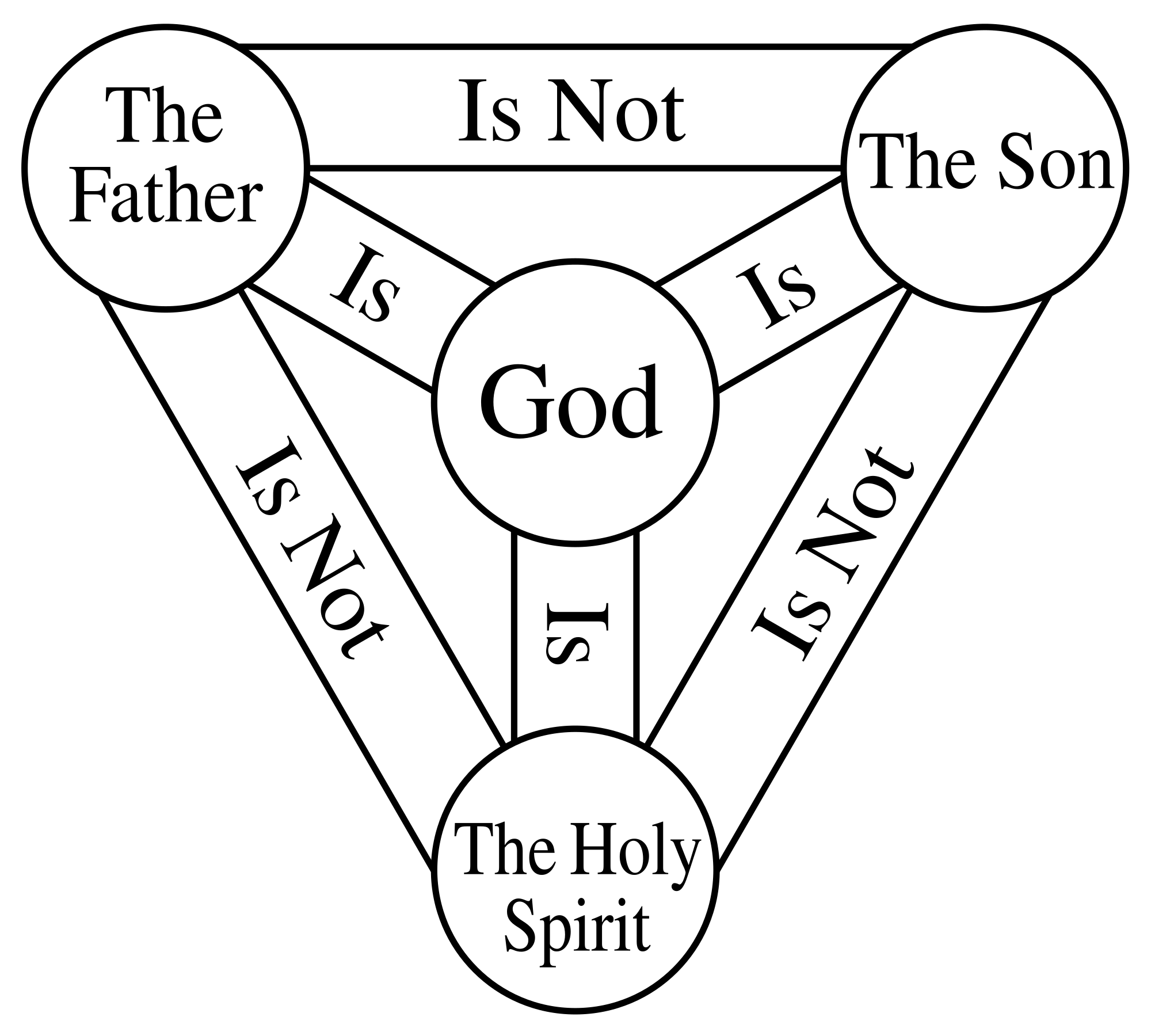
The Shield of the Trinity

Traditionally, today’s liturgical office includes an ancient text commonly called the Athanasian Creed. This text begins with a phrase which is quite politically incorrect in our over-sensitive days: “Whosoever will be saved, before all things it is necessary that he hold the catholic faith. Which faith except every one do keep whole and undefiled; without doubt he shall perish everlastingly.” The text then professes the Catholic belief in that most central of doctrines for our faith, that which we are celebrating today: the Most Holy Trinity.
With the descent of the Holy Spirit upon the Church last week on Pentecost, God reveals to us who He really is in His fullness. God, being greater and more exalted than humanity, desires us to know Him, so that we may love Him and serve Him in response. The Bible can be summarized as God’s gradual revelation of Himself to the greatest of His creatures: man. We hear in the first reading about one of the greatest of those revelations to Moses on Mount Sinai. The encounter we hear, however, is not the great exchange in which God gives Moses the Ten Commandments; this particular encounter is after the sin of the Israelites in creating the golden calf and worshipping it as a false god. Yet the Almighty deigns to reveal, even after the sins of men, who He is: the one supreme Lord, He who Is as the actual Hebrew name of God translates, a God slow to anger and rich in kindness and fidelity.
Yet this does not fully reveal to us mere mortals who God is at His innermost being. It is not until the coming of the God-man that we are given the fullness of God’s being, a revelation that still leaves us in mystery. While the reception of the Holy Spirit concludes this revelation, we are still shrouded by questions. How can One be Three, and Three be One? How do the Father and the Son and the Spirit all relate to each other? The great danger in talking about the Holy Trinity is slipping into error, and it’s not too hard to do that. But what can we really say about the Trinity?
It is hard to say everything that could be said about the Trinity in a short homily, but the essentials must be covered. We worship one God, not three; the Father is God, the Son is God, and the Spirit is God. All three receive the adoration and glory that is due to God alone. Yet they are distinct from each other: the Father is neither the Son nor the Spirit, the Son is neither the Father nor the Spirit, and the Spirit is neither the Father nor the Son. The deity at the heart of our Catholic faith is one in the divine substance yet three persons as well, each with their particular role: the Father as the begetter, the Son as the begotten, and the Spirit as the bond of love between the Father and the Son. Clear?
Of course it isn’t that clear. This is why we describe this belief as the mystery of the Trinity. It is mystery because it is something that cannot be completely comprehended by our rational faculties. Saint Anselm defined God as that than which nothing greater could be conceived. If we can conceive it, it is still limited, yet God is infinite, incapable of being bounded by our lower corporal minds. If you think that you understand completely who God is, then you’re not thinking of the living God. While God’s complete being may be beyond our complete comprehension, yet He still desires us to know Him as He really is.
This is the work of the Church: to reveal God to the world. Everything the Church does is ultimately with this goal in mind: to reveal God as God revealed Himself, through Jesus Christ - His Son and our Lord. But the Church cannot carry out this task without that revelation itself. This is why the Church is not just a group concerned with external activity, but is also concerned with interior reflection and development, which is found in her sacred liturgy. For the liturgy is not primarily a tool for evangelization and conversion of non-Catholics; it is meant to be the means whereby the Christian faithful, those already members of the body of Christ, come to encounter more deeply and more richly the transcendent Trinity who becomes immanent through signs and symbols so that we may not be ignorant of Him, but drink deeply of His fullness.
While my time here at Saint John and Transfiguration has been short, I hope that I have helped you to realize more completely this essential truth of our Catholic faith. This is why I have sought to restore the traditional posture of the priest and people turned together to face God. This is why I have tried to make the sacred liturgy as noble and as beautiful as it can be here. Because we are not here to just be family or a club or anything the world offers; if that were the case, we’re doing a terrible job of it. We are here in this church because we are ultimately meant to be turned towards God, the Triune God, the God whose inner being as the Trinity reveals what our patron Saint John declares simply in his letters: God is love. It is that regular encounter with the Father and the Son and the Holy Spirit that is meant to transform us so that the rest of our lives are sanctified by His grace and we can then live not as we did before our baptisms - living in sin and error and darkness - but to live in the glorious and loving light of God.
My prayer for you all as I leave is that you may continue to grow through the wondrous exchange of the Mass to be the holy people of God, to be what you are meant to be. Do not keep to the old ways of ignorance, but draw nearer to Him who has so much more to show you than I could even if I were to stay for forty years. Do not be like so many around us who focus on themselves, but radiate with that same divine light as did Moses when he encountered the living God on Mount Sinai. Turn to Jesus, the one Word spoken by God before all time, and listen to Him, for He is the best teacher and priest you will ever have. May the light and love of the Trinity burn in your hearts more fully each day, and may everything Saint Paul commands and exhorts today be yours as well, so that we may all do as the Psalmist exclaims: to give the Trinity glory and praise forever in the banquet of Heaven.

Sunday, June 4, 2017

Pentecost

We conclude the Easter season today with the feast of Pentecost. While we spent forty days in penance during Lent, today marks the fiftieth day of the Easter celebration, reminding us that our joy in the victory which Jesus won in His Resurrection is greater than our sorrow over our sinfulness. In fact, the name Pentecost literally means fifty in Greek. It is this day in which God pours forth the Holy Spirit upon the Apostles to start the Church.
In the Old Testament, God commanded the Israelites to celebrate this day as a harvest festival and as a commemoration of the giving of the Law to Moses on Mount Sinai after God had freed the Israelites from slavery in Egypt. It is most appropriate, then, that the outpouring of the Holy Spirit occurs on this day, to remind us that it is by the Spirit of God that we have everything we possess: not just our salvation but the fundamentals of existence, such as food, clothing, shelter. God always acts with the Spirit: we should recall how Adam received the Spirit of life in the very beginning in order to live, or how the Spirit is called upon by the psalmist to renew the face of the earth. But what or who is the Holy Spirit?
Put simply, the Holy Spirit is the love between the Father and the Son. This love is so real, so tremendous between the two, that it is a divine Person, hence the Most Holy Trinity, which we will celebrate next Sunday. But this Person who is love does not remain only between the Father and the Son; He is sent down upon humanity to be the bond of love between God and man. It is in the Spirit that we are able to be united to Jesus Christ, as Saint Paul highlights in our second reading. It is through the Spirit that we are able to become holy, for only by His presence in us are we able to pray as we ought or to know what it means to be holy.
Above all, God sends forth His Spirit so as to renew the face of the earth. How does He do this? By His indwelling within our souls. God does not send the Spirit only on one occasion, but pours Him out upon us like water from a fountain. We are always in need of the rejuvenating graces and the ceaseless presence of the Holy Spirit to become holy, to be what we are supposed to be. We ought to make our own what the sequence for today’s feast beseeches of the Spirit: “Cleanse that which is unclean, water that which is dry, heal that which is wounded. Bend that which is inflexible, enflame that which is chilled, correct what goes astray.” Only in the Spirit can we be good, only in the Spirit can we be just, only in the Spirit can we be holy.

Let us beseech God on this day to pour out upon us once more His Holy Spirit so that we may be what we were created to be. Let us make our own those wondrous words, “Come Creator Spirit! Come from thy heavenly throne, and make our souls thine own!” Let us beg God to renew us by His Spirit so that we may be engulfed in the fire of His love, transformed from mediocrity into the saints we are supposed to be. Do not remain cold or lukewarm, but be stirred anew to live by the gifts of the Holy Spirit. May our parish truly be a temple of the Holy Spirit, where the fire of love burns day and night, the unquenchable fire that does not destroy but purifies and prepares all for the glories that await the faithful in the eternal splendor of Heaven.

Sunday, May 28, 2017

Ascension Sunday

Each year, Holy Mother Church commands her pastors to bless a large candle at the Easter Vigil. This candle is then processed through the Church and placed in the sanctuary, where it burns at each Mass of Eastertide until today.  This Paschal candle is meant to be the symbol of the resurrected Christ, who is the Light of the World banishing the darkness of sin. This candle reminds us that He who once was dead lives once more and does not rest in the tomb, but remains close to His apostles, showing them His sacred wounds and further instructing them on the mission that He has given to them. But on this, the feast of the Ascension of our Lord into Heaven, Holy Church commands us to extinguish this candle so as to better awaken us to the reality of this feast: the reality that our Lord no longer physically remains on this earth, but has ascended to the right hand of the Father, as we profess in the Creed.
Yet we should not greet this moment with sorrow over our Lord’s Ascension, as if He is leaving us behind or abandoning us. For, on the contrary, the Psalmist tells us that “God ascends in jubilation, and the Lord ascends with the sound of the trumpet” (Ps 46:6). We are called to rejoice on this day, not to be sorrowful. We are to rejoice, for our God and King mounts His throne prepared for Him, to reign over His Kingdom. We are to rejoice, for our High Priest ascends to the altar of Heaven, where He who is ever-living makes a continual intercession for us before God (Hebrews 7:24-25). We are to rejoice, for the Lamb who was slain goes to prepare the wedding feast in which the faithful will be united with Himself at the end of days (Rev. 19:7-9).
We should not be sorrowful that He has left, because this world is not ready for Him to rule. Our Lord now possesses that glorified and incorruptible body which is promised to all on the last day, but this day has not yet come. Our world is still filled with corruption and sin, still remaining dark in many corners of the world, still blind to the true Light which burns without being extinguished. How can He remain here in that state of finality when the world remains incomplete? Our Lord ascends to Heaven so as to remind us that we are not meant for the world as it stands now, but for the glories that await in the world to come.
But whom are these glories meant for, if not for all of humanity? And how will all hear of these glories, if no one preaches them, if no one is sent out to preach? (Rom 10:14-15) This is why the last command given by Christ to His apostles is to “go out into all the world and preach the Gospel to every creature”, waiting for the Holy Ghost to come so as to be His witnesses to the utmost parts of the earth (Mark 16:15; Acts 1:8). This is the mission of the Church, that mission which we must pray for, support, and do in our own lives, just as Jesus commanded His apostles before going to His seat at the right of the Father.

Let us then rejoice at this Mass today, that the Lord has risen on high and taken captivity captive (Ps 67:18). Let us pray to our Lord this day that He may be nearer to us not in His physical presence, but in His real presence in the Eucharist. Let us also pray for the fresh outpouring of the Holy Spirit this Pentecost, that we may be strengthened and encouraged to proclaim the Gospel message to every creature. But let us also prepare ourselves for that day when He will return, as the angels promised. Let us be watchful and look to the East in eager expectation of our Lord coming as He left us, so as to subject all beneath His feet and to rule in that eternal Kingdom where all shall be gathered to Himself and share in His glory for ages upon ages.

Sunday, May 14, 2017

Fifth Sunday of Easter - 100th Anniversary of Fatima

The place: Europe. The year: 1917. War has plagued the continent for over three years at this point. The ravages of trench warfare, poison gas, machine guns, and tanks never seems to end. But another war is brewing in Russia, where revolution will explode in October, killing the tsar and his family and leading to the rise of godless Communism. Everywhere it seems as if chaos and disorder rule the day. It is in the midst of this most depressing time that something incredible occurs in a small town in Portugal.
Three shepherd children are caring for their families’ flocks in the fields when they see a bright light. When their eyes adjust, they see a lady clothed in white. She asks them to join her in praying the Rosary. After the Rosary, she promises to visit them for four more months. Thus ended the first apparition of our Lady at Fatima in Portugal, which occurred one hundred years ago yesterday. In fact, Pope Francis has been in Fatima to celebrate the centenary of the apparitions, to honor everything that Mary did at Fatima, in particular her message. But what is her message?
Our Lady revealed to the children a few secrets. First, she showed them what hell is really like. The tortures and pain were so tremendous that one of the children remarked later on that the children were so scared by what they saw that only the assurance of Our Lady that she would take them to heaven calmed them down. The Virgin reminded them that this is what awaits sinners who do not repent and turn to Jesus. It is the ultimate fate for those who reject what Jesus declares in the Gospel today: “I am the way, and the truth, and the life.” There is no other way to follow to get to heaven except the way of Jesus; there is no other truth to believe except the truth that Jesus is Lord and King, victorious in His resurrection from the dead; and there is no life possible except life in Christ, animated by His grace and mercy to be the saints we were meant to be.
Not only did she reveal the truth about hell, but the Virgin Mary also predicted that another war would break out after the current war ended if men did not abandon their wicked ways. She also gave a prophecy of the Church in calamity, destruction seeming to occur everywhere. Yet, despite all of these terrifying visions and prophecies, the Lady ended all of this with a simple but hopeful promise: “In the end, my immaculate heart will triumph.” In truth, how can she not obtain the triumph? That heart has most completely and most willingly obeyed God from the very first moment she could act until now and until the end of time. How can Satan overcome a heart most united to God through her divine Son?
Indeed, the victory of Jesus Christ is shared by the Virgin Mary because she is the greatest of all disciples. She shows us how to follow Jesus the way; she shows how to adhere to Jesus the truth; and she is the best witness of how to live in Jesus our life. All of the saints put together cannot match her fidelity, her virtue, her purity, her sanctity. This is why we crown her as Queen - because God has already crowned her Queen of heaven and earth by her faithfulness to everything He commanded her to do.

Let us indeed crown our Lady today, but not only with a crown of flowers, but in our hearts and minds as our mother and our queen. Let us heed the warning that she gave at Fatima and still gives today: repent and believe in her Son. Convert, and be no longer the slaves of Satan, the pawns of a sinful world, but become the children of Mary, the brethren of Jesus. Let us do what she asks of us, so that we may join her and all the angels and saints in the Father’s house, where a place is prepared for all who adhere to Him who is the one way, the one truth, the one life.

Sunday, May 7, 2017

Good Shepherd Sunday - First Communion

My dear children, today is indeed a special day. It is the first day that you will join us in receiving Holy Communion. You will approach to receive that most precious food that we can ever eat: the Most Holy Eucharist. You may be asking, “Why is this so important?” Hopefully, your teachers have helped you to understand the greatness and importance of what you are beginning to do today. You are not receiving any normal food, but you are receiving Jesus Christ Himself, who gives us His Body and Blood to be our spiritual food.
Why is it that Jesus does this? Why does He want us to eat His Flesh and drink His Blood? That is because Jesus wants to draw us closer to Himself. If we want to be near our parents, our friends, or anyone we care about, we move closer to them. But we can’t normally do this with someone who is so far away as to be incapable of touching. This is the great marvel of the Eucharist: although Jesus is very far away in Heaven, He comes near to us in the Eucharist, nearer than anyone else can be to us, because He is inside us whenever we eat the Eucharist.
And what does Jesus do while He is in the Eucharist? He tries to lead you to be good, to be holy, to be what you were created to be from the beginning. We call this day Good Shepherd Sunday, because we hear Jesus in the Gospel calling Himself by this title. A shepherd leads the sheep to where they can eat and be safe, and Jesus wants to do the same thing for us, we who are His sheep. In the Eucharist, we can hear Jesus tell us what it is that He knows is best for us, so that we may join Him completely in Heaven.

My dear children, rejoice that Jesus calls you to join the rest of us in receiving the gift of the Eucharist. Treasure this day as the day you began a new phase of your relationship with our Lord by the Holy Communion you are about to receive. Pray to Him today, and every day you receive Him, for everything you need to be holy, to be with Jesus in this life and the next. Ask Him, our Good Shepherd, to tell you your future so that you may live it out as best as you can. Let us not receive Communion lightly, but treasure each reception so that we may enjoy it here on earth, and rejoice completely in it in Heaven.

Sunday, April 30, 2017

Third Sunday of Easter (OF)

Why is it that our Lord is not known at first by the disciples on the road to Emmaus? Did they not remember His face, His voice, His walk? How could they see Him and not know it was Jesus speaking to them, guiding them, encouraging them? Because they did not believe in Jesus as He really is. The faith of these two disciples was not in the God-man, but in a revolutionary, one who would restore the kingdom of Israel. They looked for the redemption of Israel from the rule of the Roman Empire, for God to elevate them to being the greatest power. But God did something far greater for them through Jesus, something which God had foretold throughout the centuries before the birth of Christ.
The great tragedy of many Catholics is that they don’t understand who Jesus is. We often try to paint Him as being close to what we are. If we are more liberal-minded, we see Jesus as the great revolutionary working to free the poor and liberate people from stuffy dogmas and doctrine. If we are conservative, we see Jesus as being more concerned with family values or human life or anything that is traditional and beneficial to human growth and prosperity. Yet Jesus cannot be painted into a corner; He is far more different than that.
This is the reason why the two disciples could not see Jesus when He was before them on that road: they were too enraptured in their particular understanding of Him. This is why Jesus almost seems to laugh as He exclaims His wonder that they do not realize who the Christ had to be and what He had to do. We can try to make Jesus be a guerilla fighter or a company man, but He is ultimately the Christ - the one anointed by God to be the Paschal lamb who takes away the sin of the world.
Do we see Jesus as He really is? Or do we keep Him in our nice, simple images that are rather comfortable to us? If Jesus does not challenge us, does not force us to reconsider our views or our ideas, is He really a good founder of a religion? Each Sunday, we gather together to do the same things these two disciples did: we break open the Scriptures to discover Jesus, we listen to the homily so that our hearts may burn as did the disciples’ hearts, and then we break the bread and discover once more Jesus really and truly present among us to be our spiritual food.

Brethren, let us humble ourselves as were the two disciples on the road to Emmaus. Let us hear Jesus trying to reveal Himself to us through the sacred actions of the Church: the Scriptures, the preaching, the sacraments, in particular the Eucharist. Let our hearts burn with a desire to know Jesus, to love Him, and to serve Him in everything that we do. As we continue to rejoice in the victory that He won for us in His death and resurrection, let us not remain unaffected by what He did, but let our eyes be opened as were the two disciples so as to see Jesus for who He truly is: the savior of the world. May we receive this tremendous grace, so that we may progress more quickly on our own road, the road to eternal life.

Sunday, April 23, 2017

Divine Mercy Sunday

As we bring the Octave of Easter to a close, we reflect on the great joy of the Resurrection which we have celebrated for the past seven days. We rejoice that Jesus is not dead, but that He is risen from the dead, victorious over all our enemies. But are we really joyful? Are we actually participating in that victory now? It’s easy to come and sing “Alleluia!” and rejoice that Jesus is no longer dead. But is he alive in our hearts as well?
Perhaps we know the story associated with why today is called Divine Mercy Sunday. A Polish nun named Maria Faustina recorded her visions of Jesus desiring that the world know His message of mercy, in particular on this day. This message, and the devotions and practices associated with it, spread in large part by the work of Pope St. John Paul II, who learned of this nun’s diary and message and spread it in everything he did. We all remember last year as the Extraordinary Jubilee Year of Mercy, called by Pope Francis to deepen our understanding of mercy and to receive it. But did anything change?
There seems to be two different mindsets in the modern marginal Catholic. The first is the presumption of mercy, in which it is known with absolute certainty that God has forgiven me, is forgiving me, and will forgive me. But this is not known through the frequent reception of the sacrament of mercy - the confessional. It is presumed that, since God is love, and God loves me, He’ll forgive me out of love. The other mindset is amnesia concerning divine justice. This idea goes something like this: since God is love, and God is merciful, He won’t judge me, He won’t condemn me to Hell. All I need to do is love Him a little, and everything is fine.
Brethren, I do not know where these ideas have come from, but they are both fundamentally misguided and dangerous to your eternal salvation. Perhaps it is from the chaos that has wrecked the Catholic world since the 1970s, not only as concerns the liturgy but catechesis concerning the divine mysteries. Either way, many of you live from false principles that lead to dangerous practices. God is indeed merciful, as the events of Holy Week demonstrate for us. Yet mercy without justice is a free pass to do whatever you want, and that is not what Jesus offers us from the Cross.
Why is it that Jesus endured the heart-wrenching sufferings of His Passion and Death? Why did the Father call Him to do this - to take on our flesh, to suffer, and to die? Why did all of this come to pass? So as to win for us the divine mercy we need to be reconciled to God. However, this is not a mercy that continually forgives while never asking anything from us. God pours out His mercy upon us so that we may be strengthened by Him to live our lives in faith and in justice. We see this in the first Christian community, as recorded in the Acts of the Apostles. They abandoned their sinful ways and devoted themselves to the virtuous Christian life, being transformed by the mercy of God to be able to live upright and holy lives.
This is the great mercy Jesus shows to Thomas in the Gospel. Thomas is doubtful, wary of the arguments that Jesus has been raised from the dead. But Jesus comes to him on this day and reveals Himself, showing the wounds in His hands and feet, calling Thomas to put his hand in the open wound on His chest, from which poured forth the blood and water by which we receive the new birth, as St. Peter says in the second reading. Jesus comes to Him and offers Himself so that Thomas may not remain in a state of indifference or doubt. Jesus wants us to receive that same mercy, which He offers to us not in His physical presence before us, but in His real presence in the sacraments, especially the confessional and the Eucharist.

Brethren, do not remain obstinate in presumption or forgetfulness! God’s mercy is meant to transform us from lives of quiet desperation to lives of holiness and communion with God and with each other. Jesus wants to pour out His mercy upon the world so that we may indeed receive His peace, that same peace He offers the disciples each time He appears to them after the Resurrection. Receive His mercy, and become what the holy child of God you are meant to be. Do not merely rejoice at the Resurrection, but be transformed by this mystery so as to live your lives having faith not in your own abilities or actions, but in the mercy of God won for you in Christ Jesus. Do as Saint Peter tells you with whatever remains of your life: attain the goal of your faith - the salvation of your souls.

Sunday, April 16, 2017

Easter Sunday

As the dust settles, as the light rises, as the people awake, this morning is different than any other morning. Normally when we wake up, we rise from sleep, from a state that does not persist. We are not meant to be asleep forever. But there is one who rises this morning who is not supposed to rise, not supposed to be awake at this hour. For death is supposed to be a persistent state, one that does not end, in fact, one that is the end for us all. Yet He is risen, and He will not enter that state ever again.
The prophet Isaiah proclaimed that one would come along who would become the suffering servant of the Lord, one who would “cast death down headlong for ever” (Is 25:8). Saint Paul would proclaim a few decades after this day, “O Death, where is your victory? O Death, where is your sting?” (1 Cor 15:55). For indeed, on this day Death is cast down, humbled in the face of the One who once died but now will die no more. Death has no claim over Him, but He has one claim over Death: victory.
He whom John the Baptist called the Lamb of God has been immolated upon the altar of the Cross. He whom Pilate cursed at when he mockingly asked, “What is truth?”, now stands outside the sepulcher as the complete Truth revealed by God. He whom the priests shamed as being incapable of saving Himself now towers over every enemy of God and man as the one who has saved all. He is the Paschal victim, the innocent lamb whose blood reconciles sinners to the Father, as that beautiful sequence proclaimed.
What more is there to say on this Easter day? Jesus Christ is risen, risen from death, from the bowels of Sheol, from Hell itself as we say in the Apostles’ Creed. He stands over Satan, over sin, and over death as the Victor. The bonds of slavery are broken; we are set free so that we may enter into the eternal Promised Land of God. Yet this victory, while already accomplished in Christ, is not yet completed in us.
Jesus Christ has brought about a new creation, but the former is still around us. And like bad yeast which corrupts the loaf, we too can be corrupted by this world of sin and death, returning to our former ways, losing that Promised Land forever. We are all free creatures; the eternal choice stands before us: Jesus and life, or sin and death. The struggle is real, but the victory is also real.

Rejoice, brethren, for this day is the day which the Lord has made! Rejoice, because Christ our light rises in the east! Let us turn and greet Him with the sacrifice of praise, turned together towards the risen Son. Cast off the shackles of sin and be free in Christ Jesus the Lord. Become the new dough that rises in this hungry world, the bread of sincerity and truth. Proclaim by your lives that you feast on the Paschal Lamb, that you are sustained by the meat of the Eucharist, and become what you receive. Be glad, brethren, for Jesus has won the victory. Let us follow Him so as to receive the reward of that victory, the fruits of his labor and ours: the eternal victory feast of Heaven.

Sunday, April 2, 2017

5th Sunday of Lent - Death and Life

What do we fear most about life? What is it that we dread most about our mortal nature? There is one thing common to all people of all ages that we dread and fear: death. We fear death, that undiscovered country from whose bourn no traveler returns. We hate death because we fear it, because we want to avoid it as much as possible. Our generation continues the quest for immortality, seeking the fountain of youth not in some mythical land far away, but in a pill or in a computer. We will do anything rather than die.
But death comes for us all. We cannot avoid it, we cannot pretend it will never happen. Yet there is more than one way to die. Certainly, our physical bodies can die. However, we can also die spiritually. How does this happen? It is the same as our physical death: we lose life. But how can we lose our spiritual life? We lose it when we remain enveloped in sin. We lose it when we are consumed by sin. We lose it when we choose sin over God. Our spiritual death is never just a death, but is always a suicide, for we choose that death for ourselves. Yet God desires not the death of the sinner, but that he live.
We hear about the greatest of Jesus’ miracles in the Gospel today, when He raises His friend Lazarus from death, and not just any death: Lazarus had been dead in the tomb for four days, a sign taken by the Jews to mean that one was completely and totally dead. Jesus, who is the resurrection and the life, by His power and authority restores Lazarus to life. It is probably the greatest sign that Jesus offers up to this point in the Gospels. But it also has great meaning for us: it demonstrates that God is the Lord of life, and that He can restore life whenever He wills.
We hear in the psalm today that with the Lord there is mercy and fullness of redemption. God desires life for all of us, as we see in the vision of Ezekiel in the first reading. For indeed, who can truly stand in innocence before the Lord? As the Psalmist puts it, “If you, O Lord, mark iniquities, Lord, who can stand?” None of us are totally innocent before God: all have sinned, both as individuals and as the human race. Yet God desires not death, but life. Knowing our weakness, knowing our infirmity, God desires to revive humanity by redeeming it from the bonds of sin and Satan, and this work will be accomplished so very soon in the passion and death of Christ our Lord.
Yet this redemption is not a ticket easily purchased, nor is it merely a free gift. God does offer us redemption and salvation, but it comes at a cost: our death to sin. Saint Paul recognizes this as he writes to the Romans in the second reading. Salvation is not something that is merely bought with a few words: it is something that costs us our life in sin. Saint Paul is not rejecting the physical world in saying this, but the truth that we are not meant to live for this world, to live for the flesh. We are meant to be animated by the Spirit of God to live for Christ. We cannot have the Spirit if we remain dead in sin. We cannot be lead by the Spirit if we cling to sin. We cannot live in the Spirit if we reject that same Spirit.
The raising of Lazarus from the dead serves as a sign that Jesus can raise any soul to life, even a soul that has been steeped in sin, wallowing in sin for decades. The history of the Church is filled with scandalous sinners who converted and became great saints: egotists, sex addicts, murderers, heretics, drunkards, even worshippers of Satan. Yet their eyes were opened to the error of their ways by the grace of God, they repented of their sins, and lived their lives with the same confession we hear on the lips of Martha: that Jesus is the Christ, the Son of God, the one coming into the world to save it. And we can do the same as them, if we believe as Martha and Mary did, that this same Jesus who weeps over death desires us to live and to live fully.
As we enter the last two weeks of Lent, we are plunged more deeply into the mysteries of these days. We are preparing for all that Jesus did and suffered from this day until Easter Sunday. Let us not merely listen to these actions and events, but let us be moved by them. Let our hearts be filled with contrition for our sins and a true desire to repent of them. Let us seek the mercy that can only be found in the confessional, for God desires us to have a sure sign of our pardon. Brethren, do not let your hearts remain dead to sin, but let them be alive in Christ Jesus, in His Holy Spirit. As Jesus raised Lazarus from death, so too will God raise our souls from the death of sin, but only if we respond to His grace and seek His mercy. Let us indeed seek His mercy, so that we may have the fullness of redemption in the life to come.

Sunday, March 26, 2017

4th Sunday of Lent - Blindness

Which sense would you be least willing to lose if you had to lose one of your five senses? For most people, sight is the sense they would pick to keep most out of the five. While we don’t want to lose any of them, sight seems to hold sway because it is the most useful for everything we do. Without sight, we cannot experience beauty, we would never know the faces of those we love, we would lose a tremendous amount of knowledge. Could you imagine not knowing colors?
Yet we not only possess physical sight via our eyes but rational sight from our minds. Unlike the rest of the animal world, we are able to possess knowledge and wisdom, to grow in our experiences and shape the reality as we have made it up to this time. But, just as our physical eyes can suffer from glaucomas, our rational sight, our inner eye, can become darkened. We can lose that pristine vision we once had of right and wrong, good and evil, holy and wicked and begin to see the world in bland greys. What causes this inner eye to lose the light? It is sin that darkens this eye, and only one can cure us.
In our Gospel, we hear that a man who was blind from birth receives his vision by the healing power of Jesus. This man can represent each one of us, for we too were born blind, not due to a physical defect, but to the defect of original sin upon our souls. And just as Jesus lifts the blindness from the blind man’s eyes, so too does He lift our original blindness from our souls in baptism. But we can lose that original vision over time, and we can even become blind once more, only we are trapped in a worse blindness because we had seen the Light of the world and beheld His glory, yet rejected it for something else.
We all have something that blinds us to the total truth which Jesus teaches us. For some, it is a favorite sin. For others, it is arrogance. Some are blind because of ignorance while others are blind from apathy. Whatever it is that stands in the way of clear vision, it is something that can be removed. But do we want it removed? We may be like the child who sits too close to the TV and doesn’t want to lose that spot, even though we may gain better vision because of it. We may be like the Pharisees in the Gospel, who do not believe that they are blind, which is the worst kind of blindness.
Jesus Christ is the Light of the world, the light proceeding from light, as we profess each Sunday in the Creed. He does not want us to remain in darkness, the darkness of ignorance, the darkness of pride, the darkness of sin. He wants us to see clearly, to be the children of light, as Saint Paul wants also, as we hear in the second reading. But to remain in the light means that we must be freed of sin, for the light only “produces every kind of goodness and righteousness and truth”. It means that we must cast off that which blinds us or keeps us in the darkness, and walk in the light. We cannot have it both ways, pretending to be children of light while assisting at Mass but living as if we belong to this world, the world of darkness, remaining secret and hidden rather than visible to all.
Brethren, let us be the children of light! Let us not remain in our sins or in our pride or whatever makes us blind. Let us be healed by Jesus the divine Physician so as to see clearly the Son of Man leading us to God. Let our hearts not find their rest in the filth and darkness of sin, but in the glory and light of God. Let us see the dawn of Easter rising on this day, the midway point of Lent. If we have done little to amend our life, let us not delay! The sun of the Resurrection rises in the east. Do we look for it eagerly, or do we cower in our blindness? Do we wish to remain in the darkness, or shall we be healed of our blindness, so that we may see the light in this world, and rejoice in that same light in the world to come?