Last week, we looked at the common portion of the collects for the Sundays which form the bookends of the liturgical year. We looked especially at the Church's use of the word "Excita!" To stir us anew to conversion and progress in the spiritual life, in preparation for the end of days. This Sunday, the first of Advent and the inauguration of the new liturgical year, utilizes the same word in its collect. What inspires the Church to repeat this word so soon, and also to use it at the beginning of the year?
A further examination of the collect will help us to understand this week's usage. The collect begins: "Stir up your power, O Lord, and come." While last week was addressed more to our needs and our conversion, this week sees the collect addressed to God Almighty and beseeching Him to come. In praying this, the Church opens up to us the mystery of Advent and its importance for us. For the heart of Advent is concerned with the coming of God into the lives and history of humanity.
Certainly, we are praying for God to come and save us, to free us from our sins. In this, we are joining the ancient Jews in their prayer for deliverance, in their prayer for redemption. How long did they suffer in Egypt under the cruel slavery of Pharoah! How long were they thrown about under the various emperors and princes of the eras, becoming a plaything in those exalted men's hands! How long were they even exiled from that which had been sworn over to them, the Promised Land! They sought for the day when God would deliver them from all their enemies and reign over them forever in the kingdom of gladness and joy. Yet how little did they expect God to become personally present to them, to truly come to them as a neighbor comes to a neighbor.
We, indeed, are the result of those prayers, of those expectations, though these prayers and expectations have not yet been realized completely. Christ our Savior has already come in history, has come to redeem His people, the people He has chosen to be His own. Truly has the Psalm been fulfilled which says, "All who expect you, O Lord, shall not be confounded" (Ps 24.3; see the Gradual). All those who have waited and are waiting for the Lord to come do not wait in vain, for the Bridegroom is coming, whose birth we will celebrate so soon.
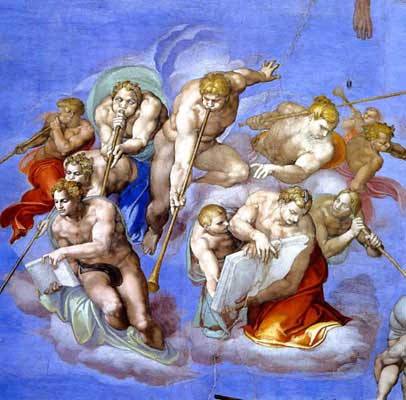
Yet we are not merely commemorating the expectation of the nations to arrive. We are also a people in waiting. We, however, are awaiting not the fulfillment of the prophecies, but for the fulfillment of God's design. This is what is hinted at in our Gospel for this Sunday. The birth of Christ into the world was only the beginning of the final fulfillment, and Our Lord gives us warning of His final coming, just as we heard last week. When Christ comes this final time, He will not appear in humility and poverty, but in power and majesty, enthroned in glory as the Just Judge come to reckon to each his own. How dreadful shall that day be for those who have not followed the Lamb, but their own foolish designs.
This is the second way that the Church calls upon God to stir Himself up as if from slumber. For the Church, the Bride of the Heavenly Bridegroom, desires to unite herself to the One she loves, to at last enter into the wedding feast prepared for all eternity. Truly, we should live in fear of that day if we are not progressing in sanctity and repentance, yet for the Christian, the end should be awaited in eager hope. We are not meant to live forever in this sin-filled world, but we are meant to be with God, in the intimate union for which we have been created.
But this talk of intimate union draws out a third and final way by which the Church calls upon her Lord through this collect. Yes, God has come within the pages of history. Yes, God will come at the last day, on the last page, to close the book of life. But there is a hidden way by which Christ comes to His Church, a way that is only illuminated to us by the saints. This is the way of Christ dwelling within the soul, of the soul becoming Christ-like, as St. Paul tells us has happened to him.
Christ is present to us insofar as we conform ourselves to His example and His teaching, insofar as we emulate His earthly life. This is the secret of the saints: all of them, though each in their own way, strove not only to imitate Christ, but to become Christ. Read any life of any saint, and you will see them growing further apart from sin and the world and the flesh, and you will also see they draw nearer to Christ: through prayer, through penance, through growth in virtue, and especially through growth in charity. We can have Christ in our lives here and now, the more we turn away from all that is hateful to Him and desire more and more to fill our lives with the good gifts and graces He gives us.
Let us, indeed, beseech God to come to us. Let us pray that He will fulfill His promise to become a son for us, a child among us. Let us pray that He will come at last as the glorious and triumphant King at the end of days. But let us pray more fervently that He will come into our hearts, into our churches, to dwell among us as the only object of our love, as the only means whereby we live and move and have our being. Take heed to the words of St. Paul in our epistle today, that we will "put ye on the Lord Jesus Christ: and make not provision for the flesh." Let us pray that God will be stirred up so that we may be stirred more completely to know Him, to love Him, and to serve Him, so that we may more completely rejoice at those words: "The Bridegroom comes; go out to meet Him."