Showing posts with label Solemnities. Show all posts

Thursday, December 8, 2016

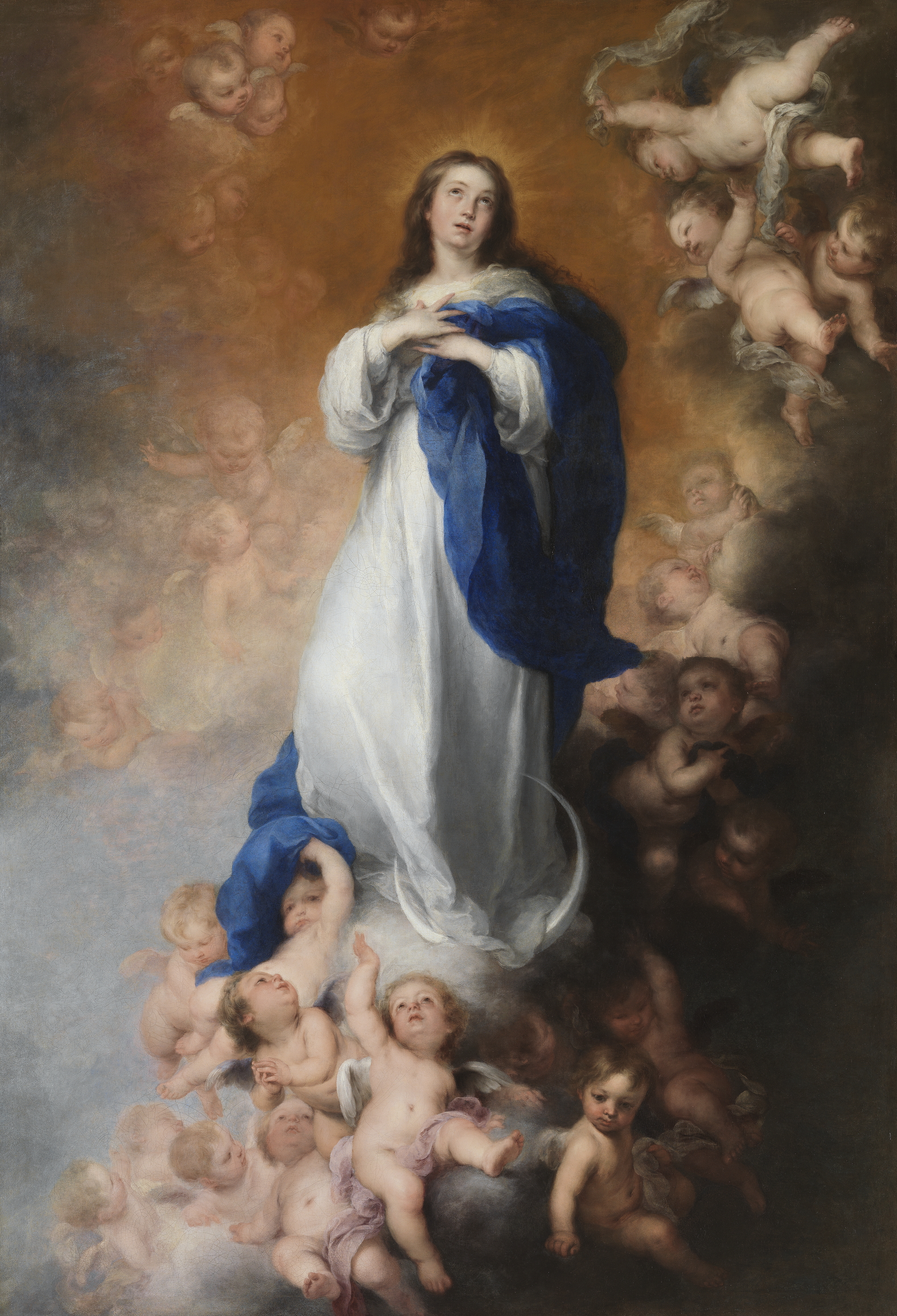
Immaculate Conception

Saint Bernadette Soubirous and Our Lady of Lourdes

In 1858, a young girl was walking with her sister and a friend near her village to collect firewood for her poor family. The other two crossed the creek near a grotto where pigs used to shelter after they were fed by the farmers, but the girl did not due to her poor health. As she waited near the grotto, she heard a noise like a wind blowing yet none of the trees stirred. She looked up at the top of the grotto and saw a most beautiful woman smile at her. Over the following weeks, this girl, Bernadette Soubirous, would pray with this lady and obey her requests. When she finally asked the lady who she was, the lady told her, “I am the Immaculate Conception.”
This is the wonderful account of the apparitions of Our Lady at the small town of Lourdes in France. Today, Lourdes is one of the most visited religious sites in the world. We are blessed to have an image of both Our Lady of Lourdes and Saint Bernadette in our church. It is appropriate to remember this apparition today in light of this glorious feast day commemorating the first moments of the life of the Blessed Virgin Mary. But we ought to ask ourselves two things. Why did this happen to Mary? And why would she identify herself by this rather formal, theological term?
What we celebrate today is the greatest grace a human being has ever received from God. Pope Pius IX definitively defined the Immaculate Conception in 1854, only a few years before the visions at Lourdes, as the dogma that “the most Blessed Virgin Mary at the first instant of her conception, by a singular grace and privilege of Almighty God, in virtue of the merits of Christ Jesus, the Savior of the human race, was preserved immaculate from all stain of original sin.” (Ineffabilis Deus) But what use is this singular grace and privilege? Why does God grant unto Mary this removal of any and all effects of sin on her person? The answer lies in the season during which we find ourselves: the season of Advent.
We are drawing closer and closer to the birth of Jesus Christ our Savior. This season of Advent is a time for remembering the preparation for this birth along with the reason for this birth. Our blessed Mother was not the first human without original sin: our first parents, Adam and Eve, were also created without sin or any stain of sin upon their souls. However, though they were free of sin, they chose to disobey God and thus fell from that state of original grace and union with God and hindered the rest of humanity, until the Savior would come and restore us to that union.
The Savior of humanity would have to undo the knot of disobedience wrought by our first parents through His own complete obedience to God. Only a completely opposite act could reverse that initial act in the garden. Saint Paul sees Jesus as the new Adam in his letter to the Romans, undoing the actions of the first Adam by obeying God rather than disobeying, by submission rather than betrayal (cf. Rom 5:12-18). But Adam did not fall alone; he fell along with Eve, who also willed to sin. But if Jesus is the new Adam undoing the old Adam’s work, who will be the new Eve to do the same thing?
Not only that, but the Savior needs a human body in order to remove sin from humanity. This Savior, while removing sin from the human condition, was free from sin Himself, being God in the flesh, for God contains no sin or evil in His divine substance and sin cannot remain in the divine presence. We might remember that God commanded Moses and the ancient Israelites to build the ark of the covenant which contained the divine presence in the ancient Temple. God commanded that this ark be made of the finest gold and best materials and that it could not be touched by anything lest it be made impure. If the Lord commands this for the symbol of His presence among Israel, how much shall He demand the greatest and the best of the womb in which He shall be conceived by the Holy Spirit and take on our flesh in such need of purification?
This solemnity, then, marks the immediate preparation for Christmas Day, for the birth of Christ our Savior. In order to take on our flesh, He needs the perfect woman. In order to undo the work of Adam, He needs an Eve to work with Him. In order to overturn our act of disobedience, He needs someone to make a great sign of obedience. This is why the Virgin is graced with the fruits of Christ’s salvation beforehand: that she might cooperate fully and completely when the angel tells her that she will be the mother of the Savior. That instead of Eve’s no, Mary will say “Let it be done to me.”
Through her immaculate conception, the Mother of God is able to aid all of humanity by cooperating in the divine work of salvation. But her cooperation did not end with her acceptance of this son; it continues even now with her reigning with her son over heaven and earth. Just as she came to that grotto of pigs in Lourdes, so too does our Lady come to aid us still tainted by the filth of sin. Just as she smiled at Saint Bernadette and called her to prayer and penance, so too does she smile down at we her children and call us, like a good mother, to be the best we can be, to be saints. Just as she revealed herself as the Immaculate Conception when asked who she was, she still reveals herself to be for us the singular vessel of grace and devotion, the lowly handmaid of the Lord elevated as the Queen of heaven and earth.
Let us rejoice in the Immaculate Conception this day, as we prepare for Christmas. Let us rejoice that the Virgin Mother of God did cooperate with God and help bring about our salvation. Let us praise God who humbles Himself to drop down like dew from Heaven and to become the child of so wonderful a mother. Let us also pray to her that we may be freed of our sinfulness and become more like her every day: obedient, loving, and faithful to God. Let us rejoice in Mary so that we may rejoice more greatly in Jesus her Son.

Sunday, November 20, 2016

Christ the King (OF)

In challenging times, the Church offers a message of comfort to her members. When the world is poised against her, when all are vying to tear her apart from the outside, the Church offers those who remain with her the message of the Gospel today: You shall be with the Lord in paradise. Persevere and win the crown of victory. But in comfortable times, the Church is called to do the opposite: she is called to be a challenge not only to her members, but to the entire world.
The Church must balance the message of the Gospel with the times, for the situation requires the message that the situation requires, not necessarily the message that is desired. How comfortable indeed our times have become! Adults needing safe spaces to shield them from reality and safety pins being worn like badges of honor. Technology overwhelming our personal spaces to the point of making it quite impossible to engage in silence and meditation. Protests and riots over the past few weeks because their candidate was not elected, protests that would be called anti-democratic in other countries. How comfortable we have become indeed.
But our feast today offers us a challenge, a challenge perhaps particular to we who live in these United States, but a challenge all the same. For in celebrating this feast, we are reminded who is ultimately in charge, who is the real ruler, who has the message of truth: Jesus Christ the King of the universe. Truth, we ought to remember, is not wrong because the majority disbelieve it, nor is it right because the majority believe it: it is true because it stems from reality. In our times of excessive comfort even within the Church, the truth becomes a slap in the face that ought to awaken us to the cold hard facts of life.
The truth that we are given in today’s feast is this: Jesus Christ is not only the focus of our religion, but He is the point of unity between God and man, the one by whom we are restored to the Father. Saint Paul outlines this splendidly in our second reading, when he points out how this Jesus of Nazareth is far more than a man: He is the image of the invisible God and also the same God by whom all things were created. This Jesus of Nazareth has become king by birthright, being both God and man, and by the election of the Church, in which He is the head.
So far, that sounds pretty good. Even though we Americans prefer democracy, who doesn’t love a king? But the challenge of this truth is in this kingship of Christ. Kings do not have to pander to us to gain our vote. A king traditionally had two duties intertwined in his office: the duty to God and the duty to his people. The king was mindful that he had received his position by the grace of God and by the assent of the people, and the king must serve both. He must obey the law of God and enact laws for the well-being of men, irrespective of their desires. It is the same for Christ our King.
The challenge presented by this feast day is the challenge of understanding our place in the great hierarchy. We are all under the dominion of Christ our King, whether we accept it or not. The challenge that we face as Catholics is whether we will give assent to His kingship or not. Just as David was made king of Israel by the will of God and the request of the people, as our first reading shows, so too is Christ made the King of the universe by the will of the Father and the assent of the Church. By that assent, each Christian acknowledges that Jesus has full authority over us and that we will obey out of thanks for His redemption and to gain Him not merely as our King, but as our brother.
Jesus Christ is the King of the universe, having dominion and authority over every facet of the cosmos, yet His kingdom must begin within our lives if it will truly extend to all things which He created. The challenge of this feast is to submit ourselves to our King not as slaves, but as those who have been freed of sin by the blood of His cross, through that reconciliation He has made on the glorious altar at Calvary. Though He reigns over everything, Jesus will not force us to be the free citizens of His kingdom; only those who accept Him as Lord and King will begin to receive the inheritance of the holy ones in light.
But how do we accept this challenge and become the true members of the kingdom of Christ? We do this by making Christ the complete center of our lives, by orienting our hearts and minds more to the one who has full rights to them more so than even we ourselves possess. We abandon sin which makes us the slaves of Satan, and we turn to the sacred liturgy, the sacraments, and the devout life so as to be transformed into the citizens of the heavenly and eternal kingdom. We plead with Jesus as did the good thief at Calvary when he said, “Remember me when you come into your kingdom.”
Last week, I announced my intention to begin celebrating the Mass with all of us turned together towards the Lord, praying in a common direction. I gave the first reason for this restoration as a means of orienting us towards the eternal realities. Today’s feast provides us with another reason to return to this quite traditional position. If Jesus Christ is King, if He is meant to be the center of our lives, this truth must be lived out not merely in a philosophical or internal way. We humans need the physical as well as the mental: we use signs and symbols to reflect the truths and beliefs we hold. If Jesus Christ is King, then the sacred liturgy should reflect this reality in the fullest sense.
We are not meant to gather together to worship the priest, to gaze at his actions and marvel at him. The holiest priests are those who make themselves almost invisible before Christ, who is the High Priest truly offering the Mass through the priest. The priest is meant to represent Christ the Head of the body, the Head that looks to the Father in a gaze of adoration and love, to that same Father who gave us His Son so that we may indeed be worthy of His inheritance. Our orientation is heavenly because Christ gazes that way, returning everything to the Father, including us.
Let us acclaim Jesus Christ as our king not merely in word but in action. Let us turn to the King and honor Him as is fitting for the one who endured so much for us. Let us break free of the comforts of this world and accept the challenge of the Gospel so as to gain the inheritance won for us. Let us indeed rejoice in this house of the Lord by making the Lord the focus of our liturgy, of our prayers, and of our lives. Let us seek to reflect more clearly within us He who is the image of the invisible God, He who offers us His kingdom that shall not end.

Tuesday, November 1, 2016

All Saints (OF)

As the leaves begin to change color and die off, as the birds begin to fly south, as the temperatures begin to drop, holy Mother Church begins to turn our mind towards our own end. These last few weeks of the liturgical year remind us that this life indeed has an end; in fact, this whole world has an end. Nothing is truly permanent in this life, but all is fleeting and empty of ultimate value in the face of the finish line. As much as our modern society tries to cheat it, death still comes for every one of us.
For the Christian, however, death does not indicate the final point of personal existence nor does it signify the futility of our labors, our joys, our sorrows, our lives. Death is our reminder that we shall each go before the Judge of heaven and earth when we have passed from this mortal coil and receive the eternal recompense for our earthly conduct. One of the visions of Saint John which he recorded in his Book of Revelation is Jesus standing as the Just Judge over all on the last day, the dies irae as the traditional funeral sequence reminds us. But before that day of wrath comes, Saint John has another vision, which we hear in today’s readings: the 144 thousand and the great multitude before the throne and the Lamb.
It is this group which has already assembled in part whom we celebrate today, for the feast of All Saints is the celebration of all the souls who have begun to receive the eternal reward of union with God in Heaven. Blessed John Henry Newman tells us that “This great multitude, which no man could number, is gathered into this one day's commemoration, the goodly fellowship of the Prophets, the noble army of Martyrs, the Children of the Holy Church Universal, who have rested from their labours.” Every soul in heaven, from the Blessed Virgin Mary all the way to the soul who squeaked out enough contrition for their sins, every soul that dwells in that eternal light is celebrated this day. Why is it that we celebrate these souls today? We celebrate them for the victory they have achieved, for the aid they provide, and for the reminder they offer.
We first celebrate them for their victory. Each of these souls has gained heaven first by the infinite grace of God, given to them through the sacraments and through their daily struggles. Many of them have gained this prize through the shedding of blood; others through the great evangelical labors and counsels such as poverty, chastity, and obedience; others through the quiet small faithfulness of ordinary life. But all of them, whether martyrs, confessors, virgins, or otherwise, have worked for their eternal rest, but they are restless when it comes to we who remain, who still have our own journey.
The saints are not so arrogant that, once they leave this world, they abandon us and focus solely on God. On the contrary, their love of God increases exponentially each day so that they love us even more than we love one another. If they are truly united to God, who desires our individual salvation, why would they not desire it for us as well? Thus do the saints seek to intercede for us before the heavenly altar, passing along our petitions and prayers to the wondrous Giver of every good and perfect gift which we need and should desire. Just as family sticks together and helps one another, so too does our family in Heaven, our brothers and sisters united together in Christ, aid us in all that we need.
But why do we need aid? Why do we call it victory? We need aid, and we hail it as victory because our earthly life is a contest between sin and salvation. Heaven is not free nor is it cheap; God has indeed opened the gates thanks to the merits of Christ our Redeemer, but He can still close those gates upon us. The saints stand as a reminder first that this victory is possible; that we can indeed gain Heaven by the grace of God and the merits of our labors. Yet they also remind us that, no matter what we are called to do in this life, we must struggle and we must fight in order to gain that prize of faith. It is not easy, but salvation is not so impossible that even we who live in the world can achieve it.
There are so many varieties of saints to discover, to learn from, and to emulate in our own way. The martyrs: the first witnesses of Christian holiness, who strove valiantly against the enemies of our faith. The confessors: those who went before the world and proclaimed the Gospel by their words and their actions so as to draw others to Christ. The virgins: the brides of Christ who unite themselves to their heavenly Spouse in hope of a more fruitful maternity than we could imagine. The married: seeking holiness through the union of man and woman, a holiness which is meant to bear fruit. The old: those who have struggled and fought for many years to achieve victory. The young: those whom God calls to Himself to receive that victory in Himself.
The Church has surrounded herself with the saints from the very beginning. The Roman Canon, the oldest of the eucharistic prayers in our missal, is lined with the great saints of Rome and the Empire, the apostles, martyrs, and virgin martyrs who overcame strife and discord in order to be crowned with Christ in victory. But the list of saints continues to grow each day, both those publicly proclaimed to be saints by the Church and the hidden list, the list known only to God until the last day, when all shall be revealed and all shall be rewarded as is right and just.
Let us rejoice that God has already blessed the saints with the reward of Himself. Let us pray to all the saints that they may intercede for us before the throne of the Lamb by whose blood we are redeemed. But let us also begin to live so as to become saints ourselves. God demands no less than that. Let us live the Beatitudes of our Gospel, so as to emulate our Lord, the model and source of all holiness. Let us not despair that it is hard, but let us strive to achieve that reward for ourselves so that we may be worthy of the prize of eternal life.

Saturday, January 9, 2016

Baptism of the Lord (OF)

If I had been a member of a bridge club or a fraternity, yet I had left the club because I did not agree with their rules, could I still claim to be a member of that club? The answer seems pretty obvious that I should not claim membership to a group which I have such deep disagreement.  If I wanted to make the bridge club play euchre or the fraternity drop out of college altogether, could I really say that I represent the ideas and positions of each group?  Better still, if I claim to be a member of the club yet I never attend nor do I support the club, am I really living as a member of that club?  Yet how many will claim that they are Catholic yet either disagree with one of the Church’s fundamental positions or offer little in the way of support or even their presence in church?
As we conclude the Christmas season, we look at the mystery of the inauguration of Christ’s public ministry: His baptism in the Jordan by John the Baptist.  We receive another epiphany of Christ, another manifestation of the One whose birth we have been celebrating these past few weeks. But in this manifestation is made present not only Christ, but the full Trinity which is at the heart of the divine being.  God the Father speaks towards God the Son, while God the Spirit descends and anoints the Son as the Christ, the Messiah, the One chosen from before time to bring about the redemption and salvation of humanity.
Christ undergoes His baptism not out of a need for it; how can He who is God incarnate have any need for the removal of sins?  Yet He willingly receives His baptism so as to receive the anointing from which the name Christ comes.  Jesus also undergoes baptism, Saint Ambrose tells us, so that the waters of the world are made clean for baptism (cf. Catena Aurea on Lk 3:21-22).  This moment marks the transition from Christ’s life as unknown son of a carpenter to His very public ministry of preaching and teaching and effecting miracles, all pointing towards His ultimate destination in Jerusalem on Good Friday and beyond.
Jesus’ baptism serves to distinguish Him from all the rest of humanity through those words pronounced by God the Father from on high: “You are my beloved Son, with you I am well pleased.” In this statement is revealed that Jesus will be the fulfillment of all that was prophesied, most especially something we hear in Isaiah today: the chosen One of God upon whom His Spirit dwells.  From here we will see Jesus revealing bit by bit the mysteries of the kingdom of God until all is opened to us on Easter and at Pentecost.
Yet the Baptism we celebrate today should make us mindful of our own baptism, for each one of us has been washed clean by the waters of baptism.  We have become members of Christ and of His Church through this cleansing action, along with becoming a new creation in the New Man who is Christ.  In union with Christ, each one of us is called by the Father “His beloved, in whom He is pleased,” because of our union with His only-begotten Son that begins at the moment the water touches our forehead and the priest says the baptismal formula over us.
Baptism should remind us of the great miracle of water worked by God for the Israelites as they escaped Egypt, when Moses invoked God to part the waters of the Red Sea so that they could escape slavery in Egypt.  Just as the whole people of Israel passed through the parted waters towards freedom, so too have we passed through water towards the freedom from slavery and freedom in Christ.  Yet, just as the journey of the Israelites was not finished at that point, so too is our journey in Christ not finished at baptism, but has only just begun.
When we are baptized, we make a solemn vow to reject Satan and all his empty works and all his empty show, taking instead as our captain and guide Christ and His Church.  This vow means that we belong now to nothing else and no one else but God.  No one has any right upon us except God in whom we have been redeemed and are on the way to salvation.  Yet how often is it that we do not truly realize this reality but instead try to make God to be beholden to us?
Many modern Christians will try to claim that they love Christ but do not love His Church, or they will say that it would be better if the Church changed some of her positions on certain topics so as to catch up to the times or to better attract the masses.  Yet many of these positions strike at the very core of the Church’s beliefs and, in fact, infringe upon those teachings which have been revealed to us by the God who was personally present to humanity over two thousand years ago and still speaks today through the Church which He has founded upon the apostles.  To change any of these positions would be like our earlier examples of making the bridge club play euchre or the fraternity drop out of college.  It redefines what it means to be Catholic and to be a Christian.
When we were baptized, each one of us was made bound to God with and through His Church.  This does not give us the right to decide what is to be held or what is to be tossed aside.  Ours is to accept that which has been handed on to the apostles and has been passed on to us whole and complete for over two thousand years.  We do not get to decide what the Church believes and professes, but it is we who accept what she teaches and proclaim it to the world.  To do otherwise is to be like the numerous Protestant branches claiming to act in the name of the universal and traditional Church when they have splintered so far from the one, holy, catholic, and apostolic Church that it seems as if new branches are splintering off by the minute.
In baptism, we have received the gift of God’s mercy first won for us on the Cross and the promise of the Resurrection.  This in turn imposes a sacred duty upon each one of us to maintain the traditions which have been delivered to us from the apostles (cf. 1 Cor 11:2).  If we are to be members of the Catholic Church, we cannot then let the phrase, “I’m Catholic, but...” escape our lips.  Otherwise, we are not faithful to the vow we made at baptism and to the Church which Jesus Himself established and maintains to this very day.  And if we are not faithful, then we will not be the beloved children of God and unworthy of the reward God wishes to give to us.
Let us not fall into the trap of the devil in trying to make ourselves the rule of faith, but let us be obedient to Christ through His Church.  Let us be faithful to our baptism and to the vows we made, following the example of the One who was first baptized.  Let us renew our vows to reject Satan and to believe in Christ and begin to live out those vows each day.  Let us marvel in the mystery of the life of Christ who leads us on as He lead the Israelites from slavery to freedom.  Let us not make our baptisms the beginning of our eternal condemnation, but the beginning of our eternal life in Christ, where we will receive the reward of faith for all time.

Sunday, January 3, 2016

Epiphany Sunday (OF) - The Two Reactions

When a child is born in our day, everyone tries to come and greet the newborn child and to congratulate the parents. Gifts may be exchanged, especially for a first child. The visitors oooh and aaaah over the baby, trying to see the parents in the child’s features. It is a joyous occasion for all, except perhaps the baby tossed around the room.  These past few days in the Church have been no exception to that. How many people have come before the crib scene to rejoice in the birth of the Christ Child? How many have joined the angels and shepherds in glorifying God on this great day? The crowds have come from every land and nation, every people and tongue.
Today we see the beginning of that procession in the Magi coming from the East. Three non-Jewish men become the first to greet the newborn Child from outside of the people of Israel. They come bearing their own gifts for the Child, each pointing to who that Child will be when He grows up. But the coming of the Magi is not joyful for everyone.
Herod, the reigning king of Israel, is furious at the news which the Magi bring him. In fact, all of Jerusalem is afraid of the news, as Saint Luke tells us. They are afraid because they fear what Herod will do. And Herod’s reaction is gut-wrenching: he tries to kill the child by killing all the boys born around the same time as Jesus.
What an awful reaction to have at the birth of a child! Yet Herod, in his rage and his jealousy, expresses the fulfillment of what will be said about this Child when the Child is presented in the Temple; that this Child will be the fall and the rise of many. For today marks that point when the Light of the World born on Christmas Day begins to shine upon the whole world.
The word Epiphany signifies a revelation or a manifestation, and the visit of the Magi indicates the beginning of the manifestation of Christ to all the world. This manifestation of Christ can only lead to one of two reactions: the first is seen in how Herod reacts - though perhaps not as extreme. Yet one reaction to Christ is rejection, even a forceful and furious rejection. How, you might say, can one reject a child? The reasons or the excuses concerning this Child are numerous: too many demands, too impossible to be real, too simplistic, and so on.
We've heard the excuses from family members or friends about why they don't believe the Gospel. But they are all excuses, especially when compared to the reaction of the Magi - humility, reception, and service. These Wise Men are indeed wise in more ways than one; they are scholars who have determined that the Child born in a lowly stable will one day reign as King of the universe.
In light of this, they do three things. First: they humble themselves before the newborn King. Recognizing Him as King even while held in His mother’s arms, the Magi react with the normal reaction before the divine: awe and reverence. Next, they receive Him as their King by offering gifts. To give a gift to a king in ancient times meant that you hailed them as a king, and the Magi do the same for Christ. Finally, they serve Him both in their gifts and in their lives. While the Scriptures do not give us more about them after they return home, tradition tells us that the Magi left and bore witness to Christ the King until their deaths.
How then shall we react to the newborn Child manifested before us? Shall we reject Him and embrace anything and everything else other than Christ? Shall we reject Him not with the anger and violence of Herod, but with the coldness and indifference of our modern times? Shall we reject Him while still pretending to receive Him? Or shall we imitate the Magi?
Let us pray, brothers and sisters, that we do not reject the newborn King, but that, by the grace of God, we follow the wise example of the Magi. Let us humble ourselves daily before our God and King. Let us bring Him our gifts of love and thanksgiving and reverence, especially when we come to receive Him in the Eucharist. Let us also desire to serve Him by the daily witness of our lives, manifesting the newborn King in all that we do. Let us do all this so that we may be found worthy to marvel in the courts of our King for all eternity.

Thursday, December 24, 2015

Christmas Vigil Mass (OF)

Stories have been a part of our human experience since we have existed.  Even before we could write out words, we traced images onto the walls of caves.  Soon we began to have those appointed to the task of telling stories, either through recitation or through writing.  With the advent of motion pictures, we now have even more ways to enjoy our favorite stories come to life before our eyes. How many different stories have been told throughout the centuries: Odysseus and Aeneas, Arthur and Camelot, Robin Hood and his Merry Men, the modern sagas of the Lord of the Rings and Star Wars. Each of us has that story that we know from beginning to end, that story which we treasure greatly, which we return to time and time again.
What is it about that one story that attracts us to return to it even when we know the plot and could probably recite the whole thing from memory? It is something which speaks to us deep down within our being, striking a chord within our heart.  It resonates with what we desire and what we wish could be.  It is the proper resolution of all things: the good are rewarded, the wicked are overthrown and punished, and all live happily ever after.
This resolution is what every decent human being desires in their own life, and so we seek to affirm this by clinging on to stories where this resolution occurs.  How else do you explain the movies which get the biggest box office profits?  We want to see the triumph of good over evil, the victory of the hero against the villain, not the opposite.  Only a deformed mind would desire that evil emerges triumphant and good be crushed.  We treasure these stories because we recognize the reality that there is evil in our world, and that perhaps it might win over us unless we act.
Yet how often does it seem that this view of good versus evil is called simplistic or misguided in our own day?  We are told that one man’s view of good and evil may be vastly different than another’s, and that we must not seek to impose or be intolerant of the other’s views. Some even question the labels “good” and “evil” as being out-of-touch with the modern understanding of morality.  They will tell us that each value has its own place and time and that we cannot judge or dismiss these ideas from our minds.
If any of us really believed this view of the relative value of good and evil, then we would not be here tonight.  For tonight we re-hear the story that has been woven into the human experience from the very beginning.  We hear once the story of the real battle of good and evil which has been waged from the creation of the world, and which continues now and unto the end of time.  It is the story we are all too familiar with, yet the story which we should delight in the most.
Saint Matthew hints at this story in the beginning of his Gospel, when, as we have just heard, he lists out the generations between Abraham, David, and the one whose birth we are beginning to celebrate.  For those who are in the know, this list of names is like the feature of a TV series episode saying ‘Previously on...”  That story which is found within those names begins in the Garden of Eden when God creates man and woman, giving them life and calling them to union with Himself.  Of the fall of humanity we are all too familiar both in story form and in our own experiences.  We can try to deny it, but we know that there is a condition which leads each one of us to do that which we know is not right or to avoid doing that which is good.  So we see evil strike its first blow against God and against humanity, but it is not the last for either side.
Our story continues with Abraham: called in other places in the Scriptures the righteous or the faithful.  He obeys God completely in his life, from his call to leave his homeland and enter Canaan - the future home of his descendants - or even to the point of nearly offering his son as a sacrifice to God.  Abraham is one of the most holy people portrayed in the Old Testament, but he is not capable of finishing the story, and so it continues after him.
Next we see King David, the strong warrior who secures the nation of Israel against her enemies. David is highly praised in the Scriptures, especially in the Psalms as a righteous king and a holy warrior.  Yet David was not completely righteous or faithful; the most famous incident is when he lures Bathsheba away from her husband and commits adultery with her, even killing her husband so that she could be his wife.  David is thus seen as incapable of completing this story of humanity, and so it continues after him.
We then hear about those who are sent into exile after Israel is conquered many years after the death of David. This is one of the lowest points in the story up to tonight’s feast: the nation promised by God to exist forever has been conquered and banished from the Promised Land.  It seems at this point that God will not be victorious, that perhaps the devil will emerge victorious in this story.  But it is not the case: God will eventually free the people so that they may return to their heritage and live once more in the favor and grace of God.  Yet none of these men or women listed were able to conclude our story, and so it continues after them.
Until tonight.  With the child whose birth we celebrate tonight, our story begins to turn towards its climax through the introduction of the most unexpected of characters: the Author of the story itself.  For the child born to us this night is no mere child.  He is the Creator of the entire universe become a creature within that same universe; He is the Author of the great story who becomes one of the characters within that same story; He is the indivisible, infinite, immortal, eternal God become man so as to serve that same God.  It is this child who will turn the story towards its climax through His life and through His death.
Indeed, what we celebrate tonight is the fact that God becomes personally present to us through the same flesh which we all posses so as to bring about the conclusion desired by God.  Only God is capable of this, yet it is man who must do this since it was man who started the mess in the first place.  So it is that God takes on our flesh and is given a part in the story which He is writing.  So it is that this Jesus of Nazareth comes so as to free us from our sins.
We know the conclusion of the story: we see it in the Cross displayed so prominently in our church.  We will celebrate it once more on Easter Sunday when we recall and rejoice in the Resurrection of Jesus from the dead.  But can we really say that all of that is the true conclusion to this story we have reviewing?  How can we say that this story is done when it seems that so little has changed from before?
It is true that the story of humanity is finished in Christ’s life, death, and resurrection.  Jesus’ vindication of humanity shines forth like the dawn and His victory like a burning torch, as prophesied by Isaiah in our first reading.  Yet this story is not finished for each one of us.  It is unfinished in that we each are given the choice of either joining in with the victorious story of Christ or of writing our own story against God and against Christ.  It is unfinished in that it is still being written in our hearts and in our lives, the pen standing over the paper at each moment to write down and to trace out our path either towards union with God or abandonment of God.
We all know the classic ending of Dickens’ A Christmas Carol: Ebenezer Scrooge, having been visited by three spirits showing him Christmases past, present, and future, changes his ways for the better, exclaiming at the end “I will honour Christmas in my heart, and try to keep it all the year.” For the Christian, this is meant to be not the end of our individual stories, but the beginning of our own adventures.  Each one of us is called to a part in the great story of humanity’s fall and rise. Each one is meant to make our own the story of Jesus Christ: born in a stable, hidden for 30 years, teaching and preaching and working miracles, praised by many, hated by some, cursed and derided, tortured, suffered, crucified, died, and resurrected, now reigning gloriously in Heaven after his ascension.  If we are to honor Christmas all year, we must make our broken or discordant stories one with the story of Christ, with the story of His Church.
Let us rejoice in this day, because God does not abandon us as a failed story, but instead willing enters the story so as to restore us.  Let us rejoice in that God stoops down to meet us in our flesh so that we might be able to be united to Him.  But let us not forget this story or merely write it off.  Let us honor the true message of Christmas through our living out the consequences of that story: conforming ourselves to Christ through His Church, the Church which is the greatest storyteller in the world.  Let us continue to hear that story each Sunday and indeed each day of our lives so that we may not be entertained but moved to transform ourselves to be more like Christ our hero, Christ our victor, Christ our king.  May we truly celebrate the Christmas story by reflecting it in our lives in each moment, so that we may rejoice at the conclusion of this story at the Last Day, when all the wicked shall be condemned, all the good shall be rewarded, and Christ will glorify His faithful with the gift of eternal life.  Let us live out our stories so that we may be a part of the new story which will be written in joy and peace, where all will live happily ever after.

Tuesday, December 8, 2015

The Feast of the Immaculate Conception (OF)


If we were given the opportunity and the funds, what sort of house would we build?  Would we not desire the very best materials, the highest quality furniture, perhaps even the best and newest technology we could find?  If we were capable, we would each most likely build a house better than the one in which we live now, even if we are comfortable and love what we have.  This does not necessarily signify weakness or sinfulness, but rather that we desire the best in our lives, most especially with the place where we call home.  This desire for the best is not only found in humanity, but it can also be found within the Divinity.
God desires to have the best in all that He works.  This is not because He needs it, since He is infinite and omnipotent and already has everything He could ever want, but rather because the best that earth and creation can offer are those things which are closest to God in holiness, in beauty, and in truth.  God also desires the best in His works so as to lift us up to Himself through those works.  This is proven in the work for which we have started preparing in this Advent season: the birth of the Savior of the human race.
As we continue our preparation for the coming of Christ at Christmas, it seems as if the Church interrupts this season of Advent with today’s feast of the Immaculate Conception.  Yet this could not be farther from the truth.  If we understand what is happening in the mystery of today’s feast, we will see how this event is essential to the work of salvation God brings about in His Son Jesus Christ, along with seeing how the Blessed Virgin Mary is the greatest and the best creature God has ever made.
Having already noted this God’s desire for quality in His craftsmanship, we can look at what we celebrate today as one of the clearest examples demonstrating this principle.  It all begins in the Garden, which we hear the closing part in our first reading today.  Adam and Eve have contracted sin for the whole human race through their disobedience to God’s command, thus requiring their exile from the Garden and the punishment of travails in labor.  Yet even in the midst of this condemnation, God makes a promise to them that this will not persist forever.  The Lord tells our first parents that “I will put enmity between [the serpent] and the woman, and between [the serpent’s] offspring and hers” (Gen 3:20).  This has been seen by the Church throughout the centuries as the foreshadowing of what will happen in the Gospel between Christ the Son of Mary and the Devil the trickster who slithered his way into ruining humanity.
Indeed, God will do this not just through any human agent, but He will do it by His own Son becoming a man so as to win humanity back from Satan.  Yet this goal of salvation via the Incarnation of God the Son begs the question: how will God become man?  Will He imitate Adam by being born from the earth? Or will He just appear among the crowds, becoming a man instantly?  Or will God take the hard road by humbling Himself to become a man just as we have done: through being born of a woman?
If God were not only to free humanity from the bondage of sin and Satan and lift us up so as to draw near to Himself, He must do it by taking on every aspect of humanity that is possible, including being conceived and born.  Yet God is all-holy, all-perfect, Goodness in His very being; how can He be born of a sinful woman, He who will be like us in all things except sin (cf. Heb 4:15)?  We have already seen that God desires to do the best in everything He works, and it is the same with the birth of His Son, our Lord and Savior.  If God the Son is to unite Himself to our human flesh and so become Jesus, He must have the best mother and the most glorious dwelling that can be created in the universe.
Thus is the Blessed Virgin Mary not only given the singular privilege of becoming the mother of God, but she is given the greatest grace and the source of the innumerable graces that fill her: the grace of being conceived without the stain of original sin.  Just as God has desired a beautiful and holy temple undefiled by sin in the times of the Old Testament, so too does He desire the most beautiful and most holy temple in the womb where He will dwell for nine months and become a member of the human race, in the womb of the Virgin Mother.
But God grants this highest privilege and immense grace upon Mary not only so that she will be the Mother of God, but that she may also begin to unravel the effects of original sin upon humanity.  Just as Adam and Eve are without sin when they decide to disobey God, so too are Jesus and Mary free of the taint of sin so as to rectify that first disobedience with the greatest obedience offered by any two human beings.  Just as sinless Eve brought forth sin unto Adam, as the story tells us, so does sinless Mary bring forth for us now the new Adam who will free us from that sin.
The celebration of the Immaculate Conception can be seen, then, as one of the most essential pieces of the immediate preparation for the coming of Christ our Savior.  For in it we see the beginnings of the fulfillment of the promise God made to Adam and Eve at their exile from the Garden, by the new garden which is found in the immaculate and virginal womb of Mary.  Yet there is more that comes from this enclosed garden than the Son who will be King and Lord: there is also the beginnings of the mercy which God desires to show unto His people.
As you have heard or seen or read for the past few weeks, Pope Francis has inaugurated a Jubilee Year of Mercy which begins on this feast.  In doing this, the pope desires to renew among we the faithful a greater appreciation of the mercy of God won for us in Christ Jesus and to be witnesses of that mercy to a world in so desperate need of that mercy.  It is fitting that we begin this Jubilee of Mercy on the day when God shows one of the greatest signs of His mercy in freeing Mary from every stain and touch of sin from her conception in the womb of her mother.
The mercy of God is given freely, without any merit on our part, but completely from the merits of Christ’s saving Passion and Death.  Mary receives this mercy and grace in a pre-figurative sense through her Immaculate Conception.  She did not earn it in any way; how can we earn something when we are incapable of breathing or walking on our own?! St. John Paul II says that “Mary is the one who experienced mercy in an exceptional way — as no one else.” (Dives in misericordia 9)  For this reason, we honor and petition Mary as the Mother of Mercy; because of all that God has done for her and through her in her Immaculate Conception, most especially becoming the mother of the one who would win this mercy for us on the Cross.
Let us then take up the call of the Psalmist to “sing to the Lord a new song, for He has done marvelous deeds” through the Virgin Mary, the best creature God has made in this universe.  Let us rejoice that Mary has been chosen to be the one “full of grace” so that she would fulfill what the archangel Gabriel declared to her: that she will bear the one whose merciful Kingdom will have no end.  Let us also turn to her, the Mother of Mercy, and beseech her to plead for us, who are still plagued by sin and temptation, who so often times fail to live up to the promise that we made at our baptism.  Let us hope in the God who has done such marvels through Mary and continues to do many marvels through the Mother of God for we her spiritual children.  Let us entrust ourselves to Mary just as God entrusted His Son to her, that we may learn from she who is the handmaid of the Lord how best to serve and love the God of mercy.  Let us not only rejoice in this feast day, but let us desire to be renewed by the mercy and the grace of God as we enter into this Jubilee of Mercy: that all our sins may be forgiven, that our lives may radiate with the joy and the love of the child for the merciful Father, that our lives may be continually purified and elevated so that we will be able to join the immaculate Virgin Mary and all the saints in the greater glories which await the faithful in Heaven.

Sunday, November 22, 2015

Christ the King (OF)

We seem to be experiencing a great crisis of leadership recently.  The influx of refugees from Syria and the Middle East has lead Western leaders to equivocate and quibble over what to do.  The attacks in Paris last week have made things seemingly harder instead of perhaps easier for our leaders.  Most are quite unsure how to act or are seemingly incapable of acting.  Christians in particular are worried about their future, as many are being driven out of their homes or even killed for professing Christ as their Lord.  Not only those Christians in ISIS-controlled lands, but even here at home, where the increasingly secular and anti-Christian crowds try to repress the faith through the civic imposition of moral evils such as abortion and homosexual so-called “marriage.”  Whom shall we rally around in these increasingly dangerous and treacherous times?
We must not delude ourselves to think that this is the first time in Christian history that the Church has been on the verge of collapse and destruction.  For the first three centuries of the Church’s existence, she was consistently attacked by the Roman Empire, to the point of creating numerous martyrs.  The barbarian hordes seemed to be slaughtering Christians left and right as they tore the Empire apart.  Much later, the machinations of Luther, Calvin, and all the Protestants seemed poised to rip the Church to pieces, incapable of recovering.  The modern era of the past 150-200 years has seen time and again the consistent pronouncement of the death of Christianity and in particular the Church.  This is to not even begin to highlight the various evils done within the Church by her members that seem poised to make the whole thing collapse.
And yet it does not fall apart, it does not collapse.  To be sure, the Church has been at many points in her history weak and in need of great care and healing.  Yet this institution we call the Catholic Church is still with us today, 2000 years after her founding.  To what can we attribute this streak of persistence?  How can it be, especially in this so-called “modern” age of technology and science and anti-religion, that this Church continues to not only take the blows giving to her, but to bounce back and overcome her attackers?
We can see the Church’s vitality in the feast we celebrate today, for it is due to Christ the King that the Church has been able to persevere even in spite of the scandalous behavior of some of her members.  A nation or a people is only as healthy as her leader, and it is no exception in the Church.  In fact, we can only attribute the longevity of the Church purely on her foundation in Christ her divine Head.  It is purely through the Word made flesh that the Church is able to endure even the worst of its own internal sickness or the greatest of attacks against her.
Why is it that we celebrate Christ as being King of the Universe?  It is because He has won that right for Himself through the victory earned on the cross.  Last week we saw how we are at war with evil, starting with Satan and continuing in each heart which separates itself from God.  But this war has already seen its victory occur in the life of Christ.  Jesus comes among us not merely to be a great teacher or a wise man, but to obtain for all of humanity our freedom from evil.  The cross is not a nice little story or a cute image; it is like a Matthew Brady photo from the Civil War, conveying the harsh and cruel manner of war.  Our first reaction should be horror at the pains and sufferings that Our Savior underwent in order to redeem us from Satan and sin.  But our second reaction should be one of joy and thanksgiving, in that Christ has emerged victorious in this battle, the victory highlighted in His resurrection on Easter Sunday.
Satan has tried to claim mastery over this world from that initial victory with Adam and Eve in the Garden, but Jesus does not let him keep that claim up for long.  With the victory of the cross and the triumph of the Resurrection comes the rewards, and for Jesus, it is to be crowned the rightful and true King of the Universe.  From Easter Sunday onwards, we are in the right to call Jesus not only our King, but in all truth the only King that we can really know, love, and serve completely.
Yet Jesus’ kingship is not completely realized in this world.  Our King tells Pilate when asked if He is a king that, “My kingdom is not of this world.”  How can it be of this world?  While Jesus has won his crowning victory in His passion, death, and Resurrection, yet there are still those who avoid, reject, or even hate Christ and do not seek to have Him as King.  Even among those who profess to belong to Christ, there are those who try to employ doublespeak, saying that they are Christian while leading lives that are diametrically opposed to what Christ and His Church teach and command.  How can Christ be truly a king when even those who claim to be His subjects are disobedient?
Jesus Christ is king no matter what our opinion or belief may be.  The question is whether we will accept Him as our king or not.  The Church will continue to proclaim the victory of Christ and His reign as the King of the Universe until the end of time.  Each one of us will be presented in this world and in the next with the ultimate question: Is Jesus Christ my king?  A king can only rule with the assent of his people.  So it is with Christ the King.  Will we let Him reign in our hearts, or will we place a usurper as king, to our eternal detriment? Will the Lord’s Prayer come true for us now, most especially that Thy kingdom come?
Let us follow Christ our King as our true leader, as our victorious leader, as our faithful leader. Let us abandon all those usurpers who have tried to rule our hearts and minds, and let the true King reign supreme. Let us do our part to build up the Kingdom of God on earth by showing the triumph of Christ in our own lives. But let us also be mindful of the final coming of Christ the King at the end of time. He will come on that terrible day to pass judgment on all and to reward all according to their labors. Let us not be too late in following the King of the Universe, so that He may bring about the completion of His kingdom and lead us to the glories that await the faithful in eternal life, sharing in that victory with Mary and all the saints forever.

Sunday, November 1, 2015

All Saints (OF)


When we were children, we all had that person we looked up to.  Whether it was our parents or a sibling, an athlete or some fictional character; each of us had someone whom we saw as a role model or as someone we’d like to be when we grow up.  Perhaps we still have that person in mind today though we have gained a few more years to our life.  Humanity is always seeking an inspiration to be better and to do better, to improve our lives from the drab and flab or the snoring and the boring.
Yet is this true within the Church?  It seems sometimes in our own day that some Christians do not desire to follow Christ more completely or seek to transform their lives according to what Jesus teaches us, but rather, they seek to transform the Church to follow after their own example or lack of example.  “Why can’t the Church change this?”, or, “Why is the Church so harsh about that?”, these lackadaisical Christians will ask.  While it is easy to seek a role model among the athletes and abnormal in our society, it seems to be more difficult to seek Christ as a role model in our own time.
Today’s feast shows us that this is not meant to be the case.  We celebrate the feast of All the Saints, of all the holy people who are now in Heaven enjoying eternal union with God.  If there is any day which condemns the lazy Christian’s complaint about the Church and her teachings, it is this day.  For we see in the lives of all the saints, known and unknown to us, how simple it is to hear the word of God and obey it.  We see in the saints the heavenly role model for our Christian lives.
The saints demonstrate to us the proper attitude of the Christian to the teachings of Christ and His Church: a spirit of belief and receptivity.  It is not we who are meant to change the Church in our own image, but rather Christ working through His Church in proclaiming to us how humanity is meant to be recreated in His image.  The saints bear witness in being the children of God, as Saint John says we are meant to be in his letter from our readings today.  If we are the children of God, then we will strive to obey our Father in all that He reveals to us through His only-begotten Son.
This filial obedience must first come through belief.  The saints show us that we must believe every word coming from the mouth of Christ as coming from God Himself.  Each one of them received the grace necessary to believe that Jesus is the Son of God, that He was born of the Virgin Mary, lived, suffered and died for our sins, rose again on the third day, ascended, and reigns now from His holy throne in Heaven.  If a Christian does not actually believe in this which we profess in the Creed every Sunday and holy day, then they do not have the Christian faith, but follow a false teacher or the devil in his lies.
This belief must then be put into practice in the life of the Christian.  Saint James reminds us that faith without works is dead.  We are called not only to believe in Jesus, but to live our lives based on all of His works and teachings.  Our Gospel shows us the summation of this in the Beatitudes, the highest of all teachings which Jesus gave us in His earthly life. We are shown in these words not merely the condemnation of what is sinful, but the blessings which emerge for doing that which is healthful.  Each phrase demonstrates to us why doing these things is good, with the final phrase revealing to us that all of this will be good in that it leads us towards the reward of Heaven.
The lives of all the saints bear witness to this promise.  Look through the catalog of saints throughout the 2000 years in which the Church has existed.  You will see the martyrs of the Church, showing to the pagans or even to bad Christians the primacy and reality of Christ over the false gods and false doctrines.  You will see the great doctors teaching the truth and condemning errors from outside and inside the Church.  You will see the holy monks and nuns who renounce all that this world offers in order to seek after Christ and to live here and now in preparation for Heaven.  You will see popes, bishops, and priests directing souls to Christ through their preaching and their sacerdotal ministry.  You will see married couples bearing the fruits of holiness through their marriage and through their children.  You will see great and small, famous and nearly-forgotten, men, women, and children, all filled with the fire of the Holy Spirit, longing to see the face of God.
The saints are our role models for living the Christian life.  They are not chosen by God to be saints apart from us.  Every single one of us is called to be a saint!  Sometimes, it seems that we think only some are meant to be saints while the rest of us are just supposed to be “normal” Christians.  This is far from the truth; in fact, Jesus says elsewhere in the same Gospel to all of His disciples, and to all of us in turn, that we are to be perfect (Matthew 5:48).  Jesus calls us to be saints!
If we are called to be saints, if we are called to be perfect, how can this be done?  This process of sainthood starts not from within ourselves, but from outside of ourselves.  With God all things are possible, and with the grace of God we can become saints.  He has already given us the grace to become members of His Church, to partake of the sacrament of baptism so as to be washed clean of the original sin which first stained us.  We should not be shy in beseeching His mercy to grant us every grace we need to be the saints He desires us to be and towards which He calls us.  Our first and last recourse should always be in prayer.
We should also seek the aid of the saints.  The saints are far more than role models for the Christian; they are our friends in Heaven.  They desire all of us to join them in the courts of Heaven and seek to win from God all that we need in order to be with them.  We should certainly find the saints that resonate with us, either in their life or in their example.  There are plenty of saints to choose from, and almost every walk of life is covered, so we have no excuse for not finding a saint to be our heavenly helper.
Along with prayer to God and to the saints, we must also be receptive to receiving the sacraments frequently and in a proper state.  Jesus Christ has given the sacraments to us through His Church as the primary means of distributing grace.  We must take full advantage of them, most especially the Eucharist and the confessional.  If we have sinned, we must not delay in receiving the mercy of God through the sacrament of reconciliation.  To go for a long period of time without going to confession would be like going a long time without showering or bathing.  In fact, to help with this, I plan on adding more time for confession on the weekends and even during the week.  There should be little excuse on my part for you not to receive the mercy of God.
Finally, we must echo the saints in living out the Christian faith in every action of our lives.  Holiness is not meant for merely one or two great moments; it is meant to be diffused throughout every moment of our life.  Each decision carries with it the choice of increasing in holiness or decreasing.  Saint John reminds us that if we hope to know what will be revealed to us in Heaven, then we must keep ourselves pure from sin, just as Christ is pure.
Let us pray to that great cloud of witnesses who cheers us on in Heaven that we may run so as to win (cf. Heb. 12:1; 1 Cor 9:24).  Let us be inspired by the great role models of the saints to live the Christian faith to the fullest.  Let us pray to the Virgin Mary, the Queen of all the saints, that she may aid us by her prayers and her example to live as the humble servants of the Lord.  Let us learn from the saints the simple road of holiness taught to them and to us by Christ our divine Master.  May we live such lives of holiness that we may join the great multitude in praising and glorifying Christ our Lamb and our King in the eternal joys of heaven.