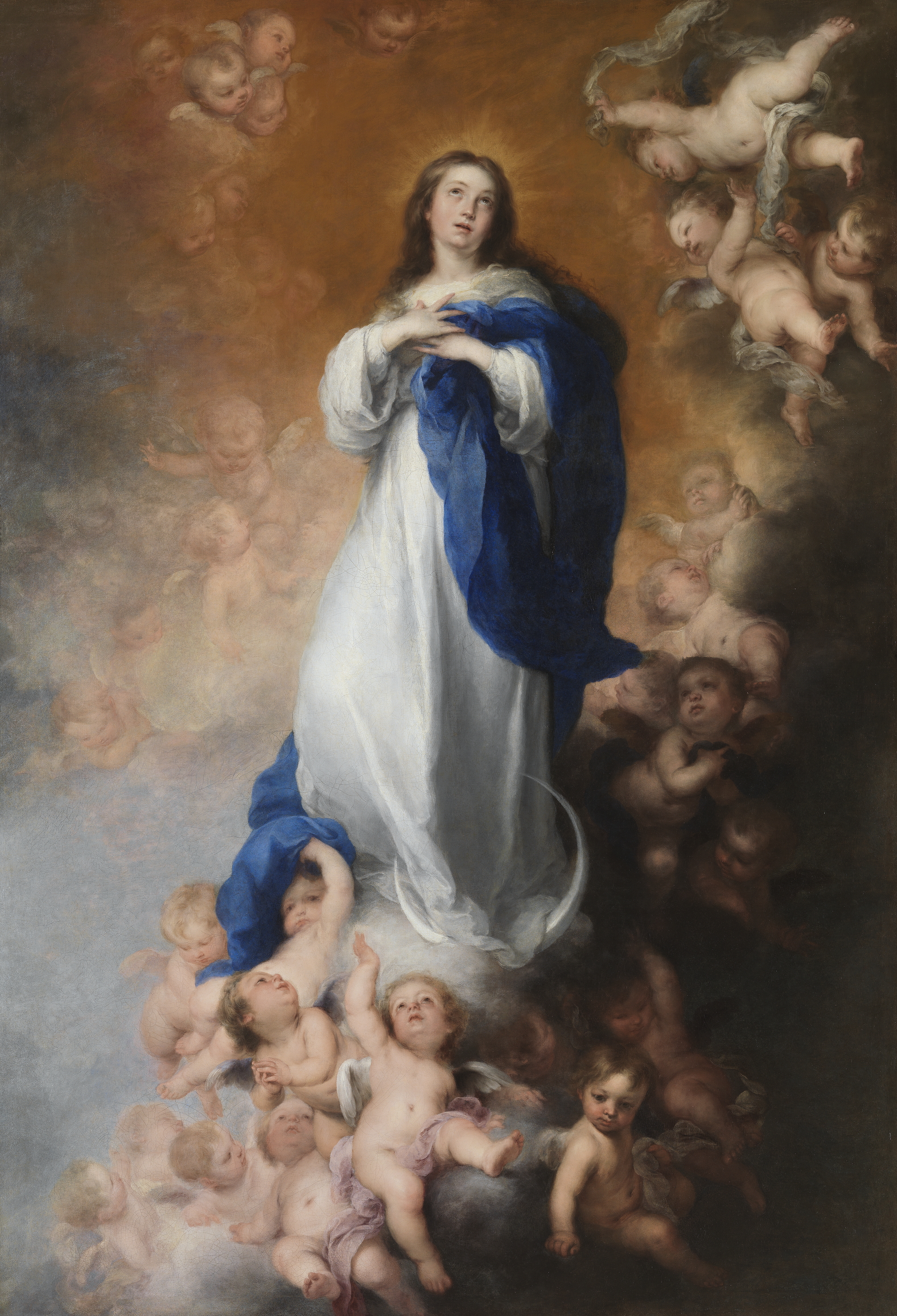
If we were given the opportunity and the funds, what sort of house would we build? Would we not desire the very best materials, the highest quality furniture, perhaps even the best and newest technology we could find? If we were capable, we would each most likely build a house better than the one in which we live now, even if we are comfortable and love what we have. This does not necessarily signify weakness or sinfulness, but rather that we desire the best in our lives, most especially with the place where we call home. This desire for the best is not only found in humanity, but it can also be found within the Divinity.
God desires to have the best in all that He works. This is not because He needs it, since He is infinite and omnipotent and already has everything He could ever want, but rather because the best that earth and creation can offer are those things which are closest to God in holiness, in beauty, and in truth. God also desires the best in His works so as to lift us up to Himself through those works. This is proven in the work for which we have started preparing in this Advent season: the birth of the Savior of the human race.
As we continue our preparation for the coming of Christ at Christmas, it seems as if the Church interrupts this season of Advent with today’s feast of the Immaculate Conception. Yet this could not be farther from the truth. If we understand what is happening in the mystery of today’s feast, we will see how this event is essential to the work of salvation God brings about in His Son Jesus Christ, along with seeing how the Blessed Virgin Mary is the greatest and the best creature God has ever made.
Having already noted this God’s desire for quality in His craftsmanship, we can look at what we celebrate today as one of the clearest examples demonstrating this principle. It all begins in the Garden, which we hear the closing part in our first reading today. Adam and Eve have contracted sin for the whole human race through their disobedience to God’s command, thus requiring their exile from the Garden and the punishment of travails in labor. Yet even in the midst of this condemnation, God makes a promise to them that this will not persist forever. The Lord tells our first parents that “I will put enmity between [the serpent] and the woman, and between [the serpent’s] offspring and hers” (Gen 3:20). This has been seen by the Church throughout the centuries as the foreshadowing of what will happen in the Gospel between Christ the Son of Mary and the Devil the trickster who slithered his way into ruining humanity.
Indeed, God will do this not just through any human agent, but He will do it by His own Son becoming a man so as to win humanity back from Satan. Yet this goal of salvation via the Incarnation of God the Son begs the question: how will God become man? Will He imitate Adam by being born from the earth? Or will He just appear among the crowds, becoming a man instantly? Or will God take the hard road by humbling Himself to become a man just as we have done: through being born of a woman?
If God were not only to free humanity from the bondage of sin and Satan and lift us up so as to draw near to Himself, He must do it by taking on every aspect of humanity that is possible, including being conceived and born. Yet God is all-holy, all-perfect, Goodness in His very being; how can He be born of a sinful woman, He who will be like us in all things except sin (cf. Heb 4:15)? We have already seen that God desires to do the best in everything He works, and it is the same with the birth of His Son, our Lord and Savior. If God the Son is to unite Himself to our human flesh and so become Jesus, He must have the best mother and the most glorious dwelling that can be created in the universe.
Thus is the Blessed Virgin Mary not only given the singular privilege of becoming the mother of God, but she is given the greatest grace and the source of the innumerable graces that fill her: the grace of being conceived without the stain of original sin. Just as God has desired a beautiful and holy temple undefiled by sin in the times of the Old Testament, so too does He desire the most beautiful and most holy temple in the womb where He will dwell for nine months and become a member of the human race, in the womb of the Virgin Mother.
But God grants this highest privilege and immense grace upon Mary not only so that she will be the Mother of God, but that she may also begin to unravel the effects of original sin upon humanity. Just as Adam and Eve are without sin when they decide to disobey God, so too are Jesus and Mary free of the taint of sin so as to rectify that first disobedience with the greatest obedience offered by any two human beings. Just as sinless Eve brought forth sin unto Adam, as the story tells us, so does sinless Mary bring forth for us now the new Adam who will free us from that sin.
The celebration of the Immaculate Conception can be seen, then, as one of the most essential pieces of the immediate preparation for the coming of Christ our Savior. For in it we see the beginnings of the fulfillment of the promise God made to Adam and Eve at their exile from the Garden, by the new garden which is found in the immaculate and virginal womb of Mary. Yet there is more that comes from this enclosed garden than the Son who will be King and Lord: there is also the beginnings of the mercy which God desires to show unto His people.
As you have heard or seen or read for the past few weeks, Pope Francis has inaugurated a Jubilee Year of Mercy which begins on this feast. In doing this, the pope desires to renew among we the faithful a greater appreciation of the mercy of God won for us in Christ Jesus and to be witnesses of that mercy to a world in so desperate need of that mercy. It is fitting that we begin this Jubilee of Mercy on the day when God shows one of the greatest signs of His mercy in freeing Mary from every stain and touch of sin from her conception in the womb of her mother.
The mercy of God is given freely, without any merit on our part, but completely from the merits of Christ’s saving Passion and Death. Mary receives this mercy and grace in a pre-figurative sense through her Immaculate Conception. She did not earn it in any way; how can we earn something when we are incapable of breathing or walking on our own?! St. John Paul II says that “Mary is the one who experienced mercy in an exceptional way — as no one else.” (Dives in misericordia 9) For this reason, we honor and petition Mary as the Mother of Mercy; because of all that God has done for her and through her in her Immaculate Conception, most especially becoming the mother of the one who would win this mercy for us on the Cross.
Let us then take up the call of the Psalmist to “sing to the Lord a new song, for He has done marvelous deeds” through the Virgin Mary, the best creature God has made in this universe. Let us rejoice that Mary has been chosen to be the one “full of grace” so that she would fulfill what the archangel Gabriel declared to her: that she will bear the one whose merciful Kingdom will have no end. Let us also turn to her, the Mother of Mercy, and beseech her to plead for us, who are still plagued by sin and temptation, who so often times fail to live up to the promise that we made at our baptism. Let us hope in the God who has done such marvels through Mary and continues to do many marvels through the Mother of God for we her spiritual children. Let us entrust ourselves to Mary just as God entrusted His Son to her, that we may learn from she who is the handmaid of the Lord how best to serve and love the God of mercy. Let us not only rejoice in this feast day, but let us desire to be renewed by the mercy and the grace of God as we enter into this Jubilee of Mercy: that all our sins may be forgiven, that our lives may radiate with the joy and the love of the child for the merciful Father, that our lives may be continually purified and elevated so that we will be able to join the immaculate Virgin Mary and all the saints in the greater glories which await the faithful in Heaven.

No comments:
Post a Comment