Showing posts with label Ordinary Form. Show all posts

Sunday, October 2, 2022

27th Sunday of Ordinary Time Year C - Belief in Spite of All

It should be asked whether the invention of the Internet was actually a good thing. We could honestly ask that question of most media, as has been a constant complaint for millennia. The Greek philosopher Socrates, living almost 500 years before our Lord, complained that writing would cause people to stop using their memory. Yet the modern media, in particular the Internet and social media, does more than cause us to forget things, but exposes far more of our society to us. While television can be regulated or controlled by various authorities, the Internet is truly equal in that anyone can share anything. And what is shared concerning the state of affairs of our age is quite frightening.

Perhaps you have heard these things, but if you have not, they should give you pause. The consistent promotion of anti-Christian degenerate values such as sodomy, transgenderism, and the exaltation of the state above the family is consistently on display. We don’t even need to look far to see this happen. This past week, the Kentucky Department of Education issued a document on students who suffer from the mental disorder of transgenderism in favor of the student against their families. The department said that it is not always necessary to inform parents and guardians of any name changes or gender identification or sexual orientation. This is not from New York or California. This is in our state. It is here.

What is happening? What we are seeing is the complete dismantling of everything oriented to God: not just church or religion but even family and the identity of the human person as having both a body and a soul. Every aspect of society is being upended and turned towards the degradation of the human person from one created in the image and likeness of God into a unit only fit for whatever the elites or those in power think they should be. They have pushed God out of the public square, they continue to promote the slaughter of the innocent in abortion and contraception, they continue to unravel everything in the quest to tear down all that good Christians and those in pursuit of the true and the good and the beautiful have sought to build up and elevate over the course of human history.

Are we at the end? It is perhaps possible, though none of us knows the hour or the day. One could rightly argue we are seeing an end of an age, a time similar to the calamitous fall of Rome in the fifth century, signaling an immense transition into a period of further uncertainty, struggle, and woe. It is not getting better. They are striving to label you as fascists, as racists, as enemies of the state. They seek to steal your children and groom them into mindless consumers, only able to enjoy the sensual as the highest good. And it seems as if they are winning.

Yet, as Christians, as followers of Jesus Christ, we know that all this has happened before. We see it in the Passion of our Lord as He is mocked, jeered, derided, spat upon, and hated by the crowds. We see it in the indifference of Pontius Pilate, knowing this to be wrong yet desirous of pleasing the people so politics pushes on. We see it in the cruelness of the Jewish elders who scoff at the Messiah manifested before them. We see it above all in the agony of the Cross, where it seems even the Lord Himself suffers a feeling of the absence and alienation of God, crying out, “My God, my God, why have you abandoned Me?”

We know the rest of the story. We know of the triumph of the risen Savior, victorious through His sufferings and death over all the enemies of God. We know that the tomb is empty, that the promise has been fulfilled, that we are not abandoned or lost forever. We know this, yet do we believe?

The disciples ask Jesus to increase their faith in today’s Gospel. The Apostles are very real men in the sense that they seem extremely weak in comparison to the Lord who towers over everyone whenever we read or hear the Gospels. The passage ahead of this says that the disciples struggled to dispel a demon from a possessed person. So it seems natural for them to ask for more faith in order to perform more works. Jesus rebukes them for asking for more faith, as if it is only magic. We do not need more faith for the performance of works, but we need to live the faith which we have received from God towards the works He calls us to do.

Faith is not a feeling, nor is it a mere intellectual apprehension of reality. Faith is our assent to the truth which comes from God. We believe because it is true but also because God has given us the grace to believe. The small mustard seed of faith has already been planted within us, through our baptism. We must let it grow through His grace and through our works. Hence our Savior tells us to label ourselves as unprofitable servants who did what they were called to do. The response to faith is works: the living out of the truth and reality that there is one God, that Jesus is Lord, that the Church is the only means of salvation, that we are called to more than the glitter of the world and the wiles of the devil but that we are called to eternal life.

We may cry out like the prophet Habakkuk in the first reading, wondering where God is in these dark times, where it seems that everything is turned to evil and all seems but lost. Yet God assures the prophet when He declares, “The rash one has no integrity; but the just one, because of his faith, shall live.” Our task is not to give in to the despair and nihilism that washes over all, but to remain steadfast in faith, steadfast in the Lord. We must do the task God has given us and not grow slack or weary. We will be hated, we will be mocked, we will suffer in one form or another, but if we remain the servants of God, we shall live.

Dear brethren, do not lose heart at the chaos of the world. Do not struggle even when it seems that the smoke of Satan seeps into the Church, when clergy willingly abandon the faith to accommodate the age rather than proclaim the Gospel. We are not called to an age of ease but to the labor of salvation. God still speaks to us, and we must not harden our hearts either by joining the world or by despairing over how quiet God seems. As the last king of Narnia said before entering his last battle, “We are all in the paws of the true Aslan.” God is still in control.

St. Paul, writing near the end of his life, writes to his beloved Timothy, “bear your share of hardship for the gospel with the strength that comes from God.” Let us be strengthened for the battles that lie ahead. Let us live out the faith of the mustard seed which God has planted within us, to stand up for God, for truth, for goodness, and for beauty. Let us oppose all who make themselves the enemies of God with the weapons of prayer and charity. Let us turn also to the help of blessed Mary and all the saints, asking their continued support as we fight the good fight. May we continue to have faith in God, in the entire Trinity, in the one Church of Christ, that we may bear our share of hardships so that we may be worthy of the rest and the joy that awaits in eternal life. 

Sunday, February 27, 2022

Lenten Practices III - Fasting & Abstinence (8th Sunday per annum/Quinquagesima Sunday)

Before the industrialization of education, the main means of learning was by finding a master who would teach you. Most masters or teachers in history did not have massive classes with multiple subjects but had a core group whom they instructed in those subjects they knew by heart: whether martial arts or philosophy or religion. The student would spend years with the teacher, going through the various exercises and rigors necessary, until he was acknowledged as an equal by the master. This is not just something that happened long ago with the knights or the samurai or whatever group you may think of; it still happens and must happen now for all who follow Christ the divine Master.

We must not regard Jesus as some historical figure who has some wisdom to hand down to us through the ages. Rather, Jesus is the divine Master really alive and still teaching us how to live our lives, and what our priority should be. Jesus teaches us not merely by His words but by the supreme example He gives in His earthly life, demonstrating His teachings so that we can follow and be equal to Him. He is the good tree which produces much fruit, and we must be grafted on to Him if we are to be good as well.

What is the greatest example which our Master or our Teacher gives to us? He shows us how and why to suffer. If the latest news about the war in the Ukraine should awaken us to anything, it is that suffering is not so far away from us who live in the comforts of the modern world. If anything, we are increasing that suffering or switching it from the merely physical to the psychological or spiritual, which can have a far deeper impact and hurt worse than anything physical. God the Son opens Himself up to this suffering by taking on our flesh, by becoming Jesus, by joining us in this valley of tears. He teaches us that we must suffer well if we are to share in His victory over sin, over Satan, and over death. Only through suffering may we become capable of bearing good fruit.

But how can we suffer well? We do it first by embracing the sufferings that come our way in our daily lives. We do not have to go far to experience this, even if we may not be suffering physically like so many in the war-torn or impoverished places of the world. We will suffer because we are hated by people who hate Christ or His Church; we will suffer from the sins of others; we will suffer even from our own sins. It is in the acceptance of these sufferings that we will begin to see the beam removed from our eye so that we may begin to be capable of pulling the splinter from our brother’s eye.

Yet we must follow the divine Master’s example by not only accepting the sufferings that come to us just as the Cross came to Him. We must also embrace some sufferings of our own. We will hear in next week’s Gospel the account of the journey of Jesus in the desert for 40 days and nights. In that time, He willingly fasted and prayed. Not only that, but Jesus often accepted additional fasts or times of prayer and penance. How can we say we are above the Master when He willingly fasted so much or prayed so often and we do not do the same?

Our age is an age of comfort and luxury, far more than any other age before it. Our country has one of the highest rates of obesity and sickness from obesity in the entire world, and it does not affect merely the rich. Even with the sharp rates of inflation in the past few months, we can still find food all too easily and cheaply. If there is great danger of damaging our bodies from all this excess, is it not so surprising that our souls would be just as damaged in our gluttony? When our stomachs are too full, our hearts are too congested to rise up to God in prayer and thanksgiving.

This is why the Church calls us to fast in the holy season of Lent. Beginning with our mandatory fast and abstinence this Wednesday, we are meant to join ourselves in voluntary suffering with Christ in order to follow the teachings and example of our good Master. We are required as Catholics to fast from food on Ash Wednesday and Good Friday, along with abstaining from meat on every Friday of Lent. This is the minimum we are mandated to do, but we should willing do more than that. If Jesus gave everything on the Cross for us, then we can give up some more food beyond those two days. If the Master suffered so much in being scourged and whipped and cursed at and crucified, then we too can suffer in giving up meat on more days than Fridays.

“From the fullness of the heart, the mouth speaks,” says the Lord. He also says, “By their fruits, you will know them.” Shall we embrace the path of the Master and accept the sufferings of Lent in union with Him, or shall we grumble that we must do so little? Shall we open our hearts to be transformed not just by fasting but also prayer and almsgiving so as to become the good trees producing good fruit, or shall we remain the rotten tree that remains fruitless and only worth being thrown into the fire? May the divine Master help us to remove the beam of sin from our eyes so that we may see and follow His holy example, not just through this Lent, but through the Lent of life, so that we may be worthy of joining Him in that eternal Easter where suffering shall be no more, and where we shall celebrate the victory of Christ over death, knowing that our labor here below was not in vain.

BONUS: BULLETIN ARTICLE

FROM THE PASTOR – FASTING & ABSTINENCE

   This coming week sees the start of Lent with Ash Wednesday. “Again we keep this solemn fast,” as the famous hymn begins. We begin this solemn season with the usual fasting and abstinence (see the table below). Yet this is not the only way that we can fast or abstain in this penitential time. Here are some other ideas to help you more properly observe this season.

· ADDITIONAL DAYS—Besides the mandated days of fasting and abstinence (see below), we ought to willing practice these acts on other days. The traditional days of penance are Wednesdays and Fridays. We could do more fasting on those days or more abstinence.

· SWEETS—While this has been the classic example done by children, we can and should seriously abstain from sweets in Lent. The intentional self-denial of that which is pleasing to us reminds us that our true sweetness and joy are found in God and not in the things of this life. Not only ought we to give up sweets, but we should even be willing to take on some more bitter or less pleasing foods, or not use as many spices or condiments to make something tasteful to our tongue.

· ENTERTAINMENT—We should abstain from the multitude of media which entertains us, and give that time instead to growing closer to God. Instead of the TV or the computer or the devices, spend that time in prayer or sacred reading, or go out and do some act of almsgiving.

· MATERIAL GOODS—This is the time of year for spring cleaning. We should clean out our closets not merely with the mindset of what haven’t I worn or used in a while, but whether I can get along without this thing. Let’s be honest: most of us have more than we need, and we can afford to give to others.

   This is the time to grow in God and to become holy. Let us take up the practices of prayer, almsgiving, and fasting to increase in the Lord. Let us not merely complete the minimum but strive to become all we can be, so that our earthly Lent may prepare us for the eternal Easter.


Sunday, February 13, 2022

Lenten Practices II - Almsgiving (7th Sunday per annum/Sexagesima Sunday)

The complete message of the Gospel is founded on one primary principle: the principle of love. Everything proceeds from this love because God is love. The teachings of Jesus can be reduced to love, and we see that in the two great commandments He gives us: love of God and love of neighbor. But how do we love? Jesus teaches us this in today’s Gospel passage by reminding us that we are to love everyone.

It is very easy for us to love those around us who please us. But we are not only called to love them, but to love all of our neighbors. Jesus begins His instructions by commanding love of enemies. Yes, we must love our enemies. We must not hold ourselves back from loving just because they do not please us or we do not like them. To love is not the same thing as to like: to love is an action which must come from our whole being. How can we love our enemies? We do it just as God does, for God loves all of His enemies, all of those who go against His will; in other words, God loves all of us.

The great sign of the love of God is the sign of the Cross. Jesus gives everything He has for love of us even as we demand He be crucified and reject Him to embrace sin. But His love is so immense as to destroy the earthly man of sin and recreate us to love as we were meant to love. We must grow in the practice of this love especially in the upcoming season of Lent. Lent is the sacred time dedicated to acknowledging our sins and growing in God, and we must grow in love as well. We grow in the practice of love through the Lenten practice of almsgiving.

To give alms is not to give and expect repayment or to give and receive a favor in return; to give alms is to give without any consideration for a return except perhaps the eternal reward God desires for us. We are called to share ourselves with our neighbor not just in thoughts or words but in real actions. We not only give to the Church or to the poor, we also give to our enemies. We not only give cash but we give our sweat and blood and tears. We not only give what we have but even go beyond that to give when it hurts. This is the real demonstration of love, because love is not easy.

As we prepare for the holy season of Lent, each one of us must ask: How do I love as Jesus commands me to love? How do I love God more? Do I actually love my neighbor, whoever he may be? All of us are meant to be witnesses of God’s love to the world, to a world that increases in hatred and division and animosity. We cannot wait for someone else to do it; we must be the hands of God that give and show His love to all. If we only love when it is easy, why should we expect anything from the Lord who loved us unto death?

Let us pray, brethren, for an increase in love within us. Let us pray to see Christ in our neighbor and to love Him in them. Let us grow in love during Lent so that we may be the true children of the Father who is compassionate and merciful towards all. Let us draw others to God by our acts of love so that they may also be transformed from earthly children of sin to spiritual sons of God. Let us love in the example of love we see from Christ on the Cross, so that we may be able to enter into the fullness of love that awaits the true lovers of God in eternal life.

BONUS: BULLETIN ARTICLE

FROM THE PASTOR—PRACTICING ALMSGIVING 

   Continuing our preparation for Lent, we see how it is we ought to practice almsgiving. It is one thing to talk about giving of ourselves, but another to know how it is we can do it. What first comes to mind is, “Where can I give my money?” Yet we should remember that we can and must give more than cash in giving alms. The worn-out phrase “time, talent, and treasure” does have an echo of truth within it. Here are some ways we can offer alms not just in Lent but throughout the entire year.

· OUR PARISH—Charity begins at home. The only way any parish church stays open is by the charity of the people who live there and come to its help. The numerous ways that you all have helped out throughout the years are greatly appreciated, as will be your continued help in whatever way you can give.

· ST. VINCENT DE PAUL—The Society of St. Vincent de Paul works to help the poor and unfortunate who are in need not merely around the world, but in our own back yard. Our parish helps the Saint Cecilia chapter, but we can help the entire diocesan conference in its work of sharing the love of Christ to all. You can see what opportunities are available at svdpnky.org or calling (859)341-1212.

· CATHOLIC CHARITIES—The diocese operates a chapter of Catholic Charities which is involved in a variety of works: from homeless outreach (including Parish Kitchen which offers meals) to child & family services to housing services. See how you can help on their website at covingtoncharities.org or call (859)581-8974

· AID TO THE CHURCH IN NEED—We should not only help out in our local area but also as much as we can around the world. The organization Aid to the Church in Need provides a means of supporting various projects throughout the world: from giving Mass stipends to foreign priests as their primary source of income to funding a variety of projects for religious orders or dioceses in need. You can see for yourself what they do and how you can help at churchinneed.org.

   Above all, we must not forget the neighbor before us. Do we pray for those who we meet? Are we willing to give when someone asks, even if they seem sketchy? Do I foster charity in all my actions? The ultimate purpose of almsgiving is not self-promotion or self-aggrandizement, but for the increase in charity within us. Let us pray about how we can give of ourselves just as Christ gave Himself completely on the Cross for our salvation, then let us give without counting the cost, hopeful that our reward will be great in eternal life.


Sunday, February 6, 2022

Lenten Practices I - Prayer (6th Sun per annum/Septuagesima Sunday)

There is a bit of a religious revival in our area today, with all the excitement over the Super Bowl. People all over will be hoping for a win for the local team, yet there is nothing they can do to help make that happen. It seems rather frivolous to beseech God for such a thing: what is a team’s victory in comparison to so many other things happening in our lives and around us? Yet this moment of excitement and anticipation is a good reminder to us of the two things today’s readings prompt in us: trust in the Lord and prayer.

We must remember as Christians that there is nowhere else we can place our trust for anything good or necessary to happen except in the Lord. God is in control of everything, and not in a secondary manner; God is intricately involved in the operation and existence of all things. Nothing exists without His willing it into existence; nothing moves outside of His will; nothing happens beyond His sight. God in His infinite providence, omnipotence, and eternal existence has seen everything happen before the universe even existed. There is no one else in whom we can place our total trust and reliance for all things except in God.

This is what Jesus praises in the Gospel passage in which He enumerates the Beatitudes according to Saint Luke. Only those who are poor will turn to God for their every need; only the hungry will seek the food of God; only those who weep will seek their consolation in the Lord who suffers with them and conquers every enemy; only the persecuted will place their hope in the Lord who triumphs in His resurrection and will have the final revenge on all enemies on the Last Day. Those who do not desire or need these things do not turn to God, they do not seek the Source of all goodness and truth, they do not pray.

We are only a few weeks away from Lent beginning, and joining in the journey of the Lord to Calvary and the tomb. This season is our time to reevaluate our relationship with God, to rectify our sinful lives, and to walk more closely to Christ than before. This walk must begin by placing our total trust in God in all things. If nothing happens outside of His will, if every good and perfect gift comes from the Father, then we must orient our lives towards God and not towards any lower or weaker power or authority. We must hope in God for all things, above all for the graces we need for everlasting life. This hope, this trust, must begin to be expressed in the primary action of the Christian: prayer.

We must pray. There is simply no alternative to prayer for the disciple of Jesus Christ. We are obligated to pray, and to not just pray for ourselves, but to pray for all. Yet we must remember the purpose of prayer is more than just the asking for things. We can and ought to ask, but prayer is far more than that. Prayer is our primary means of communication with God. It is not only a means of speaking to God, but it is also our means of hearing Him. Many will complain that they do not hear God in their lives, but how much time do we give Him to speak to us? How much do we retreat from the noise of the world to pray purposefully before Him? It is not that God doesn’t speak, but that we do not listen.

Prayer is the means whereby we are conformed to God. We adore the living God who loved us into being and loved us enough to die and rise from the dead for us. We praise Him who has done such immense marvels. We beseech Him for all that we require for ourselves, mindful that He is the ultimate source of all things. We ask on behalf of others for what they need, especially to encounter God through Jesus Christ in the Holy Spirit so that they may enter into the way of salvation. All of this is what God desires for us, but it must begin in prayer.

Our lives must be infused with prayer not just in the church but in the totality of our lives. We not only pray here at Mass but we ought to pray in our work, in our rest, in the fun times, in the sad times, in the ease of life which so many of us have in these days, in the difficulties that will come as we draw nearer to the crucified and risen Lord.  Whether it is short quick prayers offered in a moment or dedicating ourselves to an extended period of prayer, we must pray in a spirit of hope and trust in God. Whether it is for victory in the big game today, whether it is for more serious requests, whether it is in thanksgiving or in sorrow, we must pray. For if we do not pray now, why would we want to spend eternity with the God we avoid encountering through prayer?

Brethren, let us become a people of trust and prayer in all things. Let us hope in the Lord who has won everything for us in His passion, death, and resurrection. Let us be inflamed by the Holy Spirit to pray as we should so that we may become holy, so that we may become like God. Let us ask the saints to help us to pray as they prayed to God and grew closer to Him in their lives so that we may follow after them. Let us pray to live as Jesus calls us to live, not in a spirit of arrogance and disregard for the Lord, but in humility and trust, that we can encounter God through prayer in this life and be prepared to receive the fullest answer to our prayers in eternal life.


BONUS: BULLETIN ARTICLE

FROM THE PASTOR—PRAYERS AND DEVOTIONS

   With only a few weeks remaining until Lent begins, it is time to begin thinking about how we are to observe this sacred season. This Sunday in the traditional liturgical calendar starts the season of Septuagesima: the period of three Sundays and the accompanying days in-between until Ash Wednesday which are a reminder to us that Lent is approaching and gearing us up. While the current liturgy does not have this venerable tradition in it, we should still begin to orient ourselves towards the three Lenten practices of the Church: prayer, almsgiving, and fasting.

   This week, to supplement my homily on prayer, I would like to offer some various ideas to help you grow in your prayer life. While we priests may often preach on prayer, we may not offer many concrete ways for how to do it. Here are some practices that I heartily recommend.

· EUCHARISTIC ADORATION—What better way do we have to pray than to spend time before Jesus really present in the Eucharist? Beyond our reception of the Eucharist at Mass, the Church encourages us to spend time before the Most Blessed Sacrament in true prayer: to adore the Lord who humbles Himself to become our living Bread. I will be organizing some times for formal Eucharistic adoration during Lent, so I encourage you to join me in spending time with the Eucharistic Lord.

· THE ROSARY—One of the greatest tools for devotion to the Blessed Virgin Mary, the Rosary is also an opportunity to prayerfully consider the mysteries of our redemption: from the conception and birth of our Savior to His passion, death, and resurrection. Through the Rosary we can pray to and about Jesus through the help of His blessed mother Mary.

· THE BIBLE—The Sacred Scriptures are not a textbook on salvation, but the writings inspired by the Holy Spirit to sanctify us. We should read the Bible in a prayerful manner, not merely seeing the words but praying about what we read. We should not only hear what it says, but adore the God speaking to us through this text and calling us to Himself.

· DAILY DEVOTIONS—We should have a regular routine of prayer in our daily lives. We should wake up and immediately pray to give the day to God. We should pray at meals. We should take time to pray to particular saints who we are close to. It should grow to become as natural as breathing to us to pray throughout the day.

   No matter what, we need to pray. Lent is our opportunity to increase not only our prayer time but to grow better at it. The only real way to grow is to do it. How will you begin to pray this Lent? Let us pray as Jesus commands us to pray so that we may be close to Him in this life and receive the desire of our prayers in being with Him forever in the next life.


Sunday, August 26, 2018

21st Sunday per annum - After the Report

I have gone through a great wave of emotions over the past few weeks, since the publication of the Pennsylvania grand jury report which outlines not only numerous accounts of abuse by priests over seven decades, but the numerous ways the various bishops covered up or ignored these wicked priests, with some of these bishops rising to the upper ranks of the Church. The first emotion is anger - anger that this continued for so long, anger that none of the bishops seem willing to hold themselves or their brother bishops responsible, anger that even the pope seems unwilling to do anything serious. The second emotion is sadness - sadness at how many were abused and probably lost their faith, sadness at the people who tried to help but couldn’t get anywhere, sadness that this is dragging the Church through the mud once more.
All of this raises the question of whether it is good to stay in such a Church when there seems to be so many wicked men in the Church, so many who are more concerned about their rank or power rather than where they are leading souls. I am not the only priest who has struggled with these staggering and scandalous reports and wondered what to do or where to go from here. Yet I cannot shake the words that Saint Peter so quickly offers up in the Gospel today: “Lord, you have the words of eternal life.”
Brothers and sisters, where else can we go to hear these life-giving words, in particular the words Jesus has been speaking to us the past few weeks - “I am the bread of life”; “unless you eat the flesh of the Son of Man and drink his blood, you do not have life within you.” These are hard words to understand, even harder to live, as are so many things which the Church teaches, such as the difficult teaching on marriage we hear in the second reading. However, all of these words and all of these teachings come from the lips of the most innocent and truthful Man in all of history, He who declared Himself to be the Way, the Truth, and the Life, He who was willing to suffer the death of the Cross because of my sins so that I might receive that bread of life.
I believe these revelations of scandal and wickedness will be something good for the Church, like receiving the news that one has cancer. It is not the scandals themselves that are good, but that we know they are happening so that we can answer how to remove them and restore the Church to her apostolic glory. The one answer that we ought to have is that we do not believe in men; the psalms warn us against that when they say, “Put not your trust in princes, in whom there is no help.” Our faith is not in a human structure or organization but in God, in Jesus Christ who established and maintains His Church in spite of the wickedness of her members, especially her clergy.
The Church continues in her divine mission because of the grace that the Holy Spirit maintains within her. And where can we find that grace? We find it in the sacraments, and above all we find this grace in the Most Holy Eucharist. Not in the Bible, not in the tradition, not in anything else other than the sacraments which Jesus has given us and which have been maintained by the Church for 2000 years. “To whom can we go?” Peter asks our Lord. We cannot find this in any other religion nor in the absence of religion. We cannot find it in sports, in politics, in technology, in nothing else but in that simple bread and wine transformed by the action of the priest - even the most sinful priest - into the body and blood of Christ.
My dear brothers and sisters, do not lose hope in God or in His Church. There will always be sinful men and women in the Church. Remember that Judas walked with Christ, saw His miracles, and yet still betrayed Him to His death. Yet Jesus transforms that most wicked sin into the greatest good done for all of humanity. Jesus can do the same even with such terrible men at the helm in our day. I don’t know how He will do it, but I believe and trust that He will, and that He will do it even through me a sinner. Our faith cannot be in sinners, nor even in the saints who are in the Church, but God alone who acts in and through both of them. Let us taste and see the goodness of the only one who is truly good - the Lord who offers Himself for us in the Eucharist as our nourishment, our strength, and our foretaste of the glory He desires for us if we remain faithful, if we remain with Him and His Church.

Sunday, August 13, 2017

19th Sunday per annum - The Challenge of Faith

Which do we desire: comfort or challenge? Do we desire the old martial attitudes, focused in such activities as exercise, jousting, or boxing, or rather, do we desire the calm, collected tranquility of such easy activities as television, internet, and Netflix? Let’s be honest with ourselves: we want comfort. If we had to pick between remaining in our own time or dropping down into the Middle Ages, we would stay here in a heartbeat, kicking up our recliners to perish the thought of having to toil and labor for the bare minimum to survive. But is this what Jesus wants for us?
If we pay attention to Matthew’s telling of this episode of his Gospel concerning the Lord walking over the waters, we should notice one detail sticking out concerning the disciples: Matthew seems to imply that the boat was tossed about until the fourth watch of the night, or nearly 3 in the morning. Think about that: the Gospel says that as evening approached, the boat began to toss, yet Jesus seemingly abandons them for most of the evening. How terrifying it must have been for the disciples as the boat continued to rock and reel, yet their Master was not there to aid them. But when He does come, they are so frightened by His appearance they believe Him to be a ghost or an apparition.
Yet the Lord offers those prized words of consolation to any soul wearied and troubled: “Be not afraid.” Who responds immediately to this call but Peter, the one most eager to serve Christ? Even though the waves have buffeted the boat all night, Peter remains strong in his faith in Jesus, calling Him to command Peter to walk on those same waters. But even Peter has his weak points: even though he had endured the waves all night, Peter lost faith because of the strength of the wind. He begins to sink and cries out in fear just as the other disciples had done earlier. Only the strong arm of Christ is able to lift him up and put him back on the boat.
What do we see from all of this? First we are taught that our faith must be tested. The strength of our faith is quite similar to the strength of our body. What happens if we are soft on our bodies, feeding ourselves only the sweet and sugary and remaining inert? Our bodies grow fat and weak, susceptible to disease or decay. If we push our bodies, making the grueling effort to regulate our food and to exercise, rejecting the bad and replacing it with the good, we will get them into peak condition and reduce or even eliminate the possibility of disease. It is the same with our faith: we can grow quite soft in what we believe and profess, even to the point of being susceptible to the disease of error or heresy, falling away from the faith for a multitude of petty and irrational reasons. Yet if we push ourselves, learning more who this Jesus is, what He wants from us, what He has in store for us, nourishing ourselves with the sacraments, striving to remove sin and replace it with virtue, we will grow stronger in faith, able to challenge anything that the devil or the flesh or the world throws at us.
Yet we cannot rely on our own strength or ability alone. The disciples were afraid because of the boat tossing about through the night, while Peter became afraid only when he saw how strong the wind was. Each of us has those weak moments that will seem to test or may even break our faith. However, Jesus is always there, holding out to us the strong arm of His grace poured out for us in His sacraments, in particular the sacrament of confession. Our Lord knows our weaknesses, our frailty, our struggle to endure, and He knows that we will at times fail. But He does not want us to sink; rather, He holds out His arm, the arms by which He hung upon the Cross for our salvation, the same arm which He held out to Peter to keep him from sinking. If we are to become stronger in our faith, we must do it with Christ ever near to us, not just there when we want Him.
Finally, we must remember who is the center of our faith, who it is that grants us the ability to believe: God Almighty. Faith is initially a gift of God, a gift that we have not merited and could never deserve on our own. God, in His infinite love for each one of us, gives us every good and perfect gift we need to be holy. But we should never presume upon God’s good will nor should we believe that we have received enough. Jesus teaches us to pray unceasingly for everything we need and more. We ought to be like the prophet Elijah in our first reading: humbling ourselves before the transcendent, invisible God who waits for us to ask for everything. Prayer must be at the heart of our faith, or else we shall fail to grow, no matter how much we may will it or desire it.
Let us not remain comfortable with the minimal faith we have, but let us take up the challenge of living as Jesus commands. Let us cast off from the shores of this world to discover the untamed God who asks so much of us and offers us so much in return. Do not be afraid at the immensity of the task, but look to Jesus, our guide through the stormy seas. Pray that the Holy Spirit may be your Comforter in these difficult days, that His gifts may begin to bear fruit in you, even unto the growth of our church and the sanctification of our community. Let us indeed accept the challenge to follow Jesus Christ each day, that He may lead us through the turbulence of sin and strife to the serene and beautiful coasts of eternal life.

Sunday, April 2, 2017

5th Sunday of Lent - Death and Life

What do we fear most about life? What is it that we dread most about our mortal nature? There is one thing common to all people of all ages that we dread and fear: death. We fear death, that undiscovered country from whose bourn no traveler returns. We hate death because we fear it, because we want to avoid it as much as possible. Our generation continues the quest for immortality, seeking the fountain of youth not in some mythical land far away, but in a pill or in a computer. We will do anything rather than die.
But death comes for us all. We cannot avoid it, we cannot pretend it will never happen. Yet there is more than one way to die. Certainly, our physical bodies can die. However, we can also die spiritually. How does this happen? It is the same as our physical death: we lose life. But how can we lose our spiritual life? We lose it when we remain enveloped in sin. We lose it when we are consumed by sin. We lose it when we choose sin over God. Our spiritual death is never just a death, but is always a suicide, for we choose that death for ourselves. Yet God desires not the death of the sinner, but that he live.
We hear about the greatest of Jesus’ miracles in the Gospel today, when He raises His friend Lazarus from death, and not just any death: Lazarus had been dead in the tomb for four days, a sign taken by the Jews to mean that one was completely and totally dead. Jesus, who is the resurrection and the life, by His power and authority restores Lazarus to life. It is probably the greatest sign that Jesus offers up to this point in the Gospels. But it also has great meaning for us: it demonstrates that God is the Lord of life, and that He can restore life whenever He wills.
We hear in the psalm today that with the Lord there is mercy and fullness of redemption. God desires life for all of us, as we see in the vision of Ezekiel in the first reading. For indeed, who can truly stand in innocence before the Lord? As the Psalmist puts it, “If you, O Lord, mark iniquities, Lord, who can stand?” None of us are totally innocent before God: all have sinned, both as individuals and as the human race. Yet God desires not death, but life. Knowing our weakness, knowing our infirmity, God desires to revive humanity by redeeming it from the bonds of sin and Satan, and this work will be accomplished so very soon in the passion and death of Christ our Lord.
Yet this redemption is not a ticket easily purchased, nor is it merely a free gift. God does offer us redemption and salvation, but it comes at a cost: our death to sin. Saint Paul recognizes this as he writes to the Romans in the second reading. Salvation is not something that is merely bought with a few words: it is something that costs us our life in sin. Saint Paul is not rejecting the physical world in saying this, but the truth that we are not meant to live for this world, to live for the flesh. We are meant to be animated by the Spirit of God to live for Christ. We cannot have the Spirit if we remain dead in sin. We cannot be lead by the Spirit if we cling to sin. We cannot live in the Spirit if we reject that same Spirit.
The raising of Lazarus from the dead serves as a sign that Jesus can raise any soul to life, even a soul that has been steeped in sin, wallowing in sin for decades. The history of the Church is filled with scandalous sinners who converted and became great saints: egotists, sex addicts, murderers, heretics, drunkards, even worshippers of Satan. Yet their eyes were opened to the error of their ways by the grace of God, they repented of their sins, and lived their lives with the same confession we hear on the lips of Martha: that Jesus is the Christ, the Son of God, the one coming into the world to save it. And we can do the same as them, if we believe as Martha and Mary did, that this same Jesus who weeps over death desires us to live and to live fully.
As we enter the last two weeks of Lent, we are plunged more deeply into the mysteries of these days. We are preparing for all that Jesus did and suffered from this day until Easter Sunday. Let us not merely listen to these actions and events, but let us be moved by them. Let our hearts be filled with contrition for our sins and a true desire to repent of them. Let us seek the mercy that can only be found in the confessional, for God desires us to have a sure sign of our pardon. Brethren, do not let your hearts remain dead to sin, but let them be alive in Christ Jesus, in His Holy Spirit. As Jesus raised Lazarus from death, so too will God raise our souls from the death of sin, but only if we respond to His grace and seek His mercy. Let us indeed seek His mercy, so that we may have the fullness of redemption in the life to come.

Sunday, March 26, 2017

4th Sunday of Lent - Blindness

Which sense would you be least willing to lose if you had to lose one of your five senses? For most people, sight is the sense they would pick to keep most out of the five. While we don’t want to lose any of them, sight seems to hold sway because it is the most useful for everything we do. Without sight, we cannot experience beauty, we would never know the faces of those we love, we would lose a tremendous amount of knowledge. Could you imagine not knowing colors?
Yet we not only possess physical sight via our eyes but rational sight from our minds. Unlike the rest of the animal world, we are able to possess knowledge and wisdom, to grow in our experiences and shape the reality as we have made it up to this time. But, just as our physical eyes can suffer from glaucomas, our rational sight, our inner eye, can become darkened. We can lose that pristine vision we once had of right and wrong, good and evil, holy and wicked and begin to see the world in bland greys. What causes this inner eye to lose the light? It is sin that darkens this eye, and only one can cure us.
In our Gospel, we hear that a man who was blind from birth receives his vision by the healing power of Jesus. This man can represent each one of us, for we too were born blind, not due to a physical defect, but to the defect of original sin upon our souls. And just as Jesus lifts the blindness from the blind man’s eyes, so too does He lift our original blindness from our souls in baptism. But we can lose that original vision over time, and we can even become blind once more, only we are trapped in a worse blindness because we had seen the Light of the world and beheld His glory, yet rejected it for something else.
We all have something that blinds us to the total truth which Jesus teaches us. For some, it is a favorite sin. For others, it is arrogance. Some are blind because of ignorance while others are blind from apathy. Whatever it is that stands in the way of clear vision, it is something that can be removed. But do we want it removed? We may be like the child who sits too close to the TV and doesn’t want to lose that spot, even though we may gain better vision because of it. We may be like the Pharisees in the Gospel, who do not believe that they are blind, which is the worst kind of blindness.
Jesus Christ is the Light of the world, the light proceeding from light, as we profess each Sunday in the Creed. He does not want us to remain in darkness, the darkness of ignorance, the darkness of pride, the darkness of sin. He wants us to see clearly, to be the children of light, as Saint Paul wants also, as we hear in the second reading. But to remain in the light means that we must be freed of sin, for the light only “produces every kind of goodness and righteousness and truth”. It means that we must cast off that which blinds us or keeps us in the darkness, and walk in the light. We cannot have it both ways, pretending to be children of light while assisting at Mass but living as if we belong to this world, the world of darkness, remaining secret and hidden rather than visible to all.
Brethren, let us be the children of light! Let us not remain in our sins or in our pride or whatever makes us blind. Let us be healed by Jesus the divine Physician so as to see clearly the Son of Man leading us to God. Let our hearts not find their rest in the filth and darkness of sin, but in the glory and light of God. Let us see the dawn of Easter rising on this day, the midway point of Lent. If we have done little to amend our life, let us not delay! The sun of the Resurrection rises in the east. Do we look for it eagerly, or do we cower in our blindness? Do we wish to remain in the darkness, or shall we be healed of our blindness, so that we may see the light in this world, and rejoice in that same light in the world to come?

Sunday, January 22, 2017

3rd Sunday per annum (OF)

What does it mean to be Catholic? And why should you be one? This is a question that has probably popped up in our minds at one point or another. What is the reason behind being in this church, in this religion? Why should we be Catholic instead of Protestant? Why this instead of Judaism or Islam or any number of other religions? Why even have a religion? How many of my generation who simply abandon religion for a vague and inactive spirituality, only occasionally remembering that the deity even exists. But why are they wrong to do this, and we right to remain here?
Saint Peter in his first letter exhorts the faithful to have a reason for their hope (1 Pt 3:15). Do we know that reason in our own hearts? Or do we struggle to understand why we should even still come in here and go through the motions? We sometimes feel like people have it easy when it comes to matters of faith, as if it is natural for them whereas we cannot find the answer and wrestle over the point of maintaining these exercises. Yet the truth is that we all have our times of struggle in the faith. No serious Christian is absent from that struggle, yet that struggle can and often does lead to a stronger faith and a greater understanding of why we are here.
I offer you the best example I know of this: my own life. I was not really raised in the Catholic faith. I was baptized Catholic, and I did receive my first Communion. But my family stopped going to church when I was eight or nine, and it didn’t really change much in my life, except make Sunday open for anything else. However, as I grew up, I desired something more. I kept searching for the answer to all of this, what the point of it all is. I would stare up at the stars at night wondering if this was really everything that could be, if this empty universe truly held all the answers. It was not a satisfying answer in my mind.
It was during college that I began to look into the Catholic faith which I ostensibly belonged to. I was inspired by the witness of a few people who were Catholics and Protestants, but were deeply committed to their faith. I read, I studied, I prayed, I went to Mass for the first time as an adult. I began to find an answer that was far more complete than what I had known before. I began to know Jesus Christ. The rest, as they say, is history.
Brothers and sisters, Catholicism is not an ethnic religion. We are called to share this faith with our families, but it is not something that is merely passed down. Our faith is ultimately a choice, an individual choice concerning Christ, a choice with consequences. To help us with that choice, Jesus reveals Himself, as we continue to see in these post-Epiphany Gospel accounts, and today is no less different. Jesus calls all to repent for the kingdom of heaven is at hand, while He also calls Simon Peter and Andrew to come after Him. Jesus does the same for each one of us, calling us to make the choice to follow after Him.
But how many people are there from our parish who have left here, either to seek Him in another church or to ignore Him altogether? How many of our brothers and sisters have left and not returned? Can we ignore them or let them wander in the dark? And what about all our separated brethren in the various churches around us who seem to imitate the Corinthians in Saint Paul’s day, as we hear in the second reading? Can we sit by and let them proclaim, “I belong to Luther”, or “I belong to Calvin”, or “I belong to Wesley”, or “I follow the true Christ”? Do we sit on our laurels and make half-hearted prayers that God converts them? And this is without even considering the poor who do not have the Gospel, the drug-ridden, the helpless among us who struggle to eke out a basic living. Who shall tell them that the kingdom of heaven is at hand? Who shall give them the answer which their hearts seek, as I was seeking for so many years?
Jesus Christ did not establish the Catholic Church to be just one among many other temples and churches. He is the Light of the World, meant to draw all people to Himself. But He does not work alone; the Lord called the Apostles and the early disciples to work with Him in spreading this message of repentance and truth to all the corners of the world. Jesus still calls men and women to work with Him to bear that light of truth in their lives, no matter their vocation. Shall we hear His call and answer it? Shall we find in Him the truth our hearts have been seeking, the answer to all our questions? Shall we repent and embrace the kingdom of heaven?
Brothers and sisters, I urge you: make the choice for Christ! Let us turn to the Light of the World to receive His light and His salvation. Let us turn to Him who calls each one of us to follow after Him. Follow Him who has been the one definitive answer for so many people over the past two millennia, and will be the one answer until the last day. May we indeed desire the kingdom of heaven brought to us in Christ Jesus, and seek to share the Light with all whom we meet so that all of us may enter that kingdom which shall endure for ever.

Sunday, December 11, 2016

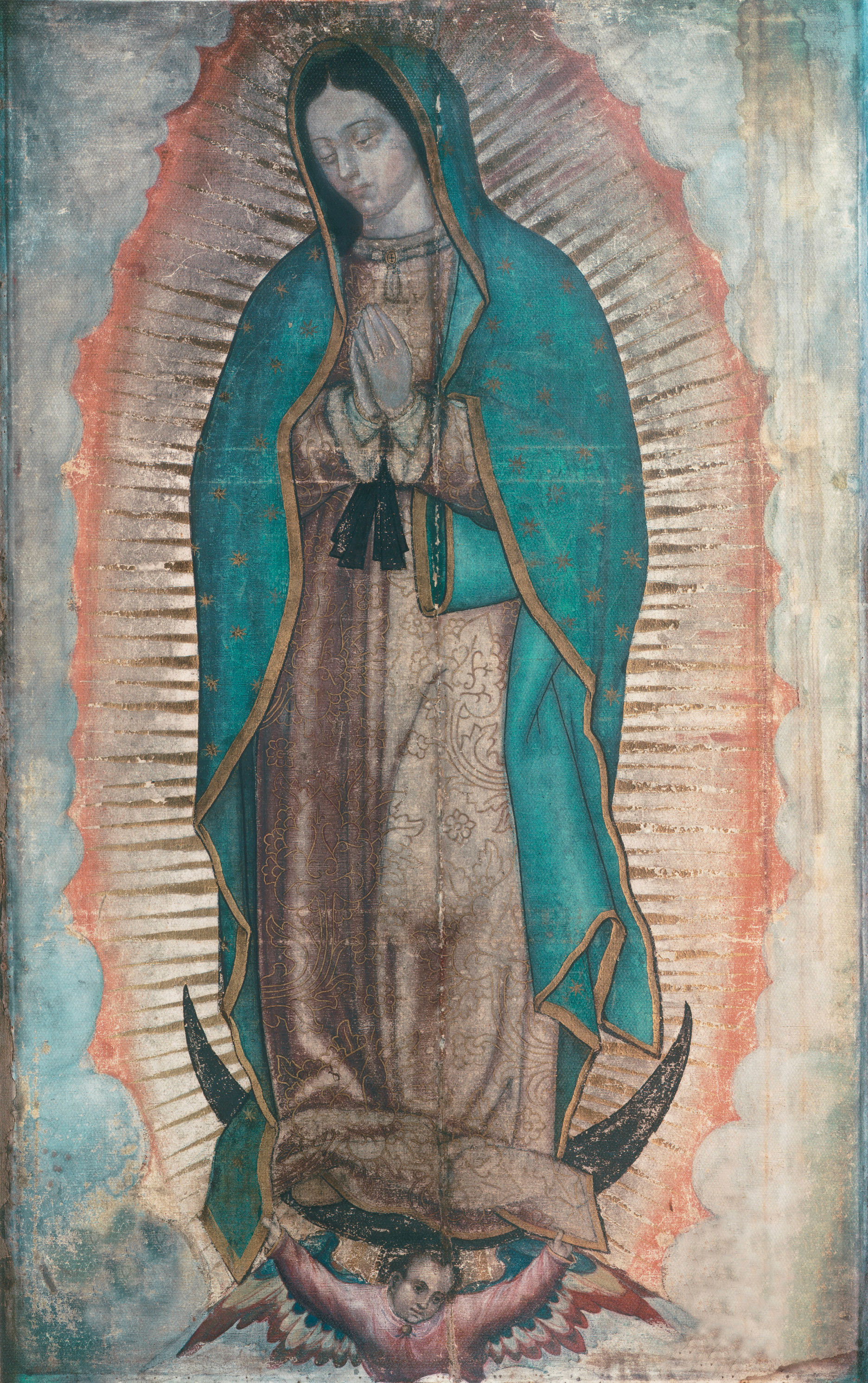
Our Lady of Guadalupe


It is so wonderful to be here with all you tonight, to celebrate the feast of the Virgin of Guadalupe. I am glad you allow a poor gringo priest to celebrate with you this wondrous feast of so beautiful and so important a lady. I must admit that I grow fonder of the Virgin each year, since I first learned of her in seminary almost ten years ago. The marvel of it all overwhelms me: how great her influence has been not only in Mexico but in all of the Americas. Truly she is the Empress of the Americas as Pope Saint John Paul II declared. Please permit me to review these marvels for our edification.
When the Spanish conquered Mexico in the 16th century, they brought with them missionaries to convert the native peoples to the Christian faith. However, these missionaries struggled greatly and received few converts in their first few years. But then Our Lady came to the hill of Tepeyac in 1531 and changed everything. This image, as you might well know, is not only responsible for the conversion of the native Mexicans, but it is the most visited image in the world. Millions received baptism and became Catholics all because of this image that has endured so much in its history, and yet it remains the same as when Saint Juan Diego received it from her.
But why is it that this image could have such an immense effect upon the peoples, even down to our day? How does La Virgen have such an impact upon so many? In truth, it is the a simple answer, though one that we may forget at times: it is the effect and the impact of a mother upon her children. Are we capable of hard-heartedness in the sight of so loving and caring of a mother? Can we fail to listen when she calls us just as she called Juan Diego by the name “Juanito”? When she shows us such a love, what else can we do but whatever she asks of us?
Yet perhaps we may have forgotten her requests or her words to Juan Diego to explain why she came. When La Virgen appeared the first time on December 9, she told him that she was the mother of the most true God, of he through whom everything lives, the Creator of persons, the master and lord of all the earth. She revealed herself completely to Juan Diego in his own language, not Spanish but the local Nahuatl language. La Virgen first seeks to reveal to this faithful man who she really is in a way that the natives would understand. She does this so that they may receive the Christian faith at their own level.
This shows the humility of Our Lady, for she never focuses on herself. She is the handmaid of the Lord, as she told the archangel in the Gospel. Everything that she does is not for her, but for her son. In fact, the image shows her as being pregnant, one of the few if not the only images to show this. Just as she carried Jesus in the womb to Bethlehem in the midst of her own people, she also carries Him to a new people who will be hers very soon. Truly she is a mother to us all.
Her very appearance is meant to reflect not only her humility, but to demonstrate to the people the truths of the faith using their own symbols along with the symbol we see in the first reading from the book of Revelation. Our parish patron Saint John called her the ark of the covenant, and paints a magnificent picture with his words: a woman clothed with the sun, with the moon under her feet and a crown of twelve stars on her head. All of these signs are found in the image, but they also carry meaning within the pagan religion of the native people.
La Virgen stands before the sun and over the moon, showing her dominance over the main gods of the pagan religion. The flower over her womb was a symbol of the divine and the center of the universe. It rests over the womb which carries the child who is both divine and the center of the universe. Her pink robe is symbolic of an Aztec princess or queen, showing her royal state. The angel holding her up holds her robe and her mantle, pointing to the child in her womb who is both human and divine. The image itself is a Gospel in pictures.
Yet the wonders of La Virgen do not end there. Perhaps you remember the story of Juan Diego trying to avoid Tepeyac because he wanted to get help for his sick uncle. Not only that, but he was embarrassed by his failure to get the bishop to believe him. Yet she does not stay on the top of the hill; she comes down and greets him with those heartfelt words, “Am I not here, I who am your mother?” What joy! What delight! Not only is she the mother of Jesus Christ the Savior, but she is our mother. A mother who does not remain above us, but humbles herself to come to us in our need.
It is this last apparition which results in that miracle of miracles which remains with us today: the image on the tilma. Just when Juan Diego hoped to avoid more failure, La Virgen proves herself through her roses and her image. Joy of joys! The victory of Our Lady comes to Mexico! We know the rest of the story, for we are living it here and now. You all would not be here if it were not for the loving kindness of La Virgen for your ancestors and your land.
But is this the end of the story? Or is it only the first chapter? Listen to those first words of Our Lady to Juan Diego: "I desire very much that they build my sacred little house here, for there I will show Him to you, I will magnify Him, I will turn you over to Him, to He who is all my love, to He who is compassionate gaze, to He who is my help, to He who is my salvation." Who is He whom she wants to offer to us? It is Jesus Christ, the King of Heaven and earth, the Savior of humanity, the Word made flesh, the God-man. All of this is meant to lead us to know Him, to love Him, and to serve Him through her. Her message for all peoples, not only Mexicans, is to know her Son, to love Him, and to join her in serving Him who is our help and our salvation. She is the best missionary for our Christian faith, because she is intimately united to He who is the center of our faith.
But how many of you truly hear her words? How many of you fulfill her request? I am happy to see so many of you with us on this beautiful night to celebrate her who is the honor of your people. Our church is bursting with love for La Virgen. But how complete is that love? Many of you are seeing me for the first time since I arrived in June. Many of you are in this church for the first time since Easter or Christmas or even the last celebration of Guadalupe. Many of you profess a love for La Virgen, but have nothing to show for it beyond your attendance here tonight.
Do you think this is what she wants for you? Do you think that she came to Juan Diego so that you might be half-Christians? Do you think she gave you this image so that you would receive baptism but never be converted to Jesus Christ? How terrible! It would have been better for your people to remain pagans rather than become a convenient Christian. It would have been better if La Guadalupana had not come if you won’t love her by listening and obeying her.
Brethren, if you love La Virgen, listen to her! If you love La Virgen, follow her! If you love La Virgen, love her Son as well! The true lover of La Guadalupana is the person who follows she who is victorious over the serpent. The true lover of La Guadalupana is the person who imitates her total obedience to God in the totality of their life. The true lover of La Guadalupana will not darken the door of the church only on her feast day, but will seek to be with her in the church as much as she demands. Love for her cannot be only an emotion; it requires actions and signs to demonstrate that love.
Let us indeed rejoice that we have such a loving mother in La Virgen; a mother who is near to us at every step. Let us rejoice that she loves us so much as to reveal herself in this unique way. But let us not waste this opportunity to be a true Guadalupano, which is very essential to our salvation, by following La Virgen who follows the most true God. Let us pray that she may continue to win us salvation and mercy from her son, so that we may not look to her in vain. May La Virgen of Guadalupe be the madrecita of the Mexicans and of all the Americas. May she be the compassionate mother of we her poor children. May she be for all of us the Queen who brings us to the glories of heaven.


Viva la Virgen!