Saturday, June 20, 2015

12th Sunday per annum (OF) - Faith


“Do you not yet have faith?”  This question of Christ could be directed not only at the Twelve with Him in the boat, but also to our generation, to modern man.  It seems that modern man, since the so-called Enlightenment, has progressed beyond faith towards reason as the principal method for engaging the world.  Modern man will cry out in relief that he is freed from the oppression of faith and religion and is now capable of moving forwards towards a bright new future, towards achieving the ultimate goal of bringing about paradise on earth.
Yet the century we have so recently closed demonstrates to us the limits of this feigned reason: the exaltation of nations over God, the devastating effects of modern war, the rise of ideologies in place of faith and against reason.  How persistent, though, modern man can be in his mad-dash quest to find something other than faith to cling to, to build upon.  For modern man ultimately fears being a subject, being ruled by someone other than himself, and he fears that faith will make him the meanest, the lowest of subjects in the cosmic order.
Yet the truth is the opposite: faith, instead of lowering us, is what elevates us towards God, towards Him who is the ultimate Good.  Modern man is looking backwards at the whole order when he thinks faith will keep him in the dirt.  It is reason alone and unaided which leaves man squalid in his spiritual poverty.  But by faith, God raises the soul above the merely human and brings it closer to Himself.  By faith, we become the human beings we were meant to be when God first created us in Eden.  By faith, we realize the full potential of our humanity as being the image and likeness of the divinity, and not merely as a rational animal.
Look at the Gospel account for today.  The disciples have been following Christ for some time now.  They have heard His authoritative teachings, they have witnessed His power over those who are sick and in need of healing, they have even perhaps seen some of the great miracles that Christ worked, such as raising people from the dead.  And yet, in spite of all this, they are still petrified of a thunderstorm when Christ is in their very midst.  Thus that indicting question from Our Lord: Do you not yet have faith?
It seems to us from what we have just heard that indeed they really do not have faith in Christ, for they question each other about the calming of the sea by a man, saying, “Who then is this, whom even wind and sea obey?”  Who else can the elements obey but their Creator, the One who gave them form and shape and order and purpose at the very beginning of time.  Who else can they obey but God?!
How much are we like the disciples in that boat on the Sea of Galilee?  We have heard Christ teach to us time and time again, proclaiming the coming of the Kingdom of God and the time of repentance.  We have heard proclaimed again and again the wonders of His earthly life, such as today’s account.  Yet, do we really believe that this Jesus of Nazareth is truly the Emmanuel, the God among us?  And do we give Him the assent that is due to that faith, that belief in the divinity of Christ?
To be a Catholic does not mean to be just a member of the crowd, as one who joins a club or group.  To be a Catholic in this day and age in particular means to stand against the wisdom of this age, which belittles faith and exalts man to the point of making him into his own god.  To be a Catholic in every day and age means to believe what the Church has proclaimed since the day of Pentecost: that the Second Person of the Trinity descended from the eternal realities and became incarnate of the Virgin, lived, preached, suffered, died, and rose again from the dead, ascending at last to the right hand of God the Father until the last day.
It is only in faith that we can be an actual Catholic, for these mysteries are beyond our usual comprehension.  These are matters which we cannot surmise by our own reflection and rationalizing, no matter how smart we may be.  This indicates to us the limits of reason when it comes to dealing with reality.  Even now, in this age of science and technology, we cannot on our own grasp the truths of the universe.  But God has willed to reveal them to us, if only we will believe.
“When the Son of Man comes, will he find faith on earth?” Christ asks in St. Luke’s Gospel.  Indeed, can He find faith now, while He is still waiting for the Last Day?  Let us beseech God that we may be true disciples of Christ, believing every word that He has uttered and continues to utter through His one, holy, catholic, and apostolic Church.  Let us begin to believe more fervently than ever all that is presented to us, most especially the creeds we profess each Sunday, letting those words not be empty bellowings, but echoes of the faithful heart.

Let us, finally, desire not only to believe, but to transform that belief into action.  Faith is not something that can be turned on and off; on when we are at Mass or when we pray, off when we are doing something else.  Every one of our actions should be driven by our faith; each one becoming an exterior realization of the interior reality of faith.  As Saint James reminds us in his epistle: “Faith without works is dead.” Either our faith begins to animate our lives or it becomes the means whereby we condemn ourselves before Christ as false witnesses and unfaithful subjects.  But, through the grace of God, we are capable of rising above this mortal coil and beginning to touch the eternal realities through Him who bridged that gap in His sacred humanity.  Let us believe this so that we may receive the reward of faith, the prize for enduring the stormy seas of modernity, the one thing which Christ promised those who are faithful: the realization of our faith in the glories of eternal life.

Saturday, June 13, 2015

11th Sunday per annum (OF)

Throughout the Gospels, we observe Christ using various methods for proclaiming the Good News to the people of His time.  He can certainly be direct in His words, yet many times He speaks in a hidden way.  This latter method has come to be called the parables, as is evidenced in our reading from the Gospel of Mark for this Sunday.  In fact, St. Mark hints at Christ’s use of parables at the end of our reading by saying that “with many such parables he spoke the word to them as they were able to understand it” (Mk 4:33).  Yet these sayings we have just heard seem rather trite to us. All this talk of seeds and growth seems rather antiquated in our day.  Yet, however out of date the Gospel may seem, it is still filled with timeless wisdom and insight for those who are able to understand it.
Take the first parable of the seed to start.  Christ shows us the means whereby our belief in God, our faith in Christ, is meant to proceed.  First, we see the seed of faith planted in the earth of our hearts by the Holy Spirit whom we received at baptism and confirmation.  We must be ever mindful that faith is a gift from God; it is not something which we have earned on our own, but is that most essential of graces which God pours upon His people so that our sanctification may begin.  We then see this seed begin to grow in short succession, from the very first seedlings to the full plant.  St. Gregory the Great sees in this parable the progression of man in holiness and perfection.  He teaches that “When therefore we conceive good desires, we put seed into the ground; when we begin to work rightly, we are the blade. When we increase to the perfection of good works, we arrive at the ear; when we are firmly fixed in the perfection of the same working, we already put forth the full grain [corn in old translation] in the ear.” [see the Catena Aurea]
Yet all of this cannot be done without the benefit of good earth.  Certainly, faith begins as a gift of God upon the soul, but the soul must cooperate in union with God.  If there is no cooperation, no desire on the part of the soul, the seed of faith will remain fallow upon the hardened earth.  If the seed is to progress from the blade to the ear to the grain, there must be a capacity within the earth to nourish the seed and provide strength for the roots necessary for growth.  So is it in the soul of every Christian; we must be open to receiving the gift of faith and letting it produce fruit in our lives.
If we are not open, then all is for nothing.  But if we are open, if we receive faith willingly and let it blossom, it will spread immensely, as the second parable demonstrates.  For the faith to which we cling is so small; it rests only in the person and actions of Christ our Lord, most specifically in His Passion, Death, and Resurrection.  Yet, if we truly believe in this tiny kernel of faith, this small seed of the Gospel, if we truly take to heart the full implications of this word proclaimed to us by the Church, we would be transformed into great saints.  For in the lives of the saints, we see the full impact of the Gospel carried out in every manner of life.  From the early martyrs to the great confessors and virgins throughout the ages to the humble little souls of ordinary Christians, the mustard seed of the Gospel produces immense fruit, as Ezechiel prophesied in our first reading.
Saint Paul highlights this result in our second reading by focusing on the perspective of being absent from Christ, who has ascended to His holy throne.  Indeed, we sometimes stumble about in our lives in a desire to see more clearly.  Yet the Apostle reminds us that we should have our sights set not on remaining close to the earth, close to our current body, but to set our sights on the heights of heaven, on desiring to be united more with Christ.  He brings to mind for the Corinthians the reality of death and judgment, that we will all receive the fruits of our labors, either the good for eternal joy, or the evil in eternal punishment.
How do we avoid the evil that will lead to eternal punishment?  By listening to what Christ and His Church teach us on what is a sin.  How do we do the good which leads to eternal joy?  By listening to what Christ and His Church teaches is not only not a sin, but is in fact good and holy.  It is through the Church that we are able to understand better and more completely what it is that Christ taught and continues to teach us about the path of holiness.  This is above all the method whereby we become the good earth capable of supporting the seed of faith in its means of growth.  We must listen, just as the Jews of Christ’s era listened to His words and were converted.  In fact, this capacity to listen is what helped the Twelve Apostles become the foundation of the Church, the bedrock upon which the Church spread throughout the world and continues to spread even in our own day.  To truly listen means to believe the word spoken and to then let it flow into every aspect of your life.
Let us begin to believe once more in the salvation of God won for us through the Passion of Christ.  Let us believe in the glorious resurrection and the hope of eternal life which Christ offers us.  Let us then put this belief into practice, by desiring to know God more completely, loving Him and adoring Him as a result, and beginning to serve Him who first served us in His earthly life.  Do not let the seed of faith fall fallow in the earth of your hearts, but let it begin to take root and grow.  Believe not in what the sinful world tells you about the ease of life and the desire for comfort, but seek the greater comfort of the life to come.  Understand the parables of Christ and begin to let them blossom in your own lives, so that you may receive not the punishment of a fruitless and faithless life, but the reward of eternal joy in the unfiltered and incomprehensible radiance of God.

Saturday, May 16, 2015

Ascension Thursday Sunday (OF)

Ascendit Deus in jubilatione, alleluia!
Et Dominus in voce tubae, alleluia!
“My God, my God, why have you abandoned me?”  We heard this over 40 days ago on Good Friday, when Christ hanging from the Cross called out to His Father in crushing despair.  But perhaps we all feel this in our own hearts when we hear that Christ has ascended into heaven.  If God so loved us, and if Christ is the means of that love, then why would he seemingly abandon His own to go to Heaven now?  Why can’t He stay and prove to all the truth of the Catholic faith?
Christ ascends into Heaven because “He also descended into the lower regions of the earth” as Saint Paul tells us in the Letter to the Ephesians.  In the depths of His suffering, Christ died and entered into the underworld, the lowest point in the spiritual spheres at which man resides, the farthest point one could be spiritually from God.  He enters into the underworld so as to liberate those souls who have not been able to enter into heaven but have passed from this world.  Christ proclaims to them the message of salvation and eternal life which is won for us and for them in His paschal mystery, and so leads them out to the heights which are now theirs and are also ours.  Since He has conquered the depths and valleys, Christ now ascends on high to His throne overseeing all in His watchful care.
Saint Paul continues, “The one who descended is also the one who ascended far above all the heavens, that he might fill all things” and this presents to us our second reason for the Ascension.  Christ ascends so that we might be filled.  But with what are we to be filled?  We are to be filled with the virtues, the habits that lead us towards sanctity.  We are to be faithful, believing in all that Christ did and proclaimed and which has been handed on to us by the Church, holding fast to our faith in those things which are unseen but still hold true.  We are to hope for the grace and mercy of God which aids us in fulfilling God’s will for us, our sanctification.  And we increase in love of God who dwells in Heaven, not on earth.  All of this could not be accomplished if Christ remained here on earth.  We would have no faith, no hope, no real love in God.
Finally, Christ ascends into Heaven so as to remind us that the full maturity of this world has not arrived yet.  What do I mean by that?  When Christ was resurrected, He did not return to life only to die once more, as happened to those whom He raised from the dead.  Christ rose unto the immortal glory which all the saints now and in the future will achieve at the end of time.  He shows us how we shall be when the fullness of time has been reached and the world as we know it comes to an end.  After that terrible day, there will emerge a new heavens and a new earth, as we see in the book of Revelation.  On that day, there shall be no death, no sorrow, no loss, no corruption, nothing that results from sin.  All that shall be left is perfection, joy, beatitude, bliss.
But until that time, we must wait, and He cannot remain.  Yet His ascension contains a promise.  The angels tell us that “This Jesus who has been taken up from you into heaven will return in the same way as you have seen him going into heaven.”  That dreadful but long expected day will come, and Christ will return in His full glory to bestow upon those who are worthy the reward of sharing in that maturity, in the full stature of Christ resurrected unto eternal life.  For now, we must wait, we must pray and we must carry on, doing what He tells us to do in our Gospel today, “Go into the whole world and proclaim the gospel to every creature.”

Let us rejoice that Christ goes forth to intercede for us with the Heavenly Father, mounting His throne to our shouts of joy.  Let us not feel abandoned by Christ, but mindful that He goes to prepare a place for us when our own lives on this earth are complete.  But let us work to earn that place in our own way, fulfilling His will for us by abandoning sin and proclaiming the Gospel of joy to every creature by our words and our lives.  Let us finally beseech God for the fresh gift of the Holy Spirit, the promised Advocate whose descent we will celebrate next week: that we may be stirred anew by that same Spirit to desire to ascend in mind if not in body towards the heavenly realities, living our lives oriented towards the splendid glory of eternal life.

Saturday, May 2, 2015

Fourth Sunday after Easter/May Crowning (EF)

As has been appropriate for Mays immemorial, we have crowned Our Lady on this first Sunday of May so as to open this month in which we hold her most dear to us.  Bl John Henry Newman, in his devotions for the month of May, relates how Our Lady is most fittingly honored during this month.  Newman writes: “May, therefore, is the time in which there are such frequent Alleluias, because Christ has risen from the grave, Christ has ascended on high, and God the Holy Ghost has come down to take His place. Here then we have a reason why May is dedicated to the Blessed Mary. She is the first of creatures, the most acceptable child of God, the dearest and nearest to Him. It is fitting then that this month should be hers, in which we especially glory and rejoice in His great Providence to us, in our redemption and sanctification in God the Father, God the Son, and God the Holy Ghost.”  Indeed, we should glory and rejoice in her through whom salvation has come and in whom the Church remains sanctified and united to her divine Bridegroom.
Our Lady deserves our praise not only because of every good gift, every perfect gift she has received, but because of their source and their purpose.  Their source is the Father of lights, who is the best of all givers.  For indeed, God gives more than grace unto each Christian; He gives that which is most dear to Him: His own Son.  And this relates the source of her gifts to their purpose.  Their purpose is for the salvation of souls; in fact, the salvation of the whole world.  God made her so perfect and pure so that she would be worthy to carry the insitum verbum, the Word grafted unto her flesh, and through her, grafted unto the flesh of all humanity.
Let us rejoice, indeed, that God has chosen His lowly handmaid to be the Mother of His Son.  Let us give her the praise that is due to her, singing the new song foretold by the psalmist in our introit, the song praising the marvels the Lord has done through her and with her.  Let us echo the praises of the Church throughout the centuries in honoring who is most blessed among all women.  Yet our praises cannot be enough for her who is such a good and perfect gift to us.
Just as promises are worthless if they are not reinforced by action, so too our praises are worthless if they do not lead us towards the goal of all the gifts we praise in her and from her.  Our Lady certainly receives our praise and gratitude with joy, but she desires to give more than that to her Son, to her King.  She desires to pass on and present more perfectly our entire being as a good gift to return to Him who has given everything for us.  In union with the Paraclete, the divine Spouse who brought her the gift of her Son, she desires to love us completely and to aid us in the ultimate goal which God has in mind for each of us: our sanctification.
The Virgin Queen loves us most when we love her in every part of our lives.  Let us do our part to make each moment of our existence ordered towards a greater love of our Queen, and, with her and through her, our eternal King.  Let us order our lives as Saint James instructs us: casting away all uncleanness and abundance of malice, being swift to hear the Word implanted in us by her and being slow to speak and slow to anger.  Above all, we must act in charity towards God, towards Our Lady, and towards our neighbor.
Let us imitate the example of the Blessed Virgin in our lives, orienting ourselves towards the Word implanted in us by the Holy Spirit, whose descent Our Lord foretells in our Gospel.  Let us hear the truth about which we should be more convinced every day: the sinfulness of disbelief even within the Church and within our hearts when we fail to live up to His commands; the justice of Christ reigning from His heavenly throne, to which He will ascend so very soon; and the judgment of God which is already cast upon this generation.  Let us not be afraid to beseech God through Our Lady for every good gift, every perfect gift necessary for us to grow in sanctity through the Word implanted within us at baptism and upon whom we are regrafted each time we worthily receive the Holy Eucharist.  Let us strive to praise Our Lady not only in our hymns and in our prayers, but also in our words and our actions, so that we may merit at the end of our days to enter into the unchangeable and unalterable joy of the Father of lights.

Wednesday, March 25, 2015

The Annunciation

The Annunciation and the Crucifixion (from the Walters Art Museum, Baltimore)
We seem to be suffering from many interruptions to our Lenten devotion over the few days.  Last week, we celebrated the feast of Saint Joseph, that righteous man whom God chose to be the custodian of the Holy Family.  We rejoiced in the humble place that God made in His eternal plan of salvation for the humble carpenter of Nazareth.  But today, on this the feast of the Annunciation, we celebrate the feast which gives rise to our Lenten penances and points us towards the resolution of this sorrowful season.  For in the message given by the angel Gabriel to the Blessed Virgin, we are shown not only the pivotal role of the Virgin in the economy of salvation, but we are also shown the entire purpose for the mysteries we are about to celebrate this coming week.
We are first privy to the importance of Our Lady in the divine plan for the redemption of humanity.  Every dogma and doctrine our Catholic faith professes about her stems from this moment in the Gospels.  She was immaculately conceived in her mother’s womb so as to be prepared for this encounter with the angel.  She had already sworn herself to the state of virginity, and she will in fact remain a virgin all her days, as the angel promises.  She is proclaimed to be the Mother of God so as to affirm the complete divinity of Him whom she was made worthy to bear as her son.  And at the end of her earthly life, having been the dwelling place of the Most High, she will be assumed body and soul into Heaven so as to remain free from mortal corruption.
All of this stems from this short encounter.  How rich is every word we hear from the lips of Our Lady!  However, there is only one word that we desire to hear upon her lips, we poor souls clamoring to God for our redemption and our salvation.  It is the word that was missing from the lips of our first parents in the garden, when they partook of the sinful fruit.  It is the word that God has always desired to hear from His people, yet how often He was rebuked by His chosen flock.  It is a word so simple, yet so potent with meaning.  That word which we desire to hear and do hear proceed from the lips of Our Lady is “FIAT.”
As we hear the angel proclaiming the glories of the One who will be born from the virginal womb, we seem to hold our breaths, waiting for the response of the Virgin.  Saint Bernard of Clairvaux, in his magnificent homily on this text, displays our patience for her answer most brilliantly: “The angel awaits your reply, for it is time that he should return to God, Who sent him. We, too, are waiting, O Lady, for a word of mercy—we, who are groaning under the sentence of condemnation. See, the price of our salvation is offered to you; if you consent, we shall at once be delivered... Hasten, then, O Lady, to give your answer; hasten to speak the word so longed for by all on earth, in limbo, and in heaven... He whom you have pleased by your silence will now be more gratified by your reply.”
And so she indeed replies to the angel and to God with that most humbling word, “Fiat” - “Let it be done.”  By this one word, Our Lady begins to unravel the damage of the Fall.  By this one word, as the hymn Ave Maris Stella tells us, she receives the Ave of Gabriel which transforms the name of Eva.  By this one word, the Virgin gives assent to God, thus undoing the knot of Eve’s disobedience through her obedience.  Just as the human race fell through a woman first, so now does the human race rise again through a woman first.  The parallels between the fall in the garden and the Annunciation fill the works of the Church from the earliest centuries.  St. Irenaeus of Lyons, from the second century, draws out this comparison between the disobedient virgin and the obedient Virgin, reflecting that “[the effects] also of that deception being done away with, by which that virgin Eve ... was unhappily misled,—was happily announced, through means of the truth [spoken] by the angel to the Virgin Mary” (Adversus Haereses, V.19).
O wondrous assent! O glorious obedience! See for yourself, brethren, how we are to respond to the promptings of God.  See how we are to truly live out our lives, not only in Lent, but every day of our mortal existence.  We must desire the will of God in our lives, lest we fail to produce the fruit which God desires to bring forth through us.  But we must also contemplate the meaning of this will, of what it is that God desires for each one of us.  This contemplation must draw us towards the second meaning of the feast, to be found in the proclamation of the angel to Our Lady.
Why is all this happening?  Why is God subjecting Himself to the lowliest of His creatures, as she refers to herself, through His conception in her virginal womb?  This is what makes the Annunciation a wonderful starting point for our preparation and celebration of the Sacred Triduum approaching so soon.  The words of Saint Gabriel reveal to us the mission of the one whose very name, whose most holy name, begins this revelation of the divine mission.
The angel first reveals the name that shall be given to the child, the name of Jesus.  In this name is signified His purpose for coming, for the holy name comes from the Hebrew words for “the Lord saves.”  The very name of Christ indicates His mission while on earth, but the words of the angel do not cease at this point.  The angel says that this child will be great, and will be called the Son of the Most High.  Who is great as is God?  The message reveals the character of this child as being God from God, light from light, true God from true God, as we profess every time we recite the Nicene Creed.  Only one can truly claim the title of the Son of God by being truly begotten, not made, by the Father.  And it is this child who will possess this title in its fullness.
The angel concludes his proclamation with the declaration that this child will receive the kingship of David, a kingship which shall not end over the house of Jacob.  Understand that the angel speaks here of the eternal house of Jacob, now assumed into the holy Church of God, which will continue without end in this world, and in the world to come.  Yet, how will this child receive the kingship which is due to Him?  How does any king receive His kingdom except to do battle so as to secure it from those pretending to have a right to it?  It must be the same with Christ, since His kingdom has been stolen and claimed by the devil.  Remember the temptation in the desert: Satan claimed to have possession of all the kingdoms of the world and that it was in his power to give them to Christ if only for a single act of worship.
And so, Christ will indeed do battle for His kingship, but in His own great way.  He will wage war with the weapons of obedience and fidelity to His heavenly Father, by teaching and doing those things necessary for our salvation.  That battle would conclude on Good Friday, upon the cross of death, which becomes through the precious blood of Christ the new tree of life.  We cannot fully appreciate the weight of the Passion without understanding everything that has led Christ and led us to this moment, nor can we truly rejoice in our feast today without appreciating the consequences of all that the angel declared unto the Virgin.
Let us, then, rejoice in the message the angel has brought not just to Our Lady, but to us as well.  Let us rejoice in Emmanuel truly dwelling with His people.  Let us desire to conform our lives more to the example of our Lord and our Lady.  First, let us imitate our Lord by subjecting ourselves to the motherly care of our Lady, whom God Himself was pleased to make His earthly mother.  No one can love the Son without loving His mother.  Yet, at the same time, no loves the mother best than when they love her Son.  Let us also imitate our Lady by loving the Word of God and desiring to yield to the will of God for our lives, come what may.  Only in this way can we truly live the Christian vocation to holiness, whatever our individual vocations may be.  Let us strive to hold their examples before us this Lent and all the Lents of our lifetimes, so that we may be prepared at last for the eternal Easter celebration, where Christ reigns triumphantly with His Queen Mother in that kingdom which shall not end.

Friday, March 13, 2015

For the Pope


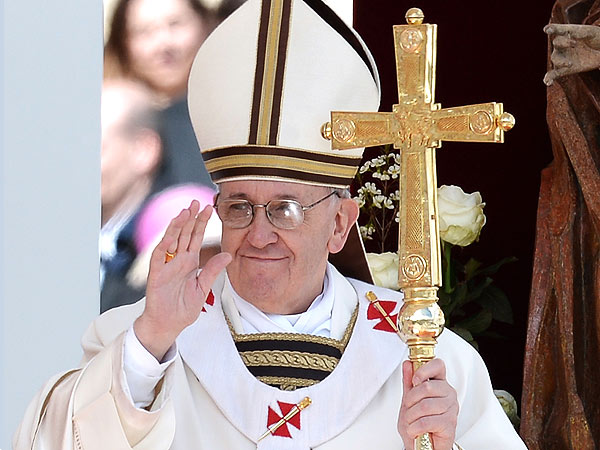
Oremus pro beatissimo Papa nostro Francisco!

Dominus conservet eum, et vivificet eum, et beatum faciat eum in terra, et non tradat eum in animam inimicorum eius.  Amen.

Wednesday, February 18, 2015

Ash Wednesday


Memento, homo, quia pulvis es et in pulverem reverteris.

Painting: Aschermittwoch (Ash Wednesday) by Carl Spitzweg