Showing posts with label Prayer. Show all posts

Sunday, February 6, 2022

Lenten Practices I - Prayer (6th Sun per annum/Septuagesima Sunday)

There is a bit of a religious revival in our area today, with all the excitement over the Super Bowl. People all over will be hoping for a win for the local team, yet there is nothing they can do to help make that happen. It seems rather frivolous to beseech God for such a thing: what is a team’s victory in comparison to so many other things happening in our lives and around us? Yet this moment of excitement and anticipation is a good reminder to us of the two things today’s readings prompt in us: trust in the Lord and prayer.

We must remember as Christians that there is nowhere else we can place our trust for anything good or necessary to happen except in the Lord. God is in control of everything, and not in a secondary manner; God is intricately involved in the operation and existence of all things. Nothing exists without His willing it into existence; nothing moves outside of His will; nothing happens beyond His sight. God in His infinite providence, omnipotence, and eternal existence has seen everything happen before the universe even existed. There is no one else in whom we can place our total trust and reliance for all things except in God.

This is what Jesus praises in the Gospel passage in which He enumerates the Beatitudes according to Saint Luke. Only those who are poor will turn to God for their every need; only the hungry will seek the food of God; only those who weep will seek their consolation in the Lord who suffers with them and conquers every enemy; only the persecuted will place their hope in the Lord who triumphs in His resurrection and will have the final revenge on all enemies on the Last Day. Those who do not desire or need these things do not turn to God, they do not seek the Source of all goodness and truth, they do not pray.

We are only a few weeks away from Lent beginning, and joining in the journey of the Lord to Calvary and the tomb. This season is our time to reevaluate our relationship with God, to rectify our sinful lives, and to walk more closely to Christ than before. This walk must begin by placing our total trust in God in all things. If nothing happens outside of His will, if every good and perfect gift comes from the Father, then we must orient our lives towards God and not towards any lower or weaker power or authority. We must hope in God for all things, above all for the graces we need for everlasting life. This hope, this trust, must begin to be expressed in the primary action of the Christian: prayer.

We must pray. There is simply no alternative to prayer for the disciple of Jesus Christ. We are obligated to pray, and to not just pray for ourselves, but to pray for all. Yet we must remember the purpose of prayer is more than just the asking for things. We can and ought to ask, but prayer is far more than that. Prayer is our primary means of communication with God. It is not only a means of speaking to God, but it is also our means of hearing Him. Many will complain that they do not hear God in their lives, but how much time do we give Him to speak to us? How much do we retreat from the noise of the world to pray purposefully before Him? It is not that God doesn’t speak, but that we do not listen.

Prayer is the means whereby we are conformed to God. We adore the living God who loved us into being and loved us enough to die and rise from the dead for us. We praise Him who has done such immense marvels. We beseech Him for all that we require for ourselves, mindful that He is the ultimate source of all things. We ask on behalf of others for what they need, especially to encounter God through Jesus Christ in the Holy Spirit so that they may enter into the way of salvation. All of this is what God desires for us, but it must begin in prayer.

Our lives must be infused with prayer not just in the church but in the totality of our lives. We not only pray here at Mass but we ought to pray in our work, in our rest, in the fun times, in the sad times, in the ease of life which so many of us have in these days, in the difficulties that will come as we draw nearer to the crucified and risen Lord.  Whether it is short quick prayers offered in a moment or dedicating ourselves to an extended period of prayer, we must pray in a spirit of hope and trust in God. Whether it is for victory in the big game today, whether it is for more serious requests, whether it is in thanksgiving or in sorrow, we must pray. For if we do not pray now, why would we want to spend eternity with the God we avoid encountering through prayer?

Brethren, let us become a people of trust and prayer in all things. Let us hope in the Lord who has won everything for us in His passion, death, and resurrection. Let us be inflamed by the Holy Spirit to pray as we should so that we may become holy, so that we may become like God. Let us ask the saints to help us to pray as they prayed to God and grew closer to Him in their lives so that we may follow after them. Let us pray to live as Jesus calls us to live, not in a spirit of arrogance and disregard for the Lord, but in humility and trust, that we can encounter God through prayer in this life and be prepared to receive the fullest answer to our prayers in eternal life.


BONUS: BULLETIN ARTICLE

FROM THE PASTOR—PRAYERS AND DEVOTIONS

   With only a few weeks remaining until Lent begins, it is time to begin thinking about how we are to observe this sacred season. This Sunday in the traditional liturgical calendar starts the season of Septuagesima: the period of three Sundays and the accompanying days in-between until Ash Wednesday which are a reminder to us that Lent is approaching and gearing us up. While the current liturgy does not have this venerable tradition in it, we should still begin to orient ourselves towards the three Lenten practices of the Church: prayer, almsgiving, and fasting.

   This week, to supplement my homily on prayer, I would like to offer some various ideas to help you grow in your prayer life. While we priests may often preach on prayer, we may not offer many concrete ways for how to do it. Here are some practices that I heartily recommend.

· EUCHARISTIC ADORATION—What better way do we have to pray than to spend time before Jesus really present in the Eucharist? Beyond our reception of the Eucharist at Mass, the Church encourages us to spend time before the Most Blessed Sacrament in true prayer: to adore the Lord who humbles Himself to become our living Bread. I will be organizing some times for formal Eucharistic adoration during Lent, so I encourage you to join me in spending time with the Eucharistic Lord.

· THE ROSARY—One of the greatest tools for devotion to the Blessed Virgin Mary, the Rosary is also an opportunity to prayerfully consider the mysteries of our redemption: from the conception and birth of our Savior to His passion, death, and resurrection. Through the Rosary we can pray to and about Jesus through the help of His blessed mother Mary.

· THE BIBLE—The Sacred Scriptures are not a textbook on salvation, but the writings inspired by the Holy Spirit to sanctify us. We should read the Bible in a prayerful manner, not merely seeing the words but praying about what we read. We should not only hear what it says, but adore the God speaking to us through this text and calling us to Himself.

· DAILY DEVOTIONS—We should have a regular routine of prayer in our daily lives. We should wake up and immediately pray to give the day to God. We should pray at meals. We should take time to pray to particular saints who we are close to. It should grow to become as natural as breathing to us to pray throughout the day.

   No matter what, we need to pray. Lent is our opportunity to increase not only our prayer time but to grow better at it. The only real way to grow is to do it. How will you begin to pray this Lent? Let us pray as Jesus commands us to pray so that we may be close to Him in this life and receive the desire of our prayers in being with Him forever in the next life.

 

Sunday, October 9, 2016

Participation in the Mass (28th Sunday per annum)

It sometimes takes an ordinary event to awaken us to the extraordinary. I think some of us want to think of God acting in a rather grand and obvious way, like the parting of the Red Sea. Yet God, more often than not, acts in the Scriptures in ordinary ways. We see this with Naaman in our first reading, who washes himself in the Jordan River so as to be cleansed of his leprosy. We see this with the ten lepers who are walking to the temple before they are healed along the way. But we also encounter this surprise of the extraordinary whenever we are present at the celebration of the sacraments.
The sacraments are not given to us in extraordinary ways, but they use rather ordinary items: water, bread, wine, oil. It is God’s way of humbling us in His use of these ordinary items to convey that extraordinary grace which is at the heart of each of the sacraments. Through water, we are cleansed of our spiritual leprosy which is sin. Through oil, we are anointed with the grace of healing and strength. And through bread and wine, we are given the spiritual food most necessary for our spiritual health. But this is not the only means whereby we encounter our extraordinary God.
We have seen through the past three weeks some of the various aspects of the Mass: as the spiritual worship of God’s People, as the rest for which our hearts yearn, and as the foretaste of that blessed place where we desire to dwell for all eternity. We have done this so as to understand this occasion at which we gather each Sunday in and out, this event that has probably become rather ordinary to most of us. Our considerations on the Mass are the beginning of our reconsideration of this rather ordinary event towards the extraordinary grace and presence of this moment.
These considerations should lead us towards a greater participation in the Mass, but that begs the question: how am I to participate in the Mass? How am I to enter into this worship, this rest, this foretaste of Heaven as God wants and as the Church has taught for her entire history? Our participation should first of all echo the actions of the Samaritan leper in our Gospel. Each one of us is like that leper, for we have all been cleansed by the blood of Christ from the spiritual leprosy of sin that had disfigured our souls. Each one of us has, like Naaman’s baby skin, been revived to spiritual youth before God. At the very least, we should thank God each and every Mass that He has forgiven us and continues to offer that forgiveness through His sacraments. But we can do more than that.
To participate in the Mass is to do more than to follow the motions of the congregation. It is also more than singing along. Our primary participation is not external but internal, not merely what our bodies our doing but what is happening within our souls. The singing of the Mass is a great part of our participation and offers a more elevated response to God, yet it is not merely in external, physical actions that we are called to enter into as we celebrate the sacred mysteries. Our internal disposition and participation is the key to all the other actions we do whenever we gather before the altar.
We must always be mindful that the Mass is not a spectator sport or a TV show, those things that make no demand of our mind or heart. One of the greatest complaints I hear from Catholics is that they don’t get anything from Mass. This is because we have not done the work we must do on our part. Our faith is like a seed: it can only grow through effort and work. If we do not water it and put it in the best soil, it will not grow to its full stature. We cannot sit back and enjoy the Mass like it’s a talk show; we must make the effort to enter into the mystery before us.
We do this through active listening: paying attention to the words of the Mass. The Church has 2000 years of experience in understanding what it means to worship and to adore God, and that comes to us through the language of the Mass. I fear that our use of our local language has made us lazy in paying attention to what the Church actually says. When we worshipped with the common Western tongue of Latin, we could join in with the prayers of the Church throughout time and space. But even with that great loss, our attention must be on what these words convey to us, why it is that we focus on such words as “sacrifice” and “worship” and “right and just”. Do not merely hear these words, but listen to them and reflect on them in your mind and heart, letting them shape your beliefs and transforming your lives. If need be, I recommend getting a missal to help you better appreciate and contemplate these words and actions as you attend Mass.
We also participate through our active praying: offering up our own prayers in union with the great prayer of the Mass. There is always something or someone to pray for: why not offer all of that up to God through the primary means He has given us? But we cannot focus only on the prayer of petition; we need to enter into the prayer of union, the prayer of the saints. The reason that the saints have flourished throughout the centuries is because of their great love for the Mass. All of the aspects of the Mass we have recently seen are from the saints who have been nourished and strengthened through this one act. It will do the same for us, but only if we let it, only if we try.
The better we pray the Mass, the greater we shall grow as individuals and as a parish. This will require changes out of us, but a change towards the greater and the better. God desires us to be with Him, and so He gives us this awe-inspiring gift of the Mass as the means of this union. Do not reject it! Do not ignore it! Make the effort to plumb the depths of these mysteries so as to be what you were made to be: a child of God, an image of Christ, a temple of the Holy Spirit. Let us not be afraid of change but seek to draw nearer to the Lord who desires not only our healing but our flourishing. Let us join the leper of the Gospel in praising God for our blessings at the Mass but also so that our faith may be increased so that we may also be saved and enter into the glories of eternal life.

Sunday, September 18, 2016

The Mass as Worship (Part 1)

NB: This sermon was given on the 25th Sunday per annum (OF) as the first of a series of sermons on the Mass.


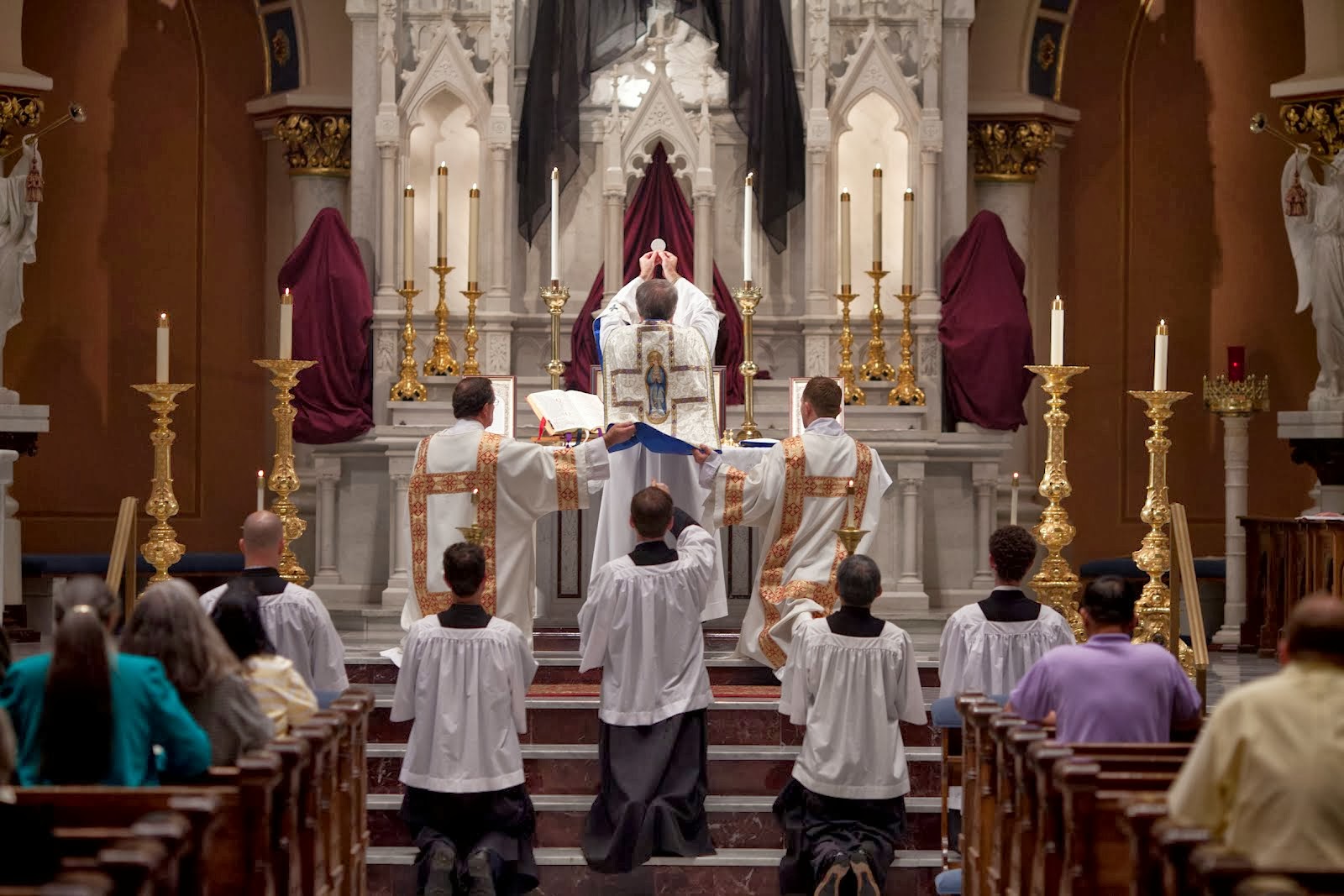
To get at the heart of a religion, one must look not merely at the beliefs or ideas of the religion, but one must look at how it worships the central deity. It is not enough to understand the intellectual ideas of the religion, but the public way in which this religion corresponds to its god. The Catholic faith is no different than any of the other religions in this aspect of its worship of God, yet it is different in how that worship is done and what she understands worship to be. For the Mass is the central act of worship in the Catholic Church, the act that is at the heart of what we believe as Catholics and as Christians. The better we understand and appreciate the Mass, the better shall we be able to participate in it and to be transformed by the Mass so as to be faithful Catholics in our daily lives.
What is the Mass? The Church has defined the Mass as the sacrifice of Christ on the Cross offered in an unbloody manner in union with the original sacrifice of Christ. Every time we participate in the Mass, we are present at the mysteries at the heart of our Christian faith: the Last Supper, the condemnation of Pilate, the Passion, the Death, and the Resurrection. All of these events either lead up to and prepare for the Cross or are the fruits of the Cross. The prophet Isaiah foretold that “by His wounds we are healed” (53:5) and so it is that Christ becomes the Lamb of sacrifice offered on the altar of the Cross so as to win for us our redemption from sin and our salvation in God.
We must be careful, however, not to think that the Mass is a new sacrifice of Christ, as if we are somehow enacting that sacrifice on Good Friday once more. St Peter tells us that Christ offered that perfect and complete sacrifice “once for all, the just for the unjust, that He might bring us to God.” (1 Pet 3:18) The Mass, therefore, is not a new sacrifice, but a re-presentation of that one perfect sacrifice on the Cross, now shown not in the bloody manner of Good Friday, but in the unbloody manner of bread and wine similar to what Melchizedek had offered on behalf of Abraham (Gen 14:18). This is one of the reasons why the sacred liturgy makes the proclamation, “The mystery of faith,” after the priest has consecrated the bread and the wine and made them the body and blood of Christ, for only by faith can we see this transformation, or transfiguration as the Church declares it, happening before us.
The Mass is the re-presentation of the sacrifice of the Cross as the primary act of worship to God. God has always commanded worship throughout the history of salvation, from Abraham offering two goats instead of Isaac, to Moses on Mount Sinai, to the grand temples of David and Solomon in Jerusalem, worship is a necessary aspect of the relationship between God and His people. And it continues today with the Church, the New Israel, the New People of God, whenever we gather together to celebrate and to offer the Mass. The Mass is an act of divine worship as seen from the invocation of the Holy Trinity at the beginning to the gift of divine blessing imparted at the end. The Roman Canon, that venerable traditional prayer of the Mass, begins, “To you, therefore, most merciful Father...” signifying that this action of the Church is directed to God the Father through God the Son by the workings of God the Holy Spirit.  We have been commanded by Jesus Christ to make this act of worship when He tells us, “Do this in memory of me” (Luke 22:19, 1 Cor 11:24).
Let us seek the Lord while He may be found among us whenever we gather together to worship at the Mass. Let us praise the Lord who lifts up we poor souls from bondage to sin so as to be united with Himself. Let us continue to make the supplications, prayers, petitions, and thanksgivings that St Paul commanded in union with Christ and which has continued for two millenia wherever the holy Mass is offered. Let us be trustworthy in appreciating and treasuring the gift of the Mass that has been handed on to us and for the greatest fruit of the Mass: the Holy Eucharist in which we are nourished and strengthened by that same body and blood so as to become what we receive. Let the Mass truly be our act of divine worship so that we give God what is owed to Him, and that He, in turn, will give us the reward of being united with Him always in the divine worship of Heaven.

Friday, March 13, 2015

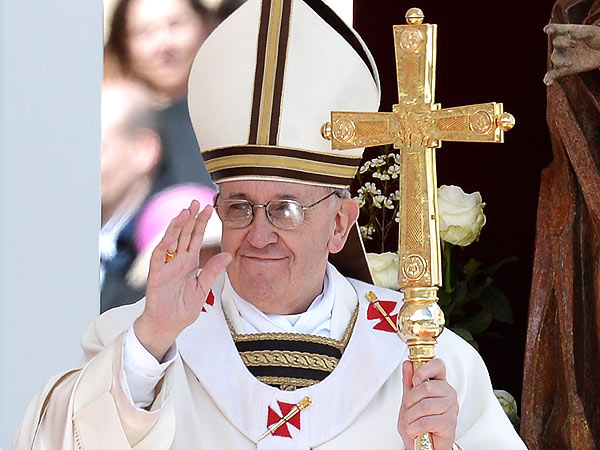
For the Pope


Oremus pro beatissimo Papa nostro Francisco!

Dominus conservet eum, et vivificet eum, et beatum faciat eum in terra, et non tradat eum in animam inimicorum eius.  Amen.