Friday, March 13, 2015

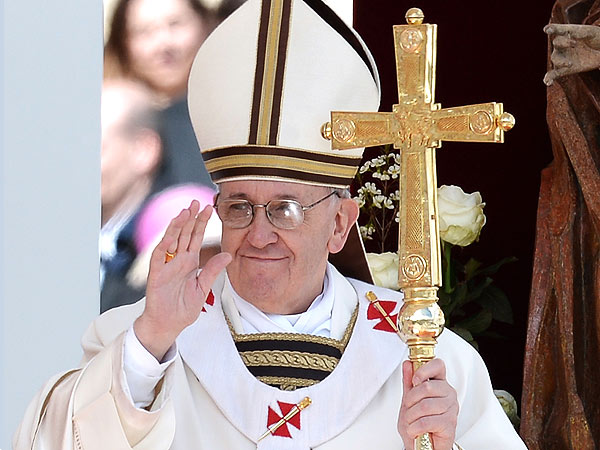
For the Pope


Oremus pro beatissimo Papa nostro Francisco!

Dominus conservet eum, et vivificet eum, et beatum faciat eum in terra, et non tradat eum in animam inimicorum eius.  Amen.

Wednesday, February 18, 2015

Ash Wednesday


Memento, homo, quia pulvis es et in pulverem reverteris.

Painting: Aschermittwoch (Ash Wednesday) by Carl Spitzweg

Saturday, January 17, 2015

2nd Sunday per annum (OF) - Listening to the Word


Having concluded the Christmas season, the Church in her liturgy now enters the time formerly named the season after Epiphany.  It is appropriate that we reference that illuminating mystery, since it is in that same mystery that we encounter Christ fully manifested to us.  These days after Epiphany not only illuminate our minds but also draw us to use our other senses to discern Christ.  The Scripture texts for this Mass call us towards using our sense of hearing so as to listen to God speaking to us.
For our God is not some far-off maker, some tinkerer who creates but then leaves His creation alone, like a forgotten watch on the upper shelf.  God is not merely turned towards action, but, perhaps far more than that, is turned towards interaction.  We encounter this first within God Himself, for the mystery of the Trinity reveals to us that, at His core, God is communion, God is interaction in a very personal way.  The Three Persons of the Trinity, sharing in the divine substance, are united in the ultimate bond of love, that selfless love which has produced all of humanity.
The Bible records for us from the very first moment of creation the interaction between God and the universe: most specifically, the interaction of God with mankind.  Even when our first parents fell in the Garden, God did not cut off this relationship; He promised, instead, that He would restore it in a most marvelous manner.  God continues to speak to humanity throughout the ages: sometimes speaking to a whole tribe or nation, as He did to ancient Israel; sometimes speaking one on one, almost face to face as it were, as He did with Moses and Samuel, whose experience we recall in our first reading.
Samuel, at first, could not distinguish who it was who called out to him.  He thought it was Eli the high priest, his earthly master.  But Eli, with a wise heart, discerns that the heavenly Lord was calling Samuel, and instructs the youth what to do.  It is the same in the life of each individual.  God calls to every human soul, beckoning them towards He in whom our hearts will find our true rest.  But how many truly hear the call?  And who can help them to know how to hear?  Our modern world screeches with the cries of so many discordant voices.  Voices on the television, voices on the computer, voices on the phone, voices everywhere.  Who has ears to hear?  Who will proclaim this God who speaks, who is speaking to us, and will teach others to hear that call?
Who else can proclaim this God but God Himself?  Thus do we return to Christ, whose birth and manifestation we have so recently celebrated.  The one voice that is able to speak most clearly and most definitively about God is the one Word which God has uttered from the very beginning, that Word which is also God.  How does the Word of God speak to us?  He speaks to us with the cry of a baby, with the voice of a child, with the voice of a man.  When Jesus Christ speaks, God speaks.  And if God speaks, then we must listen.
Yet God does not work alone in the work of redemption which He promised to Adam and Eve after their disastrous fall.  Consider the Gospel account before us today: God spoke to John the Baptist, leading him out into the desert.  John the Baptist then points out to those who will hear that the Christ, the Messiah, the Lamb of God, is passing by.  Andrew and another disciple, upon hearing this, go and encounter Christ, and come to know Him better.  Andrew in turn goes to his brother Simon and tells him of this Messiah, this Savior of the world.  Simon listens and follows, and hears from the lips of the Word Himself that he will be more than a fisherman; Simon hears that he will be the rock, the Cephas, the Petrus, upon which Christ will build His Church.
Saint Andrew demonstrates to us that we must be prepared to listen, to encounter for ourselves this Word made flesh, this Messiah living among us.  Saint Peter demonstrates for us that we can only listen to this Word, we can only encounter the Christ, within the context of the Church.  For wherever Christ is proclaimed, there is the Church to proclaim Him.  Wherever and whatever it is that Christ proclaims, there is the Church found listening to what the Word proclaims.  We cannot encounter Christ without the Church, nor can the Church be encountered with encountering Christ.
But are we listening?  Do we truly desire to encounter Christ, to listen to the Church?  Our age it seems, instead of being an age of listening, seems to be an age of doing, most especially doing only that which concerns the body.  This is the great warning which Saint Paul proclaims in our second reading.  For so many are like the sinful Corinthians whom Saint Paul chastises: desirous of finding fulfillment not in a relationship with another, with the God who is completely other than us, but finding fulfillment with the fleeting pleasures of the flesh.  This is not why we were given a body, so that it would be an instrument of pleasure.  Every time we hear in our text the word “immorality” or “immoral”, we should actually hear the term “fornication” or “sexual immorality,” for that is the full importance of the Greek word porneia which the author uses.  We were not built for mere pleasure; we were created for relationship, for love.
Let us begin to listen to God speaking to us, in Himself and in His Church.  Let us abandon any and all immorality and sin, most especially those sins of lust and fornication, so that we may begin to glorify God in our body by becoming temples of His Holy Spirit.  Let us be like Samuel, like Andrew, like Peter, and say to God, “Here I am: I come to do Your will.”  Only in saying this can we begin to discover the true joy and delight of Christian discipleship: fulfilling the will of our heavenly Father, our sanctification.  Only when we begin to abandon sin and listen to Christ’s words and dwell in Christ’s Spirit will we begin to bring to fruition that law written upon our heart which binds us towards the one who has paid the ultimate price for our bodies and our lives.  Let us come and see this Messiah among us: in the Scriptures, in the Church, but above all in the Eucharist, where He dwells among us so as to draw us to Himself and to the Father.  May we come to listen and encounter Christ, so that we may stay where Christ dwells for all eternity: in the glorious delights of eternal life.

Wednesday, December 24, 2014

Night Mass of Christmas (OF) - The Light in the Darkness

Silence has fallen upon the earth, the silence that comes with the long night. Only those things that inhabit the night, that prowl about in the darkness, are awake and moving. Around the world, men and women are huddled in their beds, sleeping away in the darkness, waiting for the morning. Even the great emperor, the Caesar who seems to have control of everything, sleep quietly in his palace in Rome. But not all is quiet, not all is dark.  In a small corner of a small province of the great Roman Empire, a child is born. It is that child whom we celebrate tonight. But who is this child? Why is this child so important that we celebrate his birth 2,014 years later? What is it that this child will do as a man? And what does this child mean to us here right now?
Isaiah gives us a hint about this in the first reading when he declares, "The people who walked in darkness have seen a great light; upon those who dwell in the land of gloom a light has shone." It is this theme of light and darkness which pervades our mass tonight, this first mass of Christmas Day, celebrated from antiquity at night, usually at midnight. It is most appropriate to offer the celebration at night due to the birth of this child, that birth which has been traditionally held to have occurred in the night, in the darkness of the world. For it is that child who will transform the darkness into something far more marvelous.
The same child, when he becomes a man fully grown, will declare himself as the light of the world. In fact, in the massive Christmas Day, which will be celebrated tomorrow, The church proclaimed the beginning of the Gospel of St. John, the beloved apostle. St. John in that same gospel declares, "The true light, which enlightens everyone, was coming into the world. He was the light of men; the light shines in the darkness, and the darkness has not overcome it." What do we mean when we say that this child is the light? A parable may help us to understand this term and how it is that Christ the child born to us is the Light of the world.  This parable actually comes to us from a pagan Greek philosopher named Plato who lived about 500 years before the birth of Christ, but it finds great significance in a Christian context.
Imagine that the race of men are restrained in a cave deep below the earth, restrained such that they are incapable of any motion. Suppose that, on the cave wall in front of them, are projected images of things faintly lit by a fire, or, to make it more modern, by a film projector. If one had grown to maturity in this state - never moving, never being free to see anything other than that projected on the cave wall - it is no surprise that this one presumes that the images are all real, and that there is nothing else to be done but to accept them. But, if one can be freed of his shackles, see the cave walls and the limited images along with their projector, and discovers that there is something far more real, more than all that he had known, would he not desire to remain in the real world rather than return to the cramped spaces and threadbare images? Would we not rebuke one who stayed in the cave after being freed as foolish or weak or trapped in an illusion?
Jesus Christ, the child born to us this night, has done something far more marvelous than simply freeing us from the paralysis of the cave, from the darkness and false reality under which we were subjected.  This child who is declared to be the Light of the World has revealed Himself to us.  It is in answering the question “Who is this child?” that we discover how bright the Light is.  For this child, of flesh and bone like each one of us, is different in one major aspect from every other human child ever born, being born, or will be born.  This child, this tiny little infant with such a weak voice, with no strength to even turn Himself over let alone to stand and walk - this child is God.
Yes, you heard me right.  That tiny little infant is the Infinite Son of God.  That weak little voice, crying out for help, for His mother, is the same Voice which declared in the beginning “Let there be light”; the same Voice which spoke to Moses in the burning bush; the same Voice which conversed with the prophets.  This supremely feeble child with no strength in His arms or legs is the same Power by which all things are ordered and established towards their ultimate end.  Jesus Christ, the child born among us tonight, is the God who exists beyond our time.
Ours is not to understand how this happens. The ways of God at times are so far above our understanding that we will never be able to comprehend completely fully truly what he is doing. Ours is to understand that it did happen. Without losing his divinity, without taking any of it, Jesus Christ who is God, the Son of God the Father, who is the Second Person of the Holy Trinity, without losing any of His divinity nor without missing anything that is human, receives the same flesh and blood as each one of us here tonight. This is the mystery of the Incarnation, the Enfleshment of God. Nine months after the Son of God was conceived by the Holy Spirit in the womb of Mary, He is born among us.
Indeed, this is a joyous night. We celebrate God coming among us, the fulfillment of the name Emmanuel, the long-desired of the nations coming to us. We indeed rejoice with the angels in echoing their triumphant chorus of praise, that Gloria which the Church recites in joy at all the great feasts, but echoes most when we celebrate this night.  Who, in contemplating this event, is not enrapt in joy?  Who does not lovingly gaze upon that humble manger to be reminded of this most joyous of news, that God shares a human life with us? The only thing that could be better than this would be to be with God all our days. But that, brothers and sisters, is the exact reason why He is born to us on this sacred night.
Going back to the parable of the cave, Jesus Christ came to share the divine light, the light of truth, the light of salvation, the light of divine love for each and every one of us.  Christ comes to reveal to us that this world is not all that it appears to be, that there is something more, something further up and further in, as C.S. Lewis alludes to in his Chronicles of Narnia series.  We sometimes sense this, that there is more than meets the eye, but we often brush it aside and settle comfortably into what our mere senses tell us.  Indeed, it seems that our age is incapable of looking at anything except what is directly in front of it, and even then does not seem the forest for the trees.
But Christ our Light shines through the darkness of our ignorance, the darkness brought on by our sins and by the work of the devil, the perpetual agent of malice against God.  He reveals to us the facade of simple reality and shows us something more is there, or rather someone who is more is there.  For Christ the light reveals to us the light which is God himself, God in three persons, the sacred Trinity. It is in Christ the man that this will be fully revealed, but we have a glimpse of this now in the ministry of Christ the child.
Let us rejoice on the sacred night. Let us rejoice at the coming of our savior, at the birth of our king and our Lord. Let us exalt with the angels in heaven glorifying him. Let our cry truly be glory to God in the highest; But what are crying not been nearly words.  For if we are to truly keep this sacred night, if we are truly to receive Christ as a child, then we must listen to Christ the man. We must listen to what Christ tells us if He is truly God among us if He is truly Emmanuel. We cannot merely adore Him as a child, but we must accept the full man, who He is and what He says to us. And what He says most of all is said not in words, but it actions, and it is said upon the cross.  For the mystery of Christmas is nothing without the mystery of the Passion and of the Resurrection. Christmas means nothing without looking towards Easter. Because Christ was born not merely to live, not merely to teach, not merely to be an example. Christ was born so that he would die the death on the cross, the death by which we would be freed of our sins and begin to enter into that blessed life God desires for us.
Let us not enter back into the cave, then, by returning to our sins, by ignoring Christ and reducing Him to a mere child.  The celebration of Christmas is worthless if we are not desiring to imitate the one in whose birth we rejoice.  Christians, do not reject the name of Christ! Do not reject what Christ has done for you by His birth in Bethlehem and by His re-birth at Calvary! We can certainly return to the dull images and easy comfort of the cave, but we will not be truly alive, truly animated to become what God has desired us to be from the very beginning of creation: the holy people of God on fire with love for Him and for all that He has done and all He has created, most especially our brothers and sisters.
If you have been slack in your Christian life, not attending Mass, not reading the Scriptures, avoiding the reception of the sacraments by which we are conformed to Christ, return to the practice of your faith.  There is no salvation or redemption in anything or anyone else.  Your things cannot save you, your lukewarmness cannot save you, no other religion can save you: It is only Christ and the one Church which He has founded, which He has maintained to this day.  Return to the Church, come back to the merciful and forgiving Father, and be restored to God.  If you are currently practicing your faith, be better.  We can always be more prayerful, more obedient in our duties, more virtuous, more faithful than we are presently.  There is no stopping in our faith: either you are moving forwards or sliding backwards.  Be strengthened by the example of Christ, of His holy mother, and by the saints who have gone before us, so as to achieve the goal of faith: your salvation, your entrance even in a remote way in this life into the glories and the joys that await in Heaven.

Let us rejoice on this night, let us rejoice in this child, but let our rejoicing not be in vain.  Christ is born to us so as to offer us salvation and sanctification, and He has already done the brunt of the work for us in His earthly life.  Ours is to decide: shall we be illuminated by the Light that has come into the world or shall we remain in the darkness of sin, of ignorance, of error, and risk losing that in which our hearts have truly desired?  May each of you have a blessed and merry Christmas, and may the glory of the Christ Child shine upon each one of you in the darkness of this night.
Sunday, November 30, 2014

First Sunday of Advent (EF) - Excita! (Part II)

  Last week, we looked at the common portion of the collects for the Sundays which form the bookends of the liturgical year. We looked especially at the Church's use of the word "Excita!" To stir us anew to conversion and progress in the spiritual life, in preparation for the end of days.  This Sunday, the first of Advent and the inauguration of the new liturgical year, utilizes the same word in its collect. What inspires the Church to repeat this word so soon, and also to use it at the beginning of the year?
  A further examination of the collect will help us to understand this week's usage. The collect begins: "Stir up your power, O Lord, and come." While last week was addressed more to our needs and our conversion, this week sees the collect addressed to God Almighty and beseeching Him to come. In praying this, the Church opens up to us the mystery of Advent and its importance for us. For the heart of Advent is concerned with the coming of God into the lives and history of humanity.
  Certainly, we are praying for God to come and save us, to free us from our sins. In this, we are joining the ancient Jews in their prayer for deliverance, in their prayer for redemption. How long did they suffer in Egypt under the cruel slavery of Pharoah! How long were they thrown about under the various emperors and princes of the eras, becoming a plaything in those exalted men's hands! How long were they even exiled from that which had been sworn over to them, the Promised Land! They sought for the day when God would deliver them from all their enemies and reign over them forever in the kingdom of gladness and joy. Yet how little did they expect God to become personally present to them, to truly come to them as a neighbor comes to a neighbor.
  We, indeed, are the result of those prayers, of those expectations, though these prayers and expectations have not yet been realized completely. Christ our Savior has already come in history, has come to redeem His people, the people He has chosen to be His own. Truly has the Psalm been fulfilled which says, "All who expect you, O Lord, shall not be confounded" (Ps 24.3; see the Gradual).  All those who have waited and are waiting for the Lord to come do not wait in vain, for the Bridegroom is coming, whose birth we will celebrate so soon.
  Yet we are not merely commemorating the expectation of the nations to arrive. We are also a people in waiting. We, however, are awaiting not the fulfillment of the prophecies, but for the fulfillment of God's design. This is what is hinted at in our Gospel for this Sunday. The birth of Christ into the world was only the beginning of the final fulfillment, and Our Lord gives us warning of His final coming, just as we heard last week. When Christ comes this final time, He will not appear in humility and poverty, but in power and majesty, enthroned in glory as the Just Judge come to reckon to each his own. How dreadful shall that day be for those who have not followed the Lamb, but their own foolish designs.
  This is the second way that the Church calls upon God to stir Himself up as if from slumber. For the Church, the Bride of the Heavenly Bridegroom, desires to unite herself to the One she loves, to at last enter into the wedding feast prepared for all eternity. Truly, we should live in fear of that day if we are not progressing in sanctity and repentance, yet for the Christian, the end should be awaited in eager hope. We are not meant to live forever in this sin-filled world, but we are meant to be with God, in the intimate union for which we have been created.
  But this talk of intimate union draws out a third and final way by which the Church calls upon her Lord through this collect. Yes, God has come within the pages of history. Yes, God will come at the last day, on the last page, to close the book of life. But there is a hidden way by which Christ comes to His Church, a way that is only illuminated to us by the saints. This is the way of Christ dwelling within the soul, of the soul becoming Christ-like, as St. Paul tells us has happened to him.
  Christ is present to us insofar as we conform ourselves to His example and His teaching, insofar as we emulate His earthly life. This is the secret of the saints: all of them, though each in their own way, strove not only to imitate Christ, but to become Christ. Read any life of any saint, and you will see them growing further apart from sin and the world and the flesh, and you will also see they draw nearer to Christ: through prayer, through penance, through growth in virtue, and especially through growth in charity. We can have Christ in our lives here and now, the more we turn away from all that is hateful to Him and desire more and more to fill our lives with the good gifts and graces He gives us.

  Let us, indeed, beseech God to come to us. Let us pray that He will fulfill His promise to become a son for us, a child among us. Let us pray that He will come at last as the glorious and triumphant King at the end of days. But let us pray more fervently that He will come into our hearts, into our churches, to dwell among us as the only object of our love, as the only means whereby we live and move and have our being. Take heed to the words of St. Paul in our epistle today, that we will "put ye on the Lord Jesus Christ: and make not provision for the flesh." Let us pray that God will be stirred up so that we may be stirred more completely to know Him, to love Him, and to serve Him, so that we may more completely rejoice at those words: "The Bridegroom comes; go out to meet Him."

Saturday, November 22, 2014

Last Sunday after Pentecost (EF) - Excita!

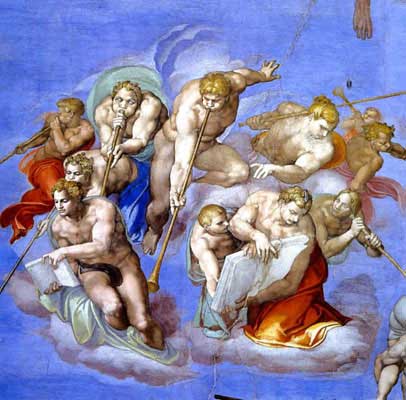
Detail from Michelangelo's Last Judgment in the Sistine Chapel
There are many correlations between this Sunday’s Mass, the last one of the time after Pentecost and thus signifying the end of the liturgical year, and next Sunday’s Mass, the first of Advent and the beginning of the year.  I highlight only one of these correlations as found within the collects which begin the Masses.  The first word of each prayer in Latin is Excita.  Of course, the English mind immediately thinks of the word excite, and truly one is correct in coming to this conclusion.  Yet what does it mean to excite?
The Lewis and Short Latin Dictionary (an essential reference for those studying the venerable language) offers a few ways to understand this word Excita.  It defines Excita the verb as to raise up, to arouse, awaken, incite, or enliven.  We see, then, that this word signifies the action of stirring up or even waking up one from some state of inactivity.  This begs the question: Why does the Church use this word not only on this day but also for next Sunday’s Mass?

We will look at the use of Excita for next week’s Mass next week (a little incentive to keep you coming!) but for this week, we can link Excita to the image Our Lord presents in the Gospel of the angel’s trumpet.  In the midst of describing in a mysterious manner the last days of the universe, Christ tells us that the Son of Man “shall send his angels with a trumpet and a great voice” after He has returned (Mt 24:31).  It is this passage that is central to interpreting the Church’s use of this word in our prayer and what effect it should have upon us.
This month of November is normally dedicated to the consideration of the Last Things since the Sunday Masses place us this impending mystery before us.  While this theme is certainly appropriate for the end of the liturgical year, it is also the fundamental inspiration for why the Church operates in this world.  Eagerly awaiting the coming of her Savior, of her beloved Bridegroom, the Church strives to call souls to that same hope and same love before the angel’s trumpet is heard, before that same Bridegroom comes to carry out His most terrifying task as the Judge of the living and the dead.
But this task of calling does not end once souls have entered into the bosom of Holy Mother Church.  Far from it!  For now comes the task of leading souls away from sin, from Satan and all his works and pomps, so that these souls may begin to live and breath that same faith, hope, and love with which Christ infused the Church.  We must always remember that our entrance into the Church, our incorporation into the Mystical Body of Christ, does not come with a guarantee or a punched ticket; it comes only with a promise: “Abide in me, and I will abide in you” (Jn 15:5).
How often it happens in our lives that we are thrilled with entering into some new activity or receiving some new toy or gadget, yet that thrill vanish after a short time and the activity becomes routine or boring, the toy becomes old and no longer carries the same curiosity.  This is most especially true in our ecclesiastical life, and even more so for those of us who have discovered or returned to the Church: we are excited and filled with awe at her teachings and her rites, her Gospel and her history, and we seem to want more, more, more!  Yet we sink into a pattern of familiarity, of routineness, a pattern that seems to make all of this just seem like anything else.  Our minds become dull with the loss of that newness, our hearts grow weary because what we expected has not come to be, our souls seem to become fixed in their ways or (even worse) to start retreating from the progress we had made back to the old comfortable sins, the easy way of living.  Like the natural world all around us, we seem to shrivel up and grow dry and cold.
It is to this that the Church, as a most loving and caring mother, knowing what is best for us, concludes the year.  She cries out to us: “Wake up! Rise up! Awake from your slumber!” She shocks us like a foghorn to the ear, like a bolt of lightning surging through our bodies.  The Church, in her perennial wisdom, knows that we human creatures too easily slack off and grow weary of the fight, grow tired of waiting, and so she revives us by her prayer.  “Stir up your people, we beseech you, O Lord!” she cries in our Collect.  Stir up your people, that they may rise from their sleep and remain true to your word.
Let us, then, be roused from our complicity.  Let us be awakened from the slumber of sin and the ease of error.  Let us arise and be “strengthened with all might according to the power of [God’s] glory, in all patience and longsuffering with joy” as St. Paul encourages us in our Epistle this day (Col 1:11).  If we have failed in sin, let us beseech God’s mercy.  If we have grown slack in our spiritual lives, let us pray Him that His grace may envelop us and His Holy Spirit stir us up to activity.  If we feel weak and unprepared, let us pray along with St. Paul that we “may be filled with the knowledge of his will, in all wisdom and spiritual understanding” so that we may “fruitful in every good work and increasing in the knowledge of God” (Col 1:9-10).
Let us not join the nations who will mourn and bewail the coming of the Just Judge when His sign appears and His angels blast their might trumpets, but let us lead lives worthy of preparing to face the Judge confident in His mercy and His grace as leading us into glory.  Let us not fear the trials and tribulations which will come, either the daily struggle which forms us into saints or the heroic struggle which signals that the last and terrible day is at hand.  Let us endure all these things so that, being excited by Holy Mother Church, we may be made worthy to be partakers of the saints in the eternal light (cf. Col 1:12).

Saturday, October 25, 2014

Christ the King (EF)

Christus vincit, Christus regnat, Christus imperat.  Christ conquers, Christ reigns, Christ commands. This ancient anthem is most appropriate for this feast of Our Lord Jesus Christ the King.  It reveals to us how it is that Christ is our true king and helps us to understand how this applies to we who are His loyal subjects.  For all earthly kings have conquered, reigned, and commanded, but only Christ has done these things in a perfect and salvific way.  Let us see how, then, He has brought about these actions.
Christ the King has conquered all the enemies of humanity: sin, death, Satan, ignorance, and error.  But He does not accomplish this victory with an army; He does not conquer with myriads of angels or men behind Him storming the battlefield.  No, indeed, Christ has won this conquest upon the Cross.  Our entrance antiphon points us to this when it declares: Worthy is the Lamb who was slain, to receive power and divinity and wisdom and strength and honor (Apoc. 5:12).  Christ the sacrificial Victim, Christ become the Passover Lamb, is the same Christ who is King.  Betrayed by His people, scourged for our iniquities, marched towards the dreaded hill, and nailed to the Cross, Christ shows the way of God in conquest is not through power but through humility and obedience.  Saint Paul rejoices in this conquest as he writes to the Colossians: Christ making peace through the blood of His cross (Col. 1:20) so as to bring about the long-sought-after redemption of man from Satan’s tyranny.
Truly, Christ works in opposition to Satan.  Whereas Satan worked through subterfuge and deceit, Christ who is the Truth shines for all to see Him.  Whereas Satan attacks and attacks again and again, Christ the Lamb is wounded again and again so that we might be healed.  And whereas Satan seeks to make himself the highest and the greatest, Christ, who has been King from the very beginning, humbles Himself and becomes a slave.  This is how Christ conquers the dreaded enemies: with humility, with obedience to the Heavenly Father’s will, with love.
Having conquered the enemies, Christ now reigns triumphant from His throne.  But again, His throne is not the normal earthly seat festooned with jewels and trinkets.  The throne of Christ while this sinful world exists is the Cross.  His crown is formed of thorns piercing His sacred Head.  He appears naked before the world: no royal purple enclosing Him except the purple of His precious Blood, no gold shining from before His Heart except the gold of a holy and perfect life, no courtiers to attend to His need except His sorrowing Mother who can do nothing to abate the pain.
The reign of Christ is not one of a lord above his people, but of God suffering with His people.  C.S. Lewis, in the Chronicles of Narnia, has the King of Archenland describe how a king must reign.
For this is what it means to be a king: to be first in every desperate attack and last in every desperate retreat, and when there’s hunger in the land (as must be now and then in bad years) to wear finer clothes and laugh louder over a scantier meal than any man in your land. (The Horse and His Boy, Chapter 15 “Rabadash the Ridiculous”)
Indeed, Christ reigns far more humbly than even Lewis himself imagined.  He certainly reigns in the glorious moments of life, the celebratory, the wonderful.  Yet He also reigns in the most sorrowful, most desperate, most miserable moments.  He reigns over the wealthy and the poor, the strong and the weak, the wicked and the good.  He reigns over all that has happened, all that is happening, and all that will happen.
Christ reigns over all because He has conquered all.  Everything belongs to Him, and nothing can be brought forward which we could truly declare to be free from the reign of Christ.  How can this be so, when Christ declares that My kingdom is not of this world?  This is because God, in all things, cooperates with man and does not rule by tyranny.  Just as He has left the Church as the instrument of salvation in the world and placed authority within men to rule and guide her, so too does Christ give power to man to govern and order his world so as to conform it to God, who is Himself ordered unto perfection.  God, St. Paul tells us, hath delivered us from the power of darkness and hath translated us into the kingdom of the Son of his love (Col 1:13).  This divine kingdom, this divine reign of Christ, is not in competition to the worldly powers, as perhaps Pontius Pilate thought, but is meant to be the true image of how man is to reign, in preparation for the consummation of the world.
Having conquered as a king, now currently reigning over us as king, Christ then commands us as our King.  The Latin word imperium signifies the ability to wield authority or having the ability to command another.  Is there anyone who has earned this right to authority over Christ?  Certainly not, after his triumphant conquest upon the throne of the Cross.  Christ has demonstrated to us through His Passion and Crucifixion that the heavenly Father has given Him the imperium over the entire world and over the totality of humanity.  When Christ speaks, He speaks on behalf of the Father.  When Christ commands, He commands on behalf of the Father.
But the imperium of Christ should not be seen as a subjection or a slavery to God.  Rather, it should be seen as an elevation, an entrance into the true freedom desired by the Trinity.  Christ does not command like some earthly emperor, but commands as a father commands a son, as a brother commands another brother.  He encourages and beckons mankind upwards towards divine intimacy, towards divine union.  Every word that He gives in the Gospels is meant to point us towards the reason why Christ came: to bring about the redemption of humanity and to unite us with God.  Pope Benedict XVI offered a good reflection on this idea when he said in his pre-papal days: “The Feast of Christ the King is not, therefore, the feast of those who are under a yoke but of those who are grateful to find themselves in the hands of him who writes straight on crooked lines.” (Co-Workers of the Truth, November 30)
Yet, how few there are who listen!  How fewer are they who hear and obey!  How many instead, join the mockings of the chief priests and Pharisees when they exclaim: Let Christ the king of Israel come down now from the cross, that we may see and believe (Mk 15:32).  This modern mockery of the concurrent reign of Christ is what prompted Pope Pius XI to establish this feast in 1925.  As the kingdoms fell and modern man believed himself to be the best judge of his own needs, Pius instituted this feast in the hope that “When once men recognize, both in private and in public life, that Christ is King, society will at last receive the great blessings of real liberty, well-ordered discipline, peace and harmony” (Quas primas, 1925).
This well-founded hope is still true today.  Our nation lies under the crippling effects of moral decay and political infighting, with little hope in either of our political parties or even in the electorate.  The western world is paralyzed by moral incompetency, formal atheism, and little resolve to fight the dangers that stand both on the edges (through militant Islam) and within the borders.  The Church, too, is not immune to this danger, as the past half-century has shown.  Priests and bishops and even cardinals have abandoned the kingdom of God and sought after the praise of men.  Yet Christ still commands, Christ still wields the imperium over the Church now just as He has done throughout the centuries and will continue to do so up to and including the last day.
How then are we to honor Christ as the King of all?  The Church, in her clemency, grants an plenary indulgence today to those who publicly recite the Act of Consecration of the Human Race to the Sacred Heart of Jesus.  Even if we cannot recite this publicly, we can make this act privately, beginning the rejuvenation of the world through our participation in the reign of Christ.  We can renew our efforts to follow the commands and the example of Christ the King, reminding ourselves when we gaze upon the Cross that God is in control: not ourselves, not our political leaders, not even our bishops and pope, but Christ the King is at the heart of all operations, and the more we cooperate with His will for us, the more shall we be rewarded in His kingdom.
We must also proclaim Christ’s kingship to the world, even perhaps back to the Church in which so many have forgotten His reign.  Our lives must echo those of the saints who gave themselves to Christ, not only the martyrs but all the saints.  It is wonderful that this feast of Christ the King occurs before the month of November, which begins with the feast of All Saints and ends with the coming of Advent.  November is a time for reflection upon the last things, and this feast helps place those reflections in context.  If we do not have Christ as our King, then what shall happen to us on the last day?
Finally, we must remember another crown which God has awarded.  There can be no king without a queen.  So too does this happen in the heavenly court: Christ the King reigns with the Queen of heaven and earth beside Him.  Let us turn to the Virgin Mary our Queen, that she may reveal to us how to venerate and serve her King.  As we conclude the month of the Rosary, let us offer those beads to her so that she may form of them a magnificent crown with which to crown the King by our works and our prayers.  Pray to her that we may become more loyal subjects of the King in this life, so as to merit the reward of the King in eternal life.  May Christ conquer, may Christ reign, may Christ command upon us all that we need to venerate Him as King and to share in His Kingship in the glory of heaven.