NB: This sermon was given on the 25th Sunday per annum (OF) as the first of a series of sermons on the Mass.
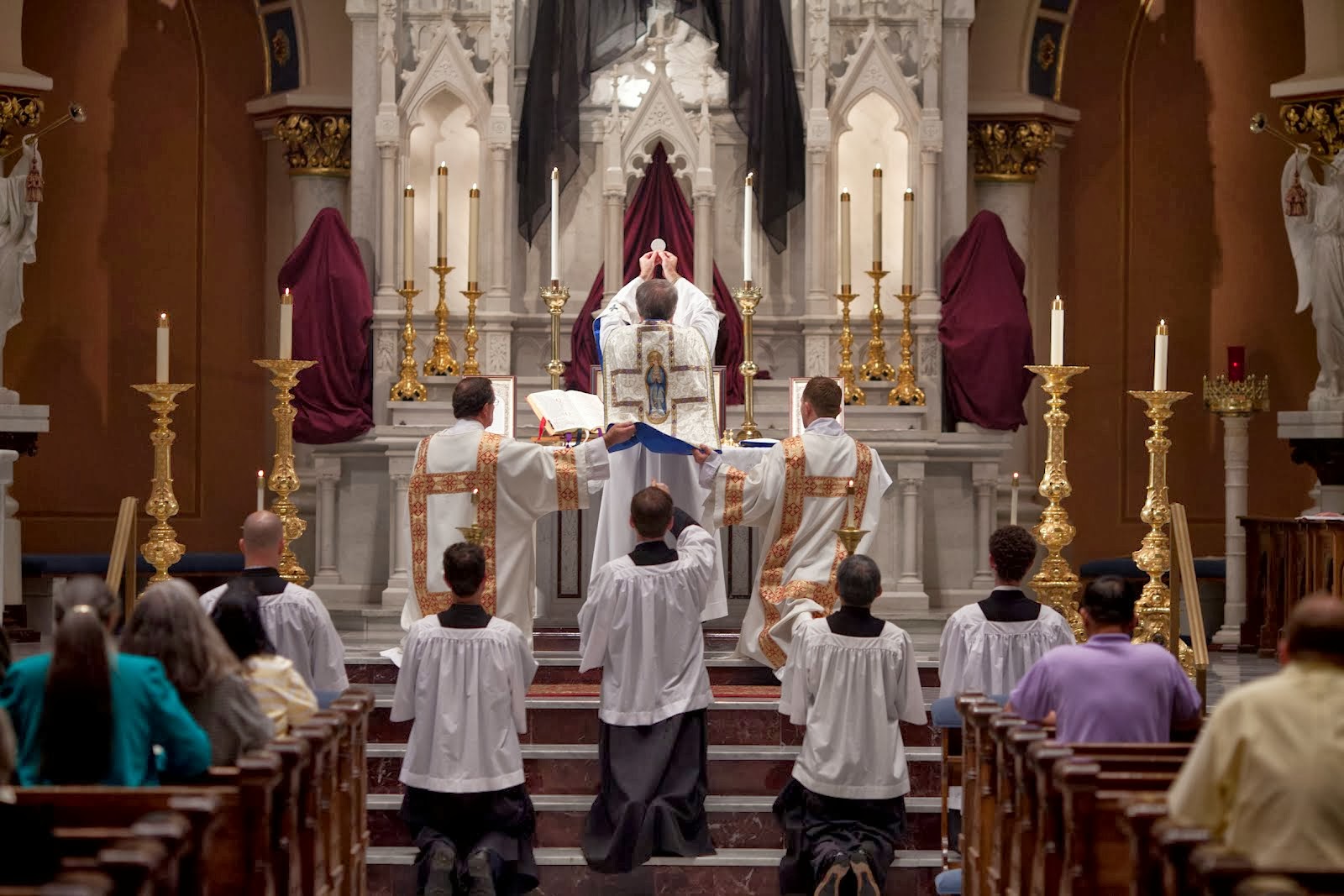
To get at the heart of a religion, one must look not merely at the beliefs or ideas of the religion, but one must look at how it worships the central deity. It is not enough to understand the intellectual ideas of the religion, but the public way in which this religion corresponds to its god. The Catholic faith is no different than any of the other religions in this aspect of its worship of God, yet it is different in how that worship is done and what she understands worship to be. For the Mass is the central act of worship in the Catholic Church, the act that is at the heart of what we believe as Catholics and as Christians. The better we understand and appreciate the Mass, the better shall we be able to participate in it and to be transformed by the Mass so as to be faithful Catholics in our daily lives.
What is the Mass? The Church has defined the Mass as the sacrifice of Christ on the Cross offered in an unbloody manner in union with the original sacrifice of Christ. Every time we participate in the Mass, we are present at the mysteries at the heart of our Christian faith: the Last Supper, the condemnation of Pilate, the Passion, the Death, and the Resurrection. All of these events either lead up to and prepare for the Cross or are the fruits of the Cross. The prophet Isaiah foretold that “by His wounds we are healed” (53:5) and so it is that Christ becomes the Lamb of sacrifice offered on the altar of the Cross so as to win for us our redemption from sin and our salvation in God.
We must be careful, however, not to think that the Mass is a new sacrifice of Christ, as if we are somehow enacting that sacrifice on Good Friday once more. St Peter tells us that Christ offered that perfect and complete sacrifice “once for all, the just for the unjust, that He might bring us to God.” (1 Pet 3:18) The Mass, therefore, is not a new sacrifice, but a re-presentation of that one perfect sacrifice on the Cross, now shown not in the bloody manner of Good Friday, but in the unbloody manner of bread and wine similar to what Melchizedek had offered on behalf of Abraham (Gen 14:18). This is one of the reasons why the sacred liturgy makes the proclamation, “The mystery of faith,” after the priest has consecrated the bread and the wine and made them the body and blood of Christ, for only by faith can we see this transformation, or transfiguration as the Church declares it, happening before us.
The Mass is the re-presentation of the sacrifice of the Cross as the primary act of worship to God. God has always commanded worship throughout the history of salvation, from Abraham offering two goats instead of Isaac, to Moses on Mount Sinai, to the grand temples of David and Solomon in Jerusalem, worship is a necessary aspect of the relationship between God and His people. And it continues today with the Church, the New Israel, the New People of God, whenever we gather together to celebrate and to offer the Mass. The Mass is an act of divine worship as seen from the invocation of the Holy Trinity at the beginning to the gift of divine blessing imparted at the end. The Roman Canon, that venerable traditional prayer of the Mass, begins, “To you, therefore, most merciful Father...” signifying that this action of the Church is directed to God the Father through God the Son by the workings of God the Holy Spirit. We have been commanded by Jesus Christ to make this act of worship when He tells us, “Do this in memory of me” (Luke 22:19, 1 Cor 11:24).
Let us seek the Lord while He may be found among us whenever we gather together to worship at the Mass. Let us praise the Lord who lifts up we poor souls from bondage to sin so as to be united with Himself. Let us continue to make the supplications, prayers, petitions, and thanksgivings that St Paul commanded in union with Christ and which has continued for two millenia wherever the holy Mass is offered. Let us be trustworthy in appreciating and treasuring the gift of the Mass that has been handed on to us and for the greatest fruit of the Mass: the Holy Eucharist in which we are nourished and strengthened by that same body and blood so as to become what we receive. Let the Mass truly be our act of divine worship so that we give God what is owed to Him, and that He, in turn, will give us the reward of being united with Him always in the divine worship of Heaven.

No comments:
Post a Comment