 |
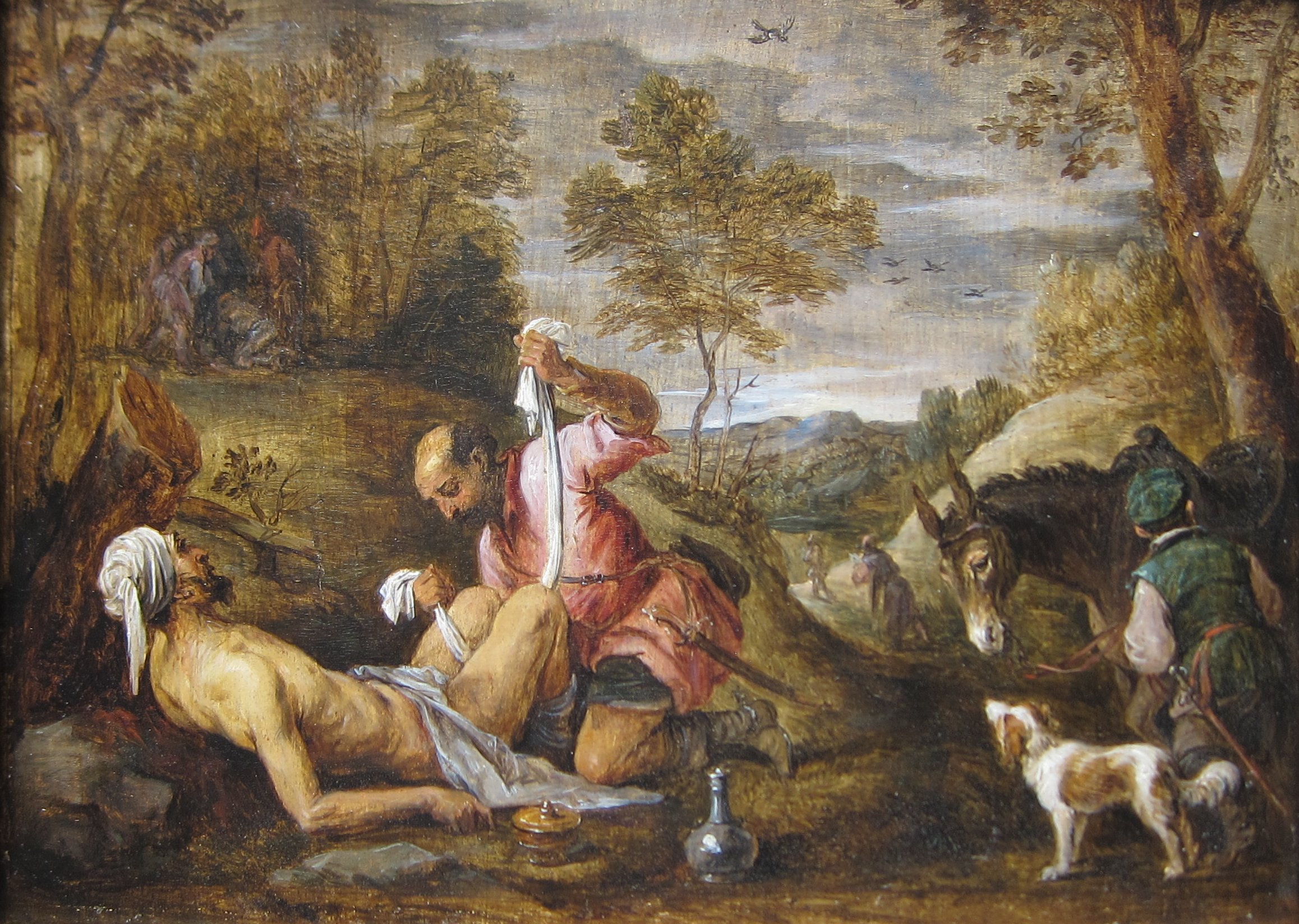
| The Good Samaritan |
Charity is one of the many virtues that our Lord preached upon in His life, and the Gospel for our Mass today is, as it were, the pinnacle of that preaching. For in expounding the parable of the Good Samaritan to the lawyer, Christ present not only the ultimate definition of human charity, but also gives witness to the divine charity which stands as the model for human charity. Indeed, this parable is a summary of the history of salvation and the triumph of Christ in restoring man to God. Let us then go out to the deep and plumb the depths of these sacred words.
The parable opens with a certain man descending from Jerusalem to Jericho. The man is seen to represent all of humanity in the parable. Jerusalem, whose name signifies the city of peace, represents the tranquility of Eden at the beginning of creation. The real-life description of the descent from lofty Jerusalem to lowly Jericho represents the descent of man from the garden into the world. But this downfall was not done by man alone, for on the road the man encounters robbers. Who else can these robbers be but the devil and his demons who strove and continue to strive against God in deforming man? The demon robbers stripe man of his original glory and wound him with the wound of concupiscence and leave man half-dead, forced to deal with the reality of death and sin.
Along comes the priest, who stands for the Law imposed upon Israel on Mount Sinai. What does the Law do for man? In the end nothing, for the Law is not meant to be the summation of life. Saint Paul points this out to us in the epistle of our Mass when he says that he has been made the minister of the new testament, the testament written not in letters as was the Law, but infused by the spirit of grace of God. The Apostle shows us that the letter of the Law kills, or more appropriately, does not bring life, while the spirit of grace brings life to man. But Christ desires especially to demonstrate to the lawyer to whom He declares this parable how the Law alone is not capable of bringing life to man. And so the priest passes along.
Along then comes the Levite, representing the prophets who came after the imposition of the Law. These are the ones who pointed out the sins of Israel and her people, calling them back to God through right living and right worship. Yet again, though, the prophets are not the be-all and end-all. The beginning of our Gospel today highlights this when Christ tells His disciples that the prophets themselves desired to see the day of Christ but did not see it in their own time. All of the prophets point towards the coming of the one who will truly bring the promise of God to fulfillment. And so the Levite passes along.
The last one to come to the wounded and half-dead man is the Samaritan. We must first recognize the significance of this title to the Jews of the time of Christ. A Samaritan was one who followed only the teachings of the Pentateuch, the first five books of the Old Testament. They were seen as impostors in the eyes of the Jews, as those not open to the fullness of truth, as perhaps Catholics have labelled Protestants in years past. So we must realize the jarring reality of hearing good things said about a Samaritan before first century Jews, and how this would have really opened the eyes of the people to what our Lord desired to tell them.
It is quite obvious by now that the Good Samaritan represents Christ our Lord and His work whilst dwelling here on earth. Hear what the Samaritan does: He comes near to the wounded man, just as Christ comes near to us by becoming incarnate. He has compassion on the half-dead man, just as God has compassion on his half-dead people. He covers the wounds so that they may heal, just as Christ is covered in the punishment due to humanity so that we may be healed. He pours upon the wounds sweet-smelling oil and reviving wine to aid in healing, just as Christ gives us the oil of absolution and vivification through Holy Communion.
Having done what he can to help the wounded man, the Samaritan places him on his beast and brings him to the inn. Likewise, Christ picks up humanity, wounded in sin, makes us members of His Body so as to carry us, and brings us into the comfort of Holy Mother Church, where humanity can find its rest and relief from the burden of sin and error. The Samaritan entrusts the wounded to the innkeeper, giving him pay and promising more to come when he returns. Christ entrusts souls to His Apostles and their successors and coworkers along with promising them that, when He returns in glory, He shall repay them whatever they have given of themselves.
How magnificent is the charity of God! How wondrous is this great work done by God in preparing the way to reconcile the world to Himself! Indeed, how great should be our thanksgiving to God for this tremendous gift which He has given freely of Himself. All of this God has done to restore us to that glory which we first possessed at our creation and to prepare ourselves for that final and overawing glory which awaits the faithful at the end of the age. This is what Saint Paul marvels at with the conclusion of today’s Epistle. If even the old Law could bring glory, though it did not bring life, how much more will the new and eternal spirit of grace bring glory to man?
Yet we cannot merely marvel at the works of God, we cannot just appreciate what has been done for us. We must follow in that example in our own lives. Why did Christ give us this parable? Because the lawyer had asked a question: Master, what must I do to possess eternal life? The lawyer was confident that merely being a right-minded Jew was enough. But the heavenly Master seeks to open his heart and ours by showing the summation of the Law and how it will be perfected in Christ. It is the same with us. We cannot presume to enter into Heaven because we are Catholics, or even faithful Catholics: we must imitate the divine charity in our lives.
Our lives must exhibit the two great commandments and draw others to desire to know the great Lawgiver and Redeemer who has inspired us to live in such a way. Certainly, we must love God completely because it is right and just to do so. We must seek to honor Him through prayer and worship, we must seek to draw nearer to Him, to plunge into the depths of divine intimacy as have done all the saints before us. But we must also recognize and serve our neighbors as ourselves: as fellow human beings who share the same wounds and need to be healed of those wounds through the mercy and grace of God as found in His Church.
Let us then turn in confidence to God in all our needs so that we may receive His gifts and return them to Him in turn. Let us cry out the words of our Introit: God come to my assistance! Lord, make haste to help me! Let us trust that our Good Samaritan is near to us, carrying us with Him through thick and thin, through all dangers and perils, in the safety of His Church. Let us seek to live our lives driven by these two great commandments of total love of God and of neighbor so as to spread the kingdom of Heaven among us. And let us seek from God through the intercession of the Blessed Virgin Mary the gifts and graces to respond to our own call to imitate the Good Samaritan in bringing healing to this broken world, and the promise of future glory in the never-ending world to come.

No comments:
Post a Comment